Moo shu is one of the few Chinese restaurant dishes that arrives as a set of parts rather than a finished plate, which is exactly why people hesitate to order it. Once you know what is in the box and what to do with it, it becomes one of the more interesting things on the menu.
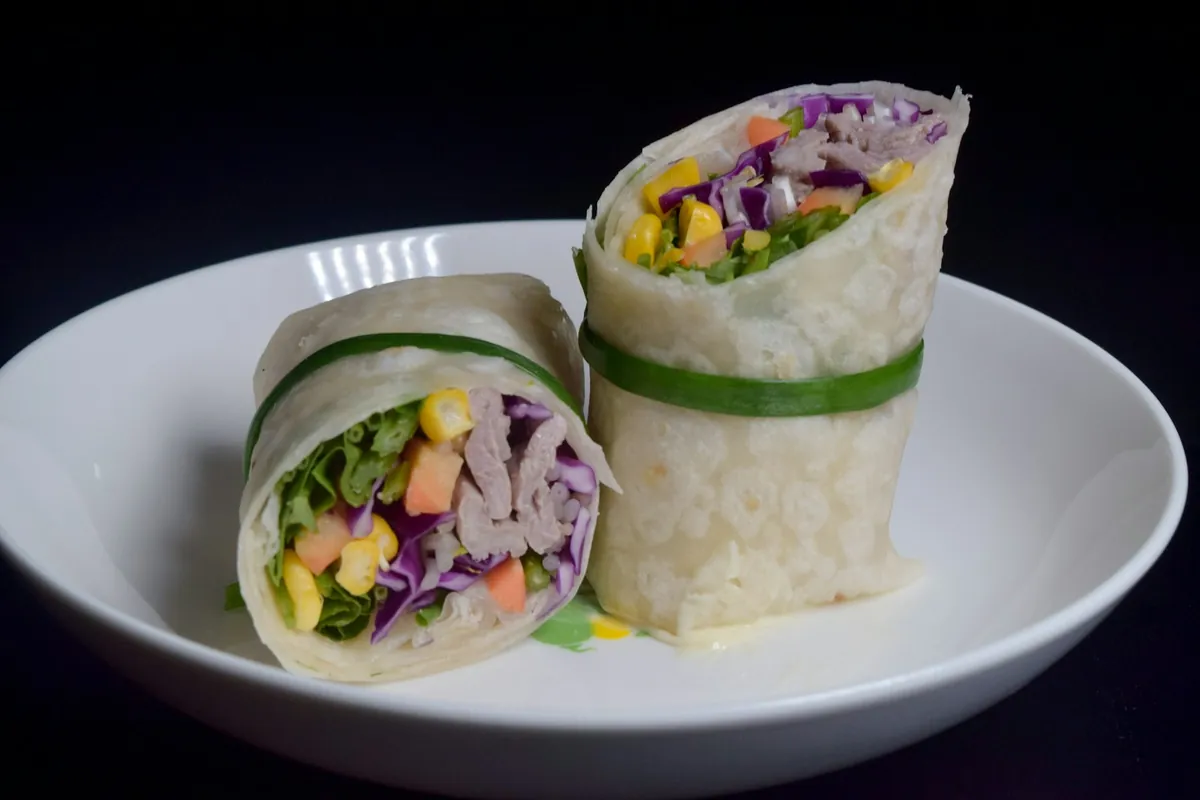
Moo shu is a northern Chinese stir-fry of finely shredded meat, egg, cabbage and mushrooms. In American Chinese restaurants it is usually served with thin flour pancakes and a sweet hoisin-style sauce, so you spread the sauce on a pancake, add the filling, and roll it up yourself — closer to a soft taco than a rice plate.
What is actually in it
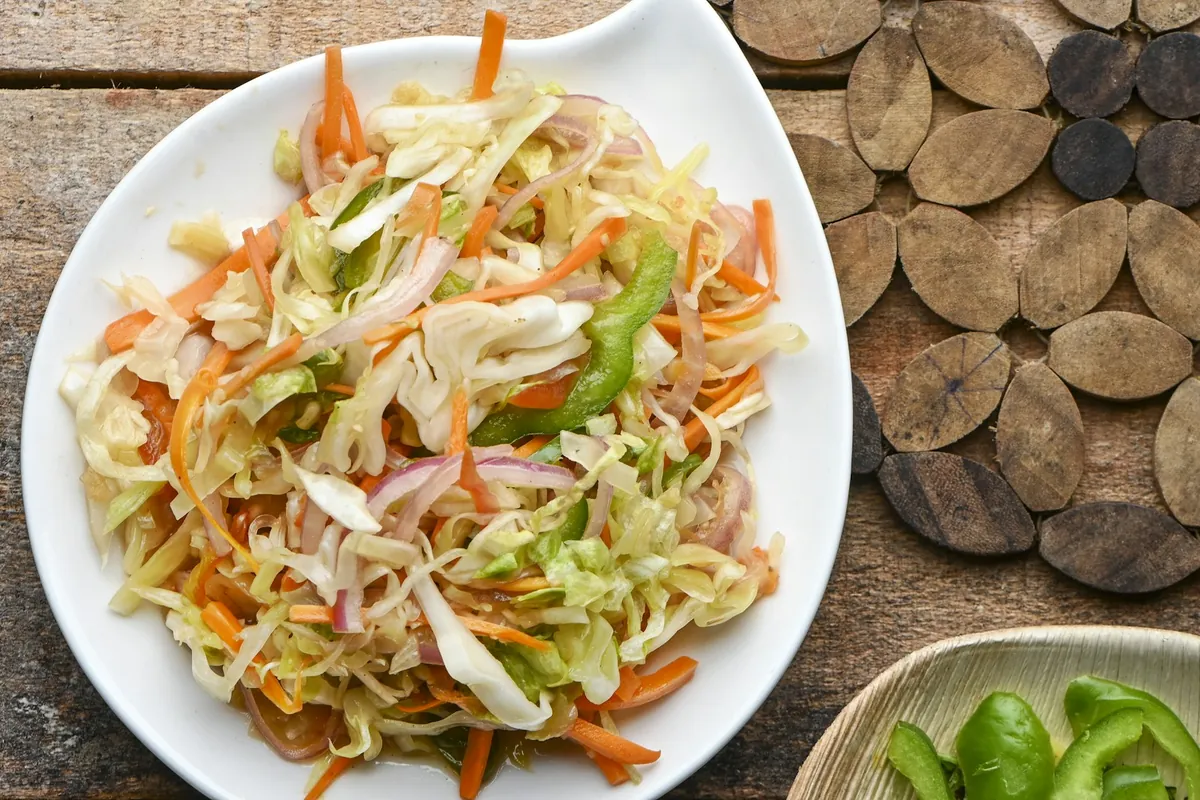
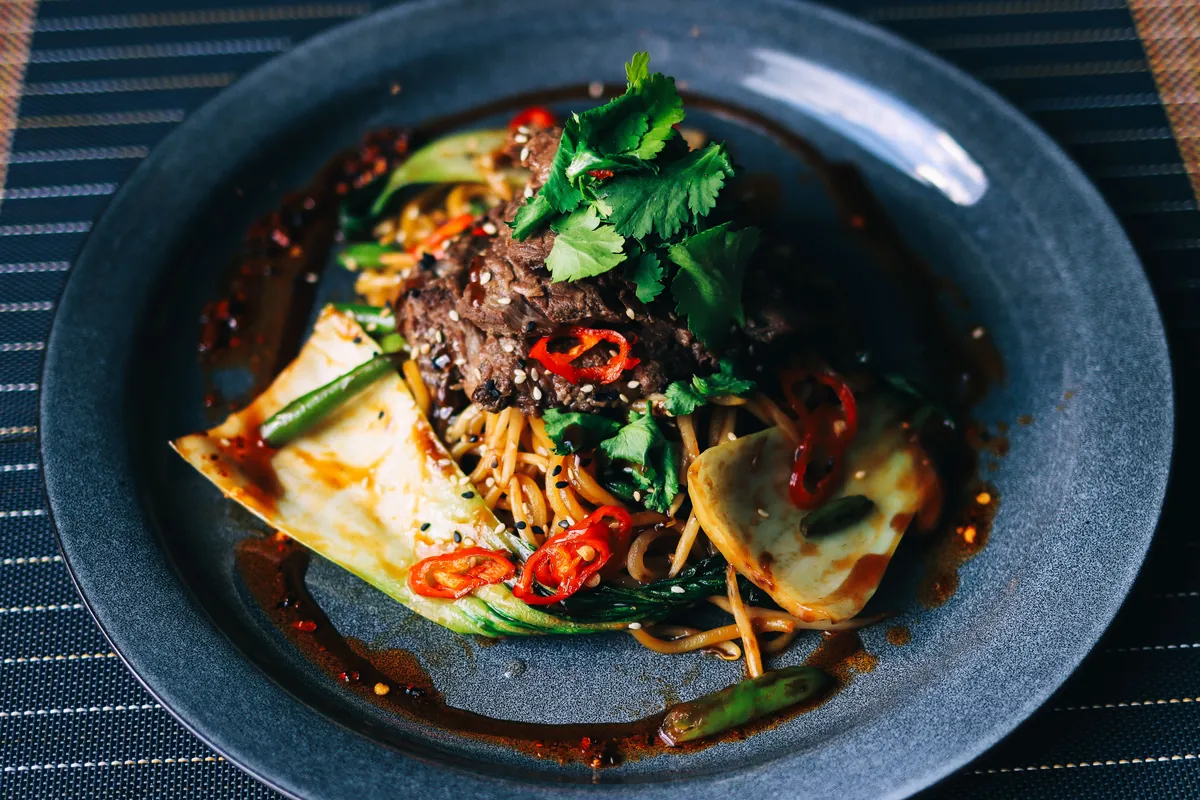
The filling is defined by its cut rather than its ingredients. Everything is shredded fine and roughly the same length, so the whole mixture holds together when you roll it. A typical version contains:
- Shredded meat — pork is the classic, but chicken, beef and shrimp are all common.
- Egg — scrambled and folded through in ribbons. This is not optional; it is a defining part of the dish.
- Cabbage — the bulk of the vegetable, shredded thin.
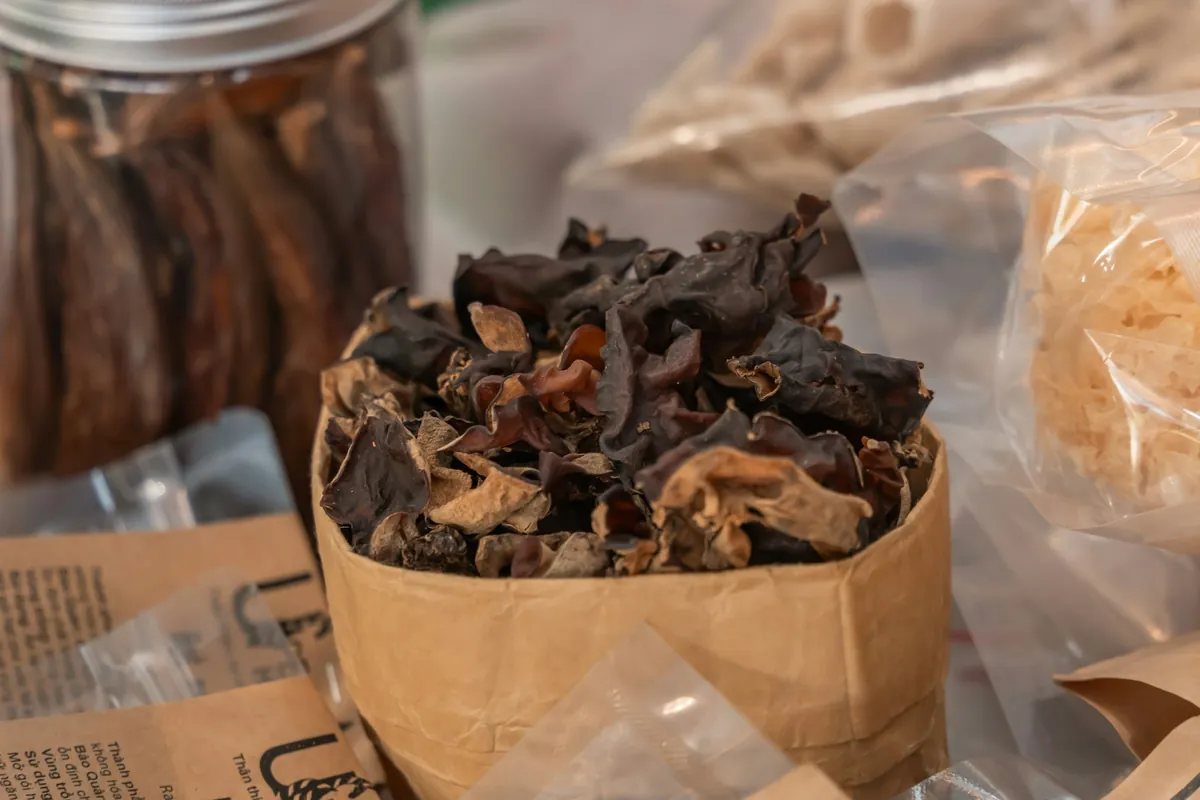
- Mushrooms — often wood ear, which contributes a distinctly springy bite.
- Scallion — cut into lengths rather than rings.
The name refers to the egg. Moo shu is written 木樨 in Chinese, a reference to the osmanthus flower, whose small yellow blossoms the scrambled egg is said to resemble. It is a description of how the dish looks, not of a place or a person.
Why it comes with pancakes
Here is a detail that surprises people: in China, this is largely a home-style dish eaten with rice. The pancakes are mostly a feature of Chinese restaurants abroad, where the dish was adapted into something closer to the assemble-it-yourself format diners already knew from Peking duck.
The pancakes themselves are thin, soft and unleavened — think closer to a flour tortilla than to a pancake in the breakfast sense. They are steamed rather than fried, and they are meant to be pliable so they wrap without cracking.
How to eat it without making a mess
There is a technique, and it takes about ten seconds to learn.
- Lay a pancake flat on your plate.
- Spread a thin line of the sauce down the middle — less than you think you need, because it is sweet and concentrated.
- Add two or three spoonfuls of filling in a strip, leaving room at the edges.
- Fold the bottom edge up, then roll from one side.
- Eat it from one end, holding it like a wrap.
Two practical notes. Do not overfill — the most common mistake is treating the pancake like a burrito wrapper when it is closer to a crepe. And assemble one at a time, because a rolled pancake left sitting will soften and lose its structure.
What the sauce is
Most restaurants serve moo shu with hoisin sauce or a plum-based sweet sauce. Hoisin is thick, dark and sweet-savory, made from fermented soybean with sugar, vinegar and spices. It is salty and sweet at once, which is why a thin line goes a long way against a mild filling.
If your order arrives without sauce on the side, ask — it is normally included but it is easy for a small container to be missed in a takeout bag.
How moo shu compares with other Chinese dishes
If you are weighing it against the dishes you usually order, this is the practical comparison.
| Feature | Moo Shu | A stir-fried entree | Lo Mein |
|---|---|---|---|
| How it is served | Filling plus pancakes and sauce, assembled at the table | Finished dish, eaten with rice | Finished noodle dish |
| Starch included | Pancakes (rice usually ordered separately) | Usually rice, ordered separately | Noodles are the dish |
| Cut of ingredients | Everything finely shredded | Sliced or cubed | Mixed through noodles |
| Sauce | Sweet hoisin, applied by you | Cooked into the dish | Tossed through |
| Effort at the table | You assemble each one | None | None |
| Good for sharing | Yes, naturally portioned | Yes | Yes |
Who tends to like it
Order moo shu if
- You like a bit of interaction with your food
- You want something lighter than a heavily sauced entree
- You are sharing and want a dish that divides naturally
- You like sweet-savory flavors such as hoisin
Choose something else if
- You want a plate you can eat straight away without assembly
- You are eating in the car or at a desk
- You dislike cabbage or egg, which are central to the dish
- You are ordering for young children who may find it fiddly
Ordering moo shu at a Chinese restaurant
Moo shu is normally listed by protein in its own short section, so you are choosing the meat rather than a preparation. Because pancakes are not always automatically included at every restaurant, it is worth confirming when you order — particularly for takeout.
Frequently asked questions
Is moo shu the same as mu shu?
Yes. Moo shu, mu shu, moo shoo and mushu are all transliterations of the same Chinese name, so menus spell it several different ways. If you see any of these spellings, it is the same dish.
Does moo shu come with rice?
Usually not. The pancakes act as the starch, so rice is normally ordered separately if you want it. If you are feeding several people, adding a fried rice or a plain rice alongside works well.
How many pancakes come with an order?
It varies by restaurant, commonly around four. Since it is not standardised, ask when ordering if you need a specific number, and request extra if you are sharing the dish between several people.
Is moo shu spicy?
No. It is a mild, savory dish, and the hoisin sauce adds sweetness rather than heat. If you want spice, it usually comes from something else on the table rather than from the moo shu itself.
Does moo shu contain egg?
Yes, egg is a defining ingredient rather than an optional extra, and the dish is named for the way the scrambled egg looks. If you need to avoid egg, this is not the dish to adapt — choose a different stir-fry instead and tell the restaurant about the allergy.
Worth ordering once
Moo shu rewards a little curiosity. It is lighter than most sauced entrees, it divides neatly across a table, and the assembly is genuinely part of the enjoyment rather than a chore.
If you have never had it, order it alongside something familiar the first time, so nobody at the table is depending on a dish they have not tried.
Moo shu in Fayetteville
China King serves moo shu with pork, chicken, beef or shrimp on Walter Reed Road.
Sources
- Moo shu pork — on the dish’s Shandong origins and the meaning of its name.
- Encyclopaedia Britannica: Chinese cuisine — on regional Chinese cooking styles.