
Two of the most useful ingredients in Chinese cooking arrive dry, look unpromising, and cost almost nothing. Dried shiitake and wood ear both need soaking before they do anything, and both do something fresh mushrooms cannot.
Dried shiitake is not a lesser version of the fresh mushroom — drying concentrates it into a different, far more savory ingredient, and the soaking water is stock. Wood ear is the black, rubbery strip in moo shu: almost tasteless, and used entirely for its springy texture.
Why dried shiitake beats fresh
This is the counter-intuitive part, and it is genuinely true rather than a thrift argument.
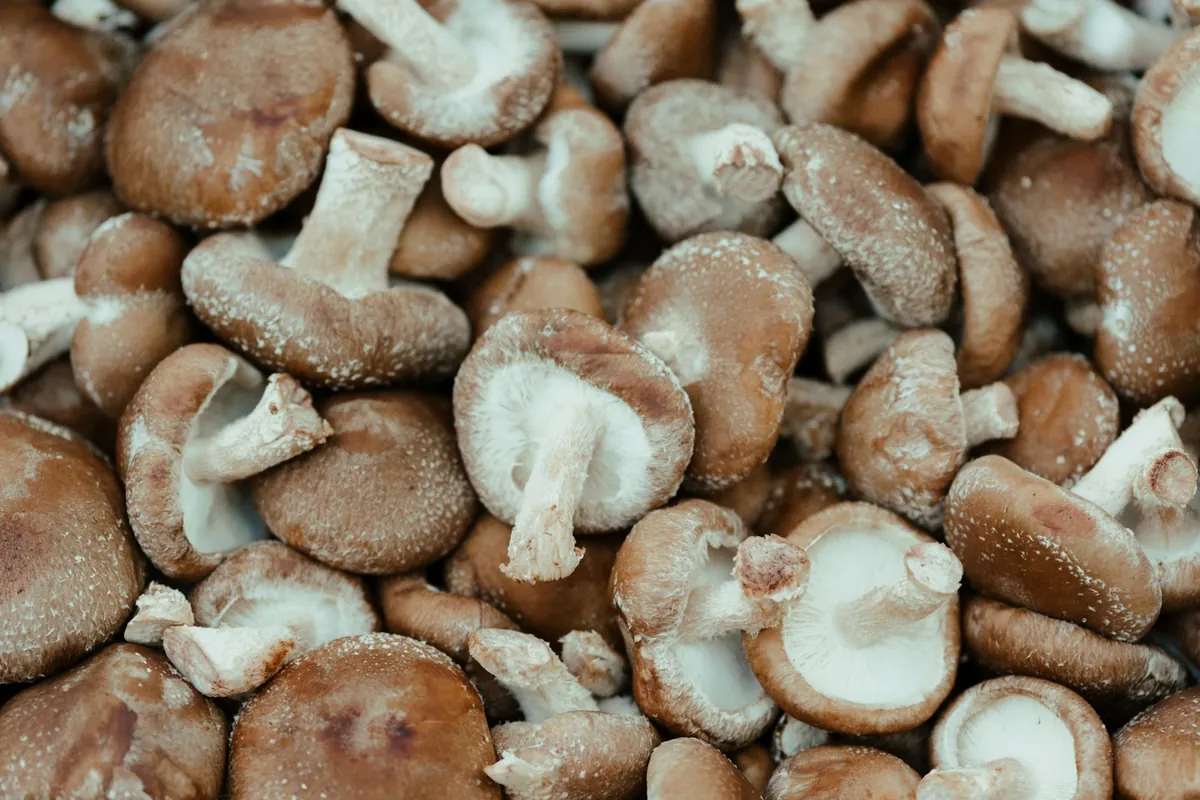
Drying a shiitake concentrates its compounds and creates new ones. The process develops guanylate, a compound that produces savory depth in the same family as the glutamate our guide to MSG covers — and the two reinforce each other, so dried shiitake in a soy-based dish tastes more savory than either would alone.
The texture changes too. Rehydrated shiitake is denser and meatier than fresh, with a firmness that survives long cooking. In a braise, fresh mushrooms collapse and dried ones hold.
So the two are not interchangeable in either direction. A recipe calling for dried shiitake wants that concentration, and substituting fresh gives you a milder, softer dish rather than the same dish with a shortcut.
The soaking water is the point
The single most common mistake with dried mushrooms is pouring it away.
Soaking rehydrates the mushroom and, in doing so, leaches a great deal of its concentrated flavor into the water. That liquid is a savory stock, dark brown and intensely mushroomy, and it belongs in whatever you are cooking.
Two practical notes. Soak in warm rather than boiling water and give it twenty to thirty minutes — boiling water is faster but produces a coarser result. And pour the liquid off carefully, leaving the last spoonful behind, because grit settles at the bottom.
Trim the stems before cooking. Shiitake stems stay tough however long you soak them, and they are worth keeping in the freezer for stock rather than putting in a stir-fry.
| Type | Soak | Tastes | Used for |
|---|---|---|---|
| Dried shiitake | 20–30 min warm | Deep, savory, almost meaty | Braises, fillings, stock |
| Wood ear | 15–20 min | Almost nothing | Texture, in moo shu and soups |
| Snow fungus | 20–30 min | Neutral | Texture, often in sweet soups |
| Dried straw mushroom | 20 min | Mild, earthy | Soups and mixed dishes |
| Fresh button mushroom | None | Mild, watery | The mushroom in moo goo gai pan |
That last row is on the menu at almost every American Chinese restaurant — our guide to moo goo gai pan covers the dish built on it, and it is a genuinely different ingredient from the dried ones above.
Wood ear: the one with no flavor
Worth explaining properly, because it is the ingredient people most often ask about and least often enjoy without context.
Wood ear is a fungus that grows on trees, sold in dry black shards that look like something swept off a floor. Soaked, it expands dramatically into dark, ruffled, translucent pieces with a springy, slightly crunchy bite.
It has essentially no taste. That is not a shortcoming — it is the entire purpose. Chinese cooking treats texture as a dimension of eating in its own right, in a way Western cooking largely does not, and wood ear exists to provide a specific springy resistance against soft ingredients.
You will have eaten it in moo shu, where it is the black strip among the shredded pork and cabbage — our guide to moo shu covers that dish. It also turns up in hot and sour soup and in cold dressed salads.
One safety note worth stating: wood ear should be soaked in the refrigerator or for a limited time at room temperature rather than left out for many hours, and cooked before eating. Prolonged room-temperature soaking of any rehydrating food is not good practice, for the same reasons our guide to food storage and safety describes.


Buying and keeping them
Buying
- Whole caps rather than slices, for shiitake
- Thick caps with pale cracks, which are prized
- Large bags — they keep indefinitely
- An Asian grocery, where they cost a fraction
Keeping
- Airtight, dry, out of light
- Effectively indefinite shelf life
- Freeze the soaking liquid in portions
- Keep trimmed stems for stock
The price difference is worth naming. A bag of dried shiitake from an Asian grocery costs a fraction of the same weight in a Western supermarket’s speciality aisle, and the quality is usually better. This is one of the clearest arguments for shopping at the specialist store.
They also last essentially forever if kept dry, which makes them the most practical thing on this list to own. A bag bought once sits in a cupboard and turns plain dishes savory for a year or more.
What they do on a takeout menu
Less than they might, and the reason is the usual one.
Soaking takes half an hour, which does not fit a kitchen assembling dishes in ninety seconds — our guide to how takeout kitchens work covers that constraint. Kitchens that use dried mushrooms soak them as part of the morning prep rather than to order.
Fresh button mushrooms are the default instead: no soaking, cheap, mild and familiar. They are what you get in the mushroom dishes across the beef, pork and chicken sections.
Wood ear is the exception that did cross over, because moo shu depends on it. It is one of the few genuinely texture-driven ingredients on an American Chinese menu.
Frequently asked questions
Are dried shiitake better than fresh?
For most Chinese cooking, yes — drying concentrates the mushroom and develops savory compounds that fresh ones lack, and the rehydrated texture is denser and holds up in a braise. They are different ingredients rather than one being a substitute for the other.
Should I keep the mushroom soaking water?
Yes — it is a savory stock and pouring it away is the most common mistake with dried mushrooms. Pour it off carefully and leave the last spoonful behind, because grit settles at the bottom.
What are the black strips in moo shu?
Wood ear, a tree fungus sold dried in black shards that expand when soaked. It has almost no flavor and is there entirely for its springy, slightly crunchy texture, which Chinese cooking treats as a quality worth having in its own right.
How long do dried mushrooms keep?
Effectively indefinitely, if kept airtight, dry and out of light. That is what makes them worth buying in a large bag from an Asian grocery, where they cost a fraction of what a Western supermarket charges.
Why do takeout menus use fresh button mushrooms?
Because dried mushrooms need half an hour of soaking, which does not fit a kitchen assembling dishes in ninety seconds. Button mushrooms are cheap, mild and need no preparation, so they became the default across the beef, pork and chicken sections.
The short version
Dried shiitake is not a substitute for fresh — it is a more savory, denser ingredient, and the soaking water is stock you should not pour away. Wood ear tastes of nothing and is there for the bounce.
Both cost very little, keep forever, and do something a fresh mushroom cannot.
Order from China King
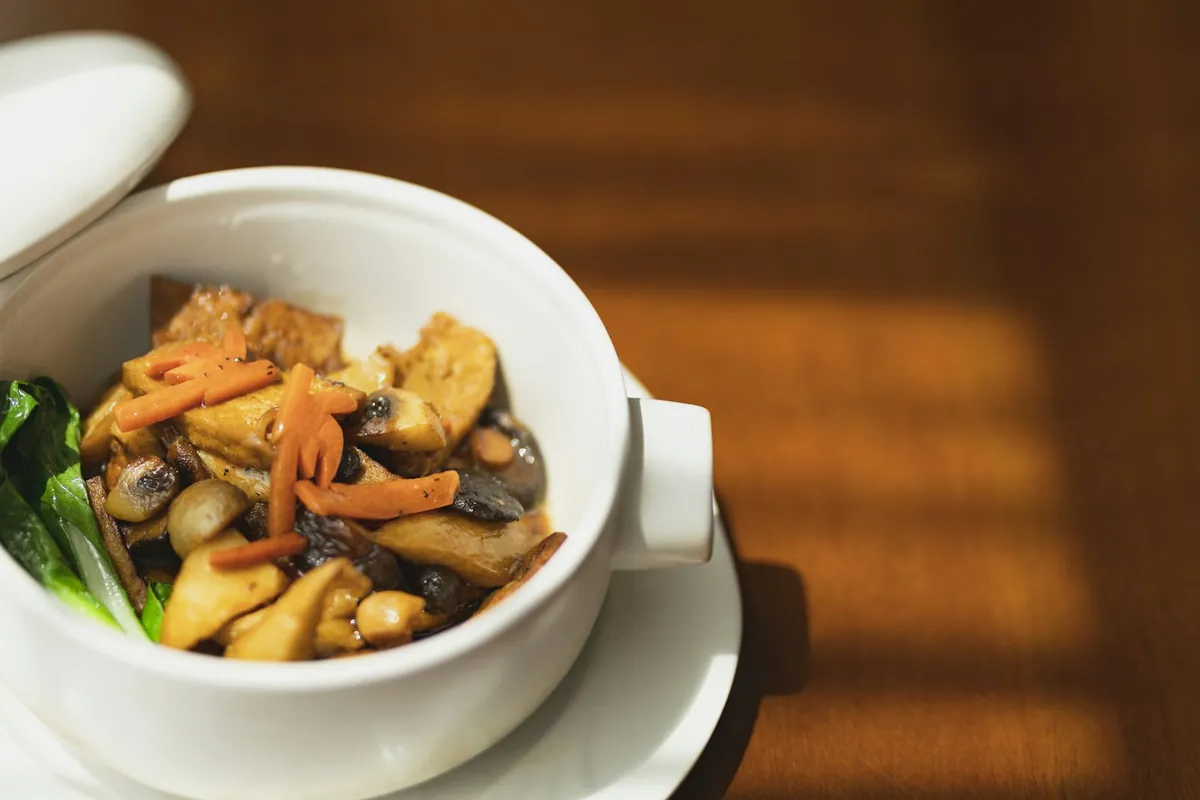
Mushroom dishes run through the beef, pork and chicken sections.
Sources
- Shiitake — on the mushroom, drying and its savory compounds.
- Wood ear fungus — on the fungus and its culinary use.