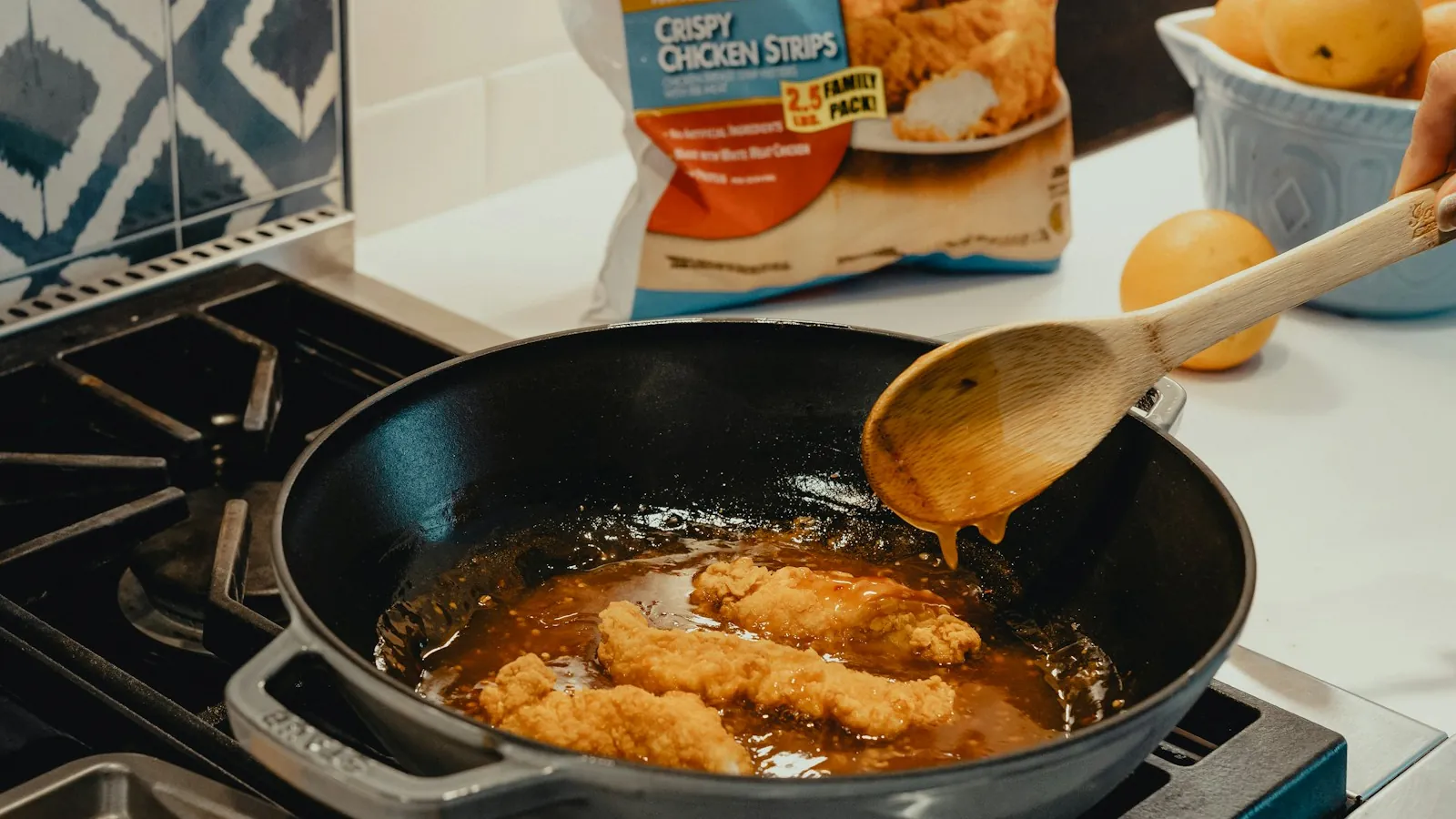
Moo goo gai pan is the most-ordered Chinese dish that almost nobody can define. The name gives away nothing in English, the menu usually translates it as “chicken with vegetables”, and that translation undersells it badly.
Moo goo gai pan is sliced chicken stir-fried with mushrooms and vegetables in a light white sauce. The name is Cantonese: moo goo means button mushrooms, gai is chicken, pan means sliced. It is the mildest dish in the chicken section — no chili, no sweetness, no heavy brown sauce.
What the name actually means
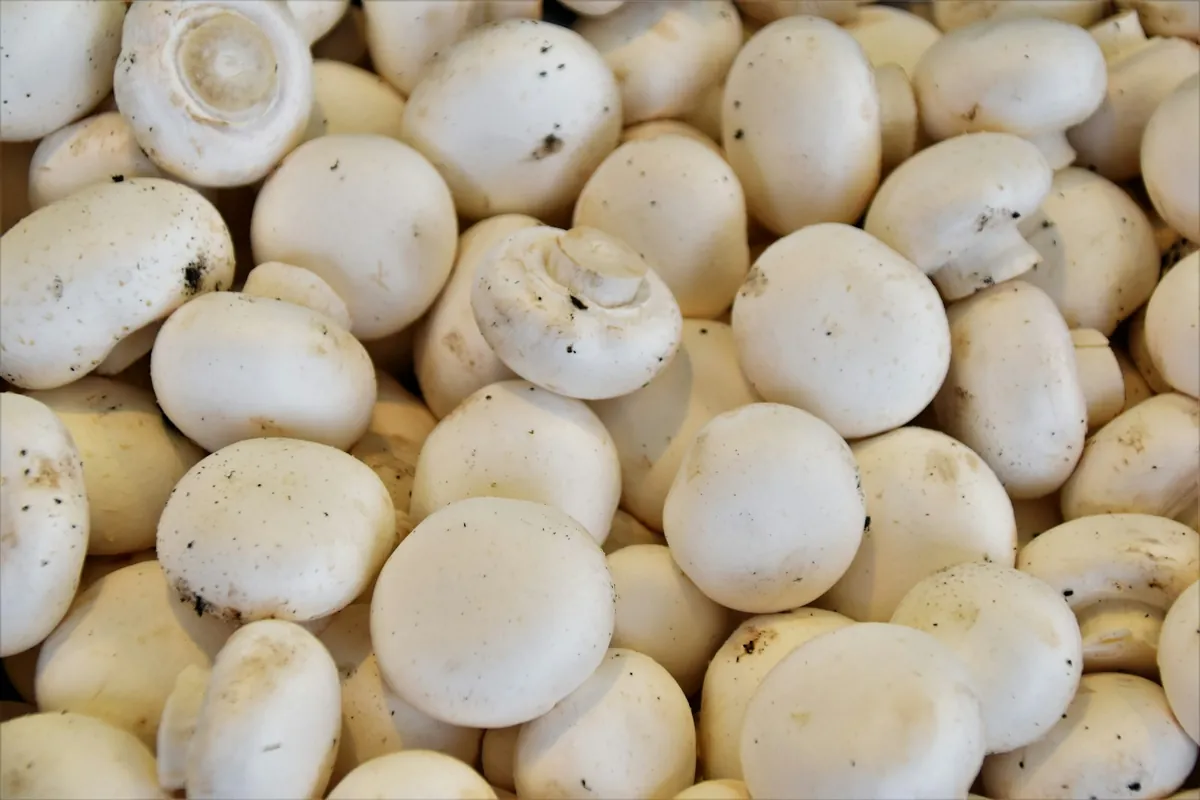
Every word in it is descriptive, which makes it one of the more honest names on the menu once you can read it. Moo goo is the mushroom — specifically the button mushroom. Gai is chicken. Pan means sliced, as opposed to diced or shredded.
So the name is “sliced chicken with mushrooms”, and that is exactly what arrives. Compare that with General Tso’s chicken, named after a nineteenth-century general who had nothing to do with it, and moo goo gai pan looks positively literal.
The mushrooms are the point of the dish, not a garnish. If a version arrives with two mushrooms in it, that version is wrong.
What is in it
Sliced chicken breast, button mushrooms, and a mix of vegetables that varies by kitchen but usually includes some combination of snow peas, water chestnuts, bamboo shoots, carrots and bok choy or celery.
The sauce is the part that distinguishes it. It is a light, clear or white sauce — thin, savory, barely coating, built to let the vegetables taste like vegetables. It is not the thick brown sauce that covers most of the chicken section, and it is not sweet at all.
That combination makes it the gentlest dish on the page. There is nothing in it that anyone finds challenging, which is why it has survived on American Chinese menus for the better part of a century.

How it compares to the rest of the chicken section
| Dish | Sauce | Sweetness | Heat | Fried? |
|---|---|---|---|---|
| Moo goo gai pan | Light white | None | None | No |
| Chicken with broccoli | Brown | Slight | None | No |
| Chicken with garlic sauce | Savory, assertive | None | Mild | No |
| Sesame chicken | Thick glaze | High | None | Yes |
| Kung Pao chicken | Savory with chili | Slight | Medium | No |
Read down that table and the case for moo goo gai pan becomes obvious: it is the only dish with nothing turned up. Our guide to Chinese chicken dishes covers the full section, and the garlic sauce dishes cover the assertive end of it.
Who should order it
It is the dish to order when the meal needs something calm in it.
If the rest of your table has chosen a fried dish and something spicy, moo goo gai pan is what stops the meal being relentless. It is also the reliable choice for anyone cautious about Chinese food, for older diners, and for children who will eat chicken but not sauce — our guide to Chinese food for children and picky eaters covers that ground.
Order it if
- The rest of the order is heavy or spicy
- You want to actually taste the vegetables
- You are ordering for a cautious eater
- You want chicken without a thick sauce
Order something else if
- You want the dish to be the main event
- You like a rich, heavily sauced plate
- You are after heat
- Everything else you ordered is also mild

What to serve it with
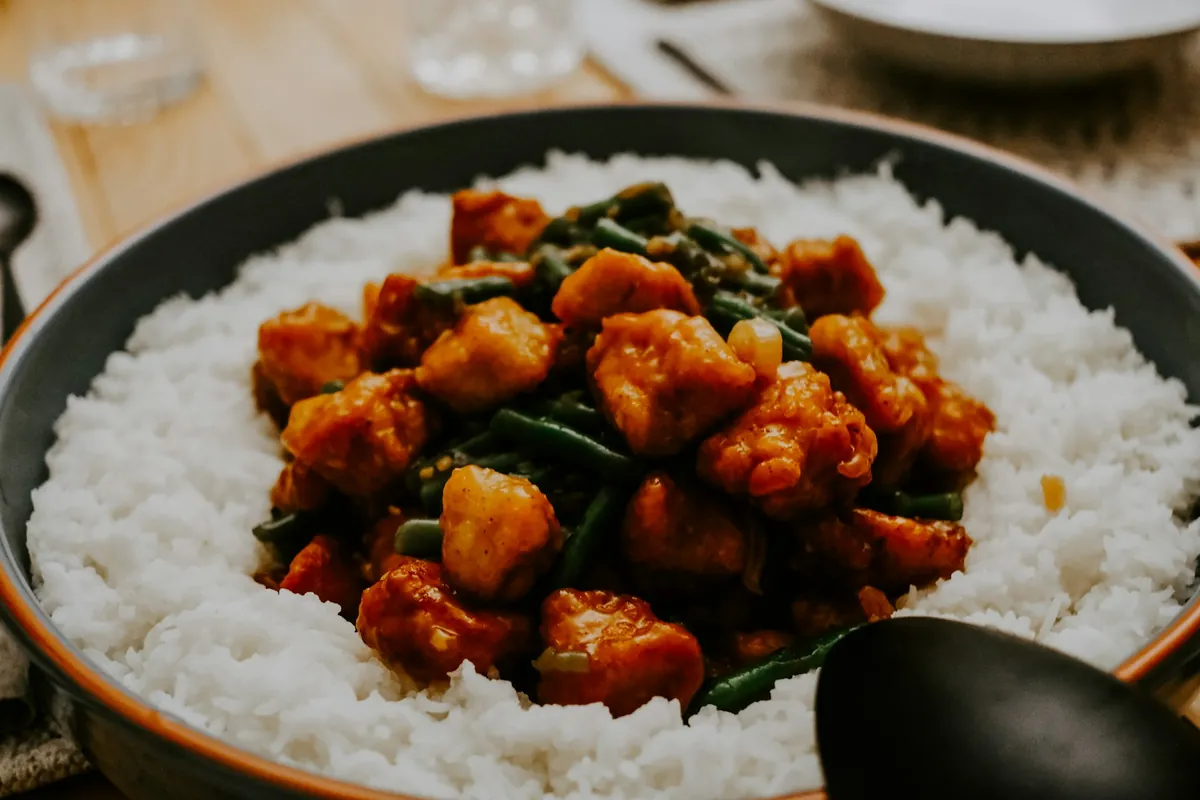
A light sauce wants a plain base. Steamed rice is the right call here: fried rice underneath moo goo gai pan gives you two savory things competing, and the thin sauce cannot assert itself over seasoned rice the way a brown sauce can.
It also earns its place next to almost anything. Because it adds no sweetness, no heat and no heavy sauce, it never fights another dish on the table — which is exactly why it works as the second or third dish in a shared order rather than the first thing you choose.
Why it can disappoint
Worth being straight about this, because it is the most common complaint. A dish built on subtlety fails badly when a kitchen rushes it.
Done well, the vegetables keep their bite, the sauce is light but savory, and the mushrooms are generous. Done badly, it is watery chicken and soft vegetables with nothing holding them together, and there is no strong sauce to hide behind. The dishes with assertive sauces are more forgiving.
It is also the dish that suffers most from sitting in a closed container, since the vegetables keep cooking. If you are taking it home, open the lid immediately — our guide to pickup or delivery explains why.
Frequently asked questions
What is moo goo gai pan?
Sliced chicken stir-fried with button mushrooms and mixed vegetables in a light white sauce. The name is Cantonese and literally descriptive: moo goo means button mushrooms, gai is chicken and pan means sliced.
Is moo goo gai pan spicy?
No. It contains no chili and is not sweet either. It is the mildest dish in the chicken section, built around a light savory sauce that lets the vegetables and mushrooms come through rather than covering them.
What vegetables are in moo goo gai pan?
Button mushrooms always, plus a mix that varies by kitchen — commonly snow peas, water chestnuts, bamboo shoots, carrots and celery or bok choy. If the exact mix matters to you, ask, because it is one of the more variable dishes on the menu.
What is the difference between moo goo gai pan and chicken with broccoli?
The sauce and the vegetables. Chicken with broccoli uses a savory brown sauce and one vegetable; moo goo gai pan uses a light white sauce and a mix of several, with mushrooms leading. Moo goo gai pan is the lighter and milder of the two.
Is moo goo gai pan the same as chicken chow mein?
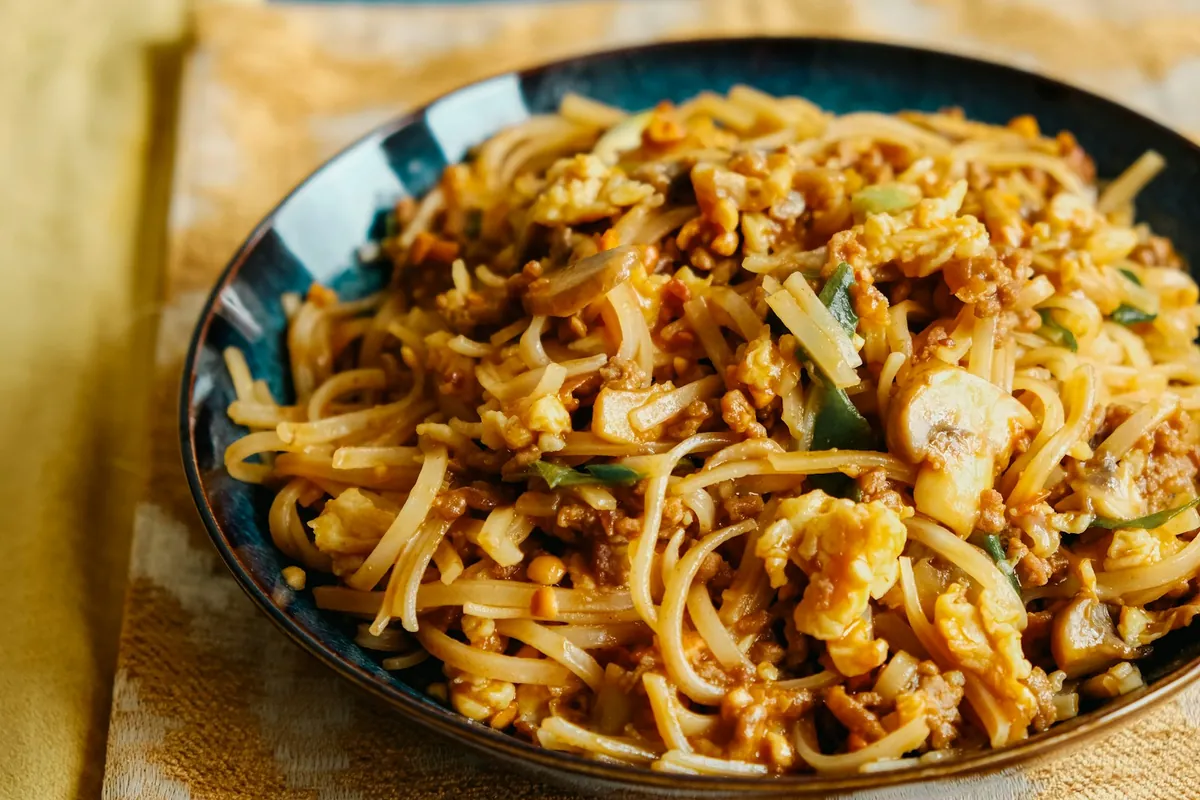
No. Chow mein is a noodle dish and moo goo gai pan has no noodles in it at all. The confusion comes from both being mild chicken-and-vegetable dishes, but one is served with noodles and the other over rice.
The short version
Sliced chicken, button mushrooms, mixed vegetables, light savory sauce. Nothing sweet, nothing spicy, nothing fried. The name is Cantonese for exactly what it is.
Order it when a meal needs a calm dish in it, and open the container the moment you get home.
Moo goo gai pan in Fayetteville
China King lists moo goo gai pan in the chicken section and as a combination plate.
Sources
- Moo goo gai pan — on the dish and the meaning of its Cantonese name.
- Britannica: mushroom — on button mushrooms and their use in cooking.