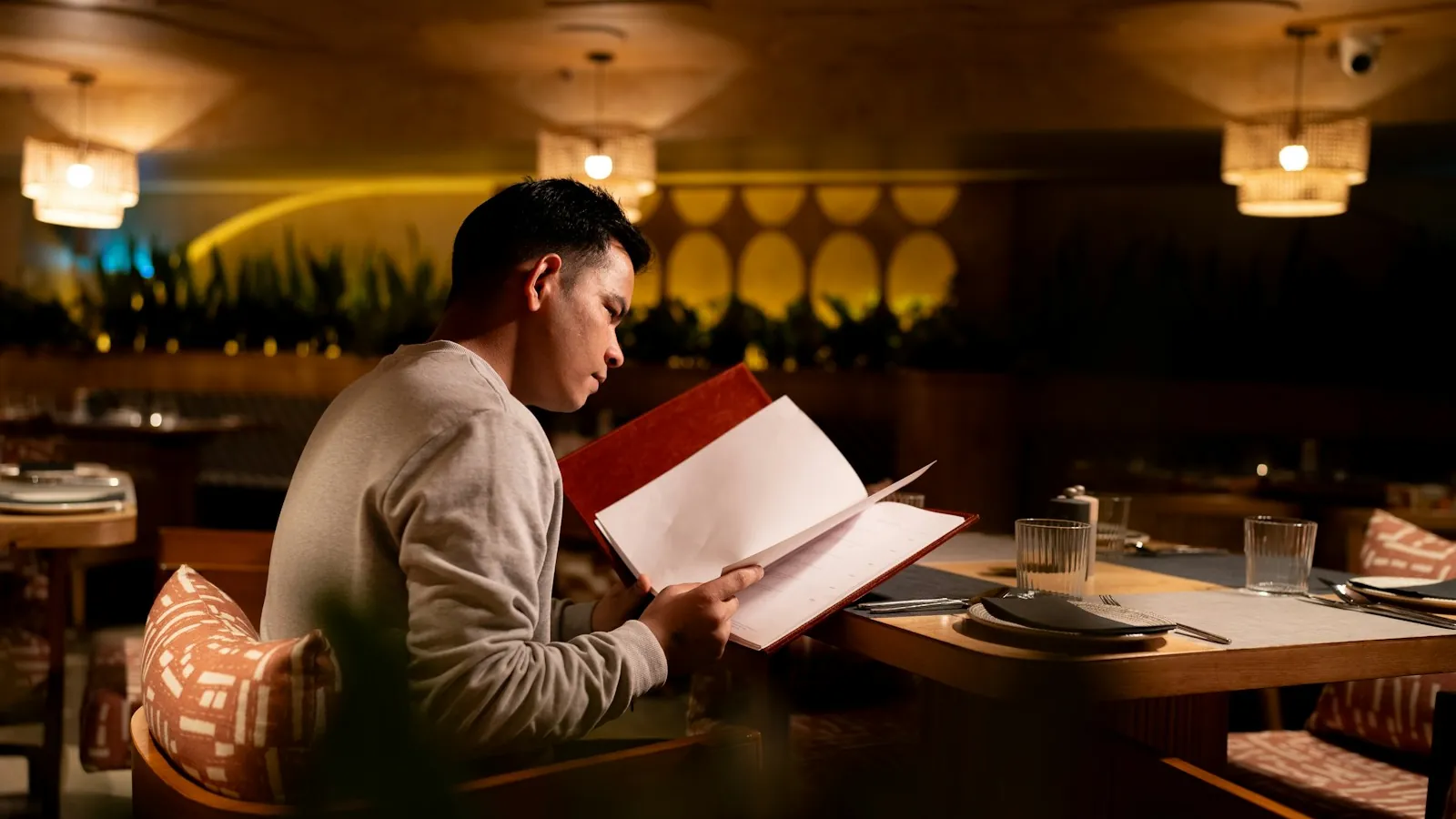
An American Chinese menu can run to two hundred items across twenty sections, most of them named in ways that give you no clue what arrives. It is genuinely intimidating the first time, and the usual result is that people order the three things they recognise and never move past them.
For two people: one appetizer to share, one familiar main, one dish you have not tried, and one rice or noodle. That gives you something safe, something new and enough food, without gambling the whole meal on unfamiliar names.

Read the menu by section, not top to bottom
The sections are the map, and they are more consistent between restaurants than the individual dishes are. Once you know what each section does, the length stops mattering.
- Appetizers — fried starters, dumplings, rolls.
- Soups — cheap, fast, and the best-value opening.
- Protein sections (chicken, beef, pork, seafood, vegetables) — sauced stir-fries, eaten with rice.
- Rice and noodle sections — fried rice, lo mein, chow mein, mei fun.
- Chef’s specials — the kitchen’s signature dishes, usually the crispy sweet chicken plates and the larger seafood or combination dishes.
- Combination plates — one entree plus rice, portioned for one person.
If you are eating alone or taking lunch to work, go straight to combination plates. If you are sharing, build from the protein sections and add one starch.
Start here if it is your first time
These are the dishes that are mild, widely available and unlikely to surprise anyone at the table.
| Dish | What it is | Why it works |
|---|---|---|
| Egg drop soup | Mild thickened broth with egg ribbons | The gentlest thing on the menu |
| Egg roll | Fried roll with cabbage and pork | Familiar, filling, travels well |
| Sesame chicken | Crisp chicken in a sweet, nutty glaze | Sweet and mild, no heat |
| Beef with broccoli | Sliced beef and broccoli in brown sauce | Savory and straightforward |
| Lo mein | Soft noodles tossed with sauce | Comforting; the safest noodle |
| Fried rice | Stir-fried rice with egg and a protein | Works alongside anything |
Then push slightly further
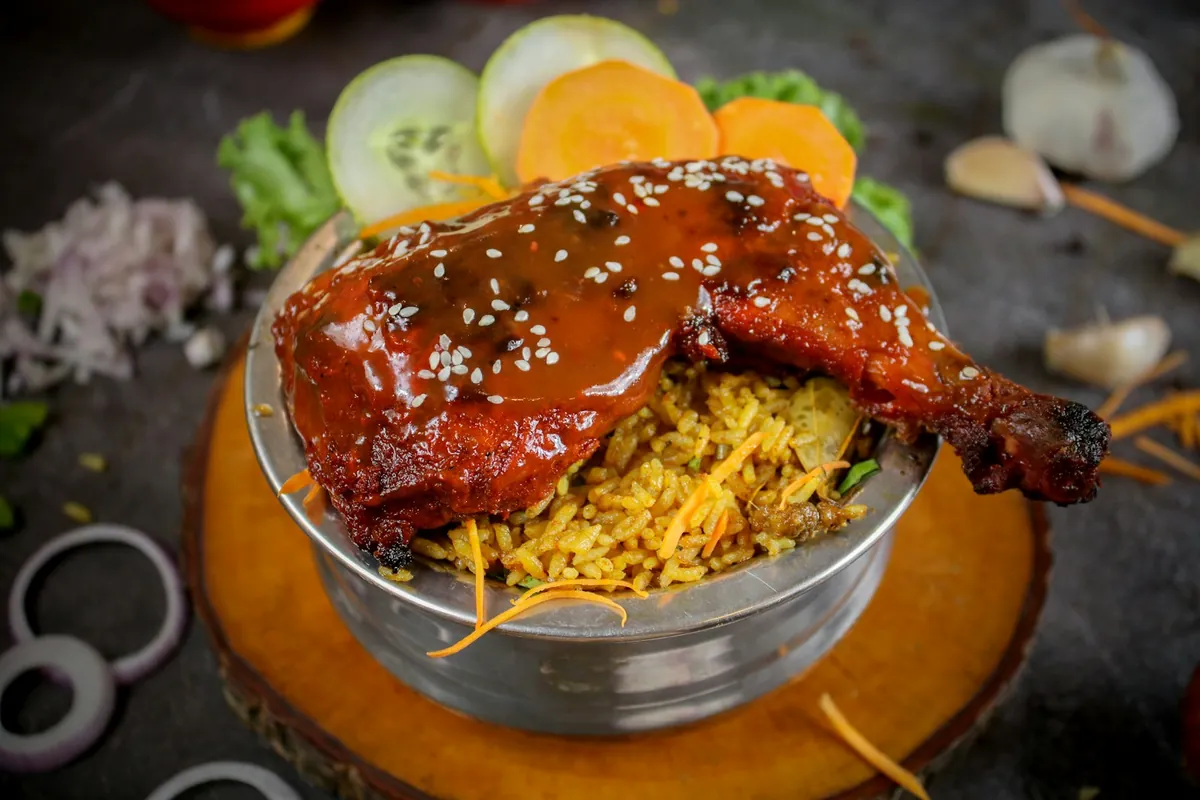
Once the familiar dishes are no longer interesting, these are the natural next steps — still approachable, but genuinely different from what you have been ordering.
- Moo shu — a shredded stir-fry you roll into thin pancakes yourself. More interactive than anything else on the menu.
- Chow mei fun — thin rice noodles, much lighter than lo mein, and the Singapore version brings curry seasoning.
- Hot and sour soup — tangy and peppery rather than genuinely hot.
- Egg foo young — thick egg patties with a savory brown gravy.
- A garlic sauce dish — savory and aromatic rather than sweet, which is where most American Chinese menus default.
How to build a balanced order
The single most useful habit is to vary three things across your dishes: the cooking method, the protein, and the flavor. Four dishes in brown sauce taste like one dish no matter how good each is.
A well-balanced table has
- Something fried or crisp
- Something in a sauce
- Something light or vegetable-forward
- One starch, not three
Signs you have over-ordered
- More than one sweet dish
- Both fried rice and lo mein for two people
- Soup and a full round of appetizers
- Three dishes with the same protein
For the quantities themselves, our guide to how much Chinese food to order per person gives a rule that scales from two people to twelve.
If you are avoiding meat
Most Chinese menus have a vegetable section and several dishes that contain no visible meat, but that is not the same as being vegetarian. Broths are commonly made with chicken or pork stock, sauces may contain oyster or fish-derived ingredients, and woks are shared throughout a service.
If you are avoiding meat by preference, the vegetable section, bean curd dishes and plain rice or noodles give you plenty to work with. If you are avoiding it strictly, or for religious reasons, ask specifically how the sauce and any broth are made rather than choosing by the dish name.
Questions worth asking when you order
Restaurant staff answer these all day and would far rather you asked than guessed.
- How spicy is it? Heat varies enormously between kitchens, even for the same dish.
- Does it come with rice? Entrees often do not; combination plates usually do.
- Can I get the sauce on the side? Worth doing for anything crisp if you are traveling home.
- What is in the house special version? It usually means several proteins, but the mix varies.
- Allergies. State them directly rather than choosing by dish name. Shared woks and fryers are normal, so a dish that sounds safe may not be — the FDA’s guidance on food allergies explains why prepared foods need checking.
Ordering for children or cautious eaters
Stick to mild, dry and recognisable. Chicken fried rice, plain lo mein, sesame chicken and egg drop soup cover almost every cautious eater. Combination plates work well here too, because the portion is already sized and everything arrives on one plate rather than needing assembly.
Avoid anything described as spicy, anything with a strong vinegar note, and dishes that arrive as components to put together.

Frequently asked questions
What should I order at a Chinese restaurant for the first time?
One appetizer to share, one familiar main such as sesame chicken or beef with broccoli, one dish you have not tried, and a rice or noodle dish. That structure gives you variety without risking the whole meal on unfamiliar names.
What is the most popular Chinese takeout dish?
Across American Chinese restaurants generally, the crispy sweet chicken dishes, lo mein and fried rice are the most commonly ordered. That is a reflection of what is familiar rather than a ranking of what is best on any particular menu.
What is a combination plate?
An entree served with rice, and sometimes an appetizer, portioned for one person. It is the simplest way to order for yourself, and the easiest option for lunch or for children.
How do I order Chinese food that is not too greasy?
Choose steamed or lightly sauced dishes over battered and deep-fried ones, pick a vegetable-forward option such as chop suey, and order plain rice rather than fried rice. Kitchens can often adjust preparation if you ask.
Should I order dishes to share or individually?
Sharing gives you more variety for the same money and is how these menus are designed to be eaten. Order individually when people are eating at different times or have strong preferences, and use combination plates for that.
The short version
Learn the sections rather than the dishes. Start with something familiar, add one thing you have not tried, vary the cooking methods, and order one starch rather than three. Ask about spice level and say so about allergies.
Do that a few times and the two-hundred-item menu stops being intimidating and starts being useful.
Ready to order?
China King’s full menu runs to twenty-two sections, with combination plates and family packs for Fayetteville.
Sources
- American Chinese cuisine — on how these menus and their sections developed.
- U.S. Food and Drug Administration: food allergies — cited above on allergen checks.