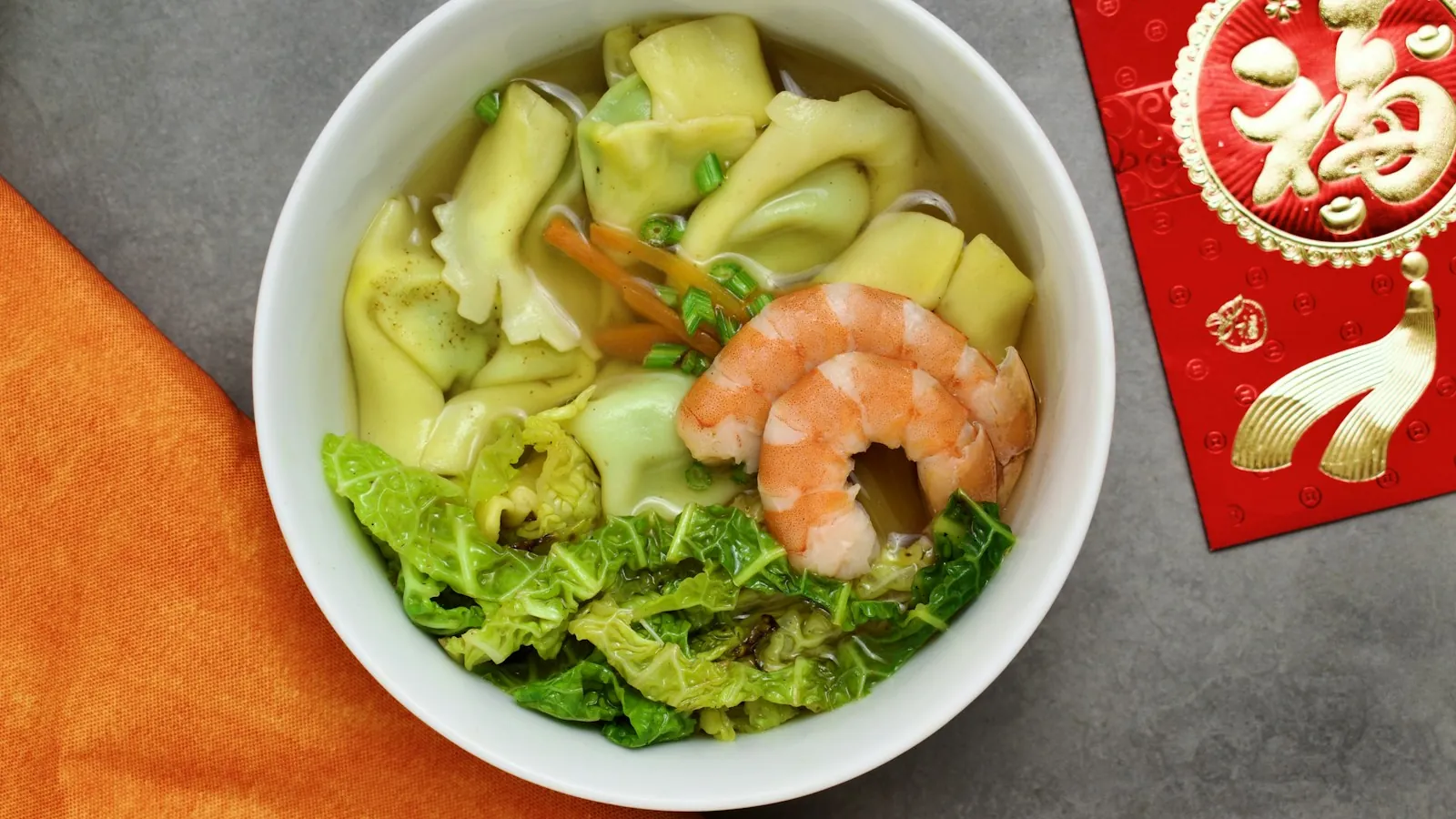
The soup section is usually the first thing on a Chinese menu and the part most people skip. That is a shame, because the soups are cheap, they are the fastest thing out of the kitchen, and they change the shape of a meal more than an extra entree does.
Wonton soup is clear broth with filled dumplings. Egg drop soup is thickened broth with ribbons of beaten egg. Hot and sour soup is darker, tangy with vinegar and warm with white pepper. Vegetable soup is the lightest of the four. Almost every other soup on a menu is a variation on these.
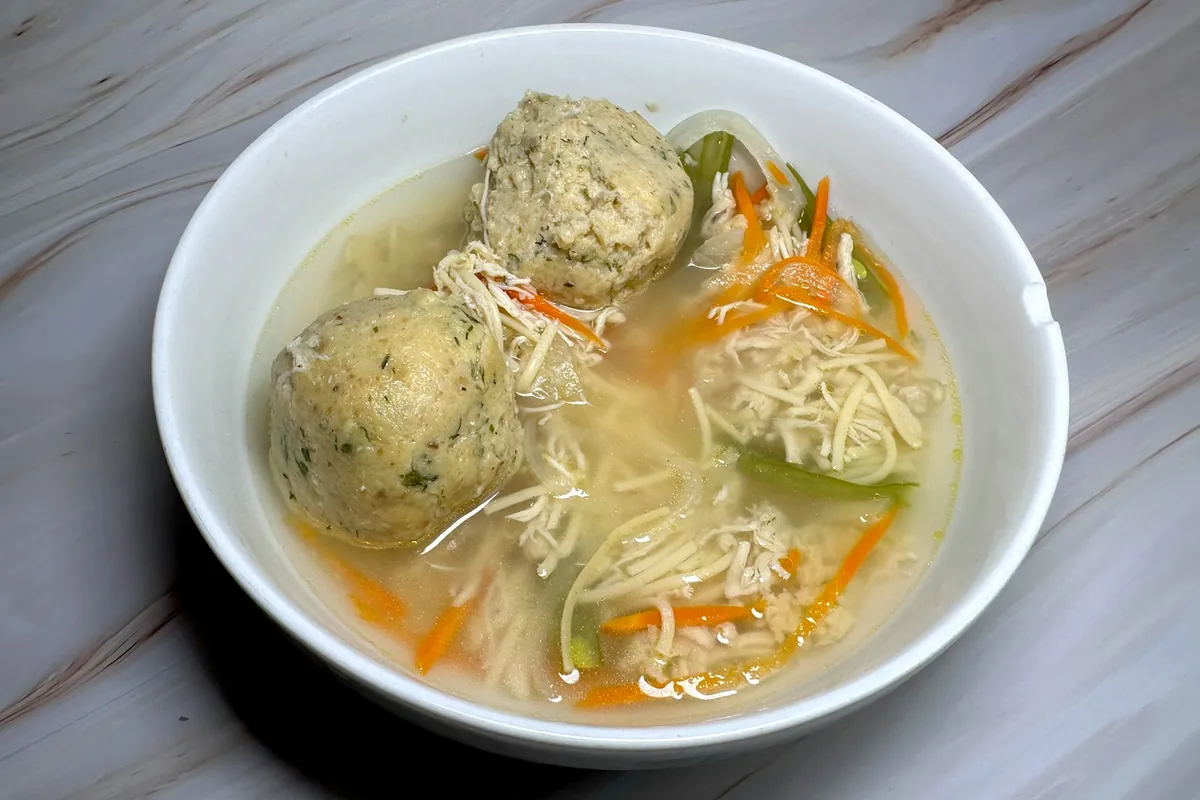
Wonton soup
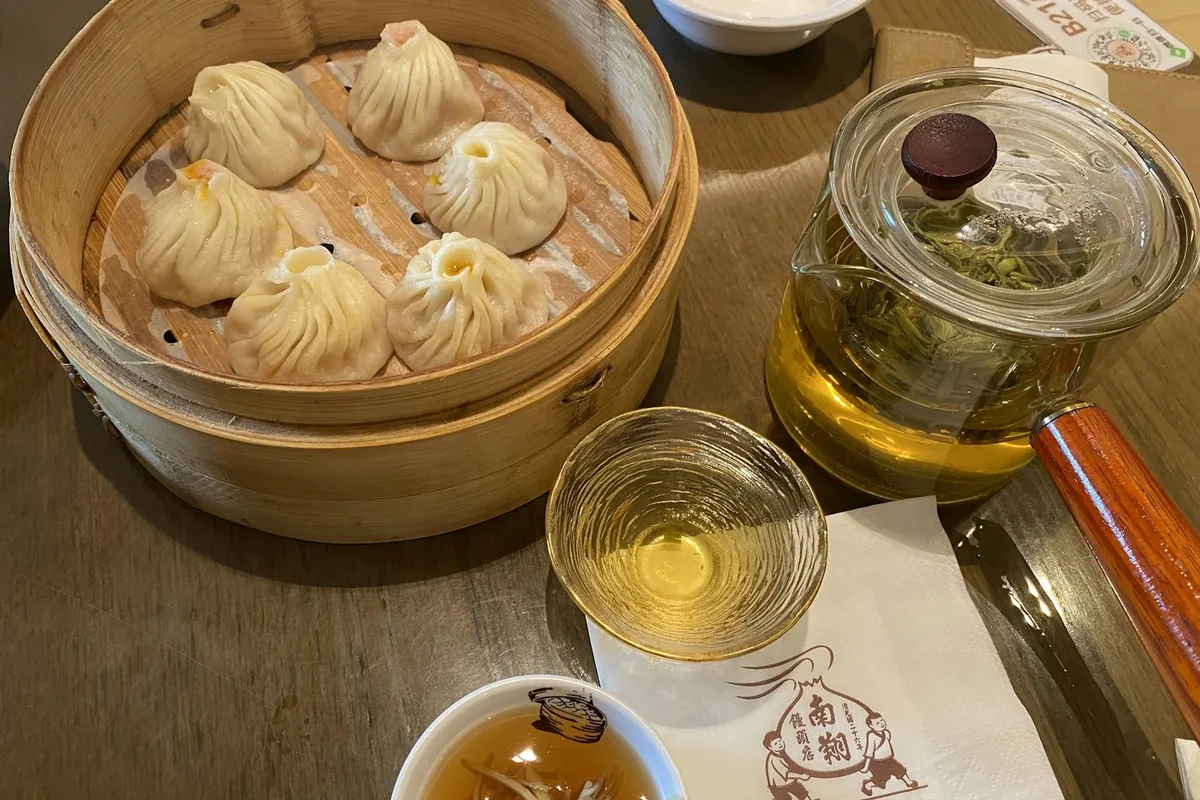
The most ordered soup on most menus, and the most substantial. Wontons are small parcels of seasoned filling — usually pork, sometimes shrimp — wrapped in a thin, delicate square wrapper and gathered at the top rather than pleated.
The broth is deliberately clear and light so it does not compete with the filling. A good wonton soup tastes clean rather than rich, and the wrapper should be soft and almost silky, not thick or doughy.
Order it if you want the soup to carry some weight in the meal. Between the wrappers and the filling, a large wonton soup is close to a light course on its own.
Egg drop soup
The simplest of the four and the mildest. Beaten egg is poured slowly into hot, gently thickened broth so it sets into fine ribbons rather than lumps. The result is silky, faintly yellow, and very mild.
It is the safest soup for a cautious eater and for children, and it is the one that works best alongside strongly flavored mains, because it adds warmth without adding another competing taste.
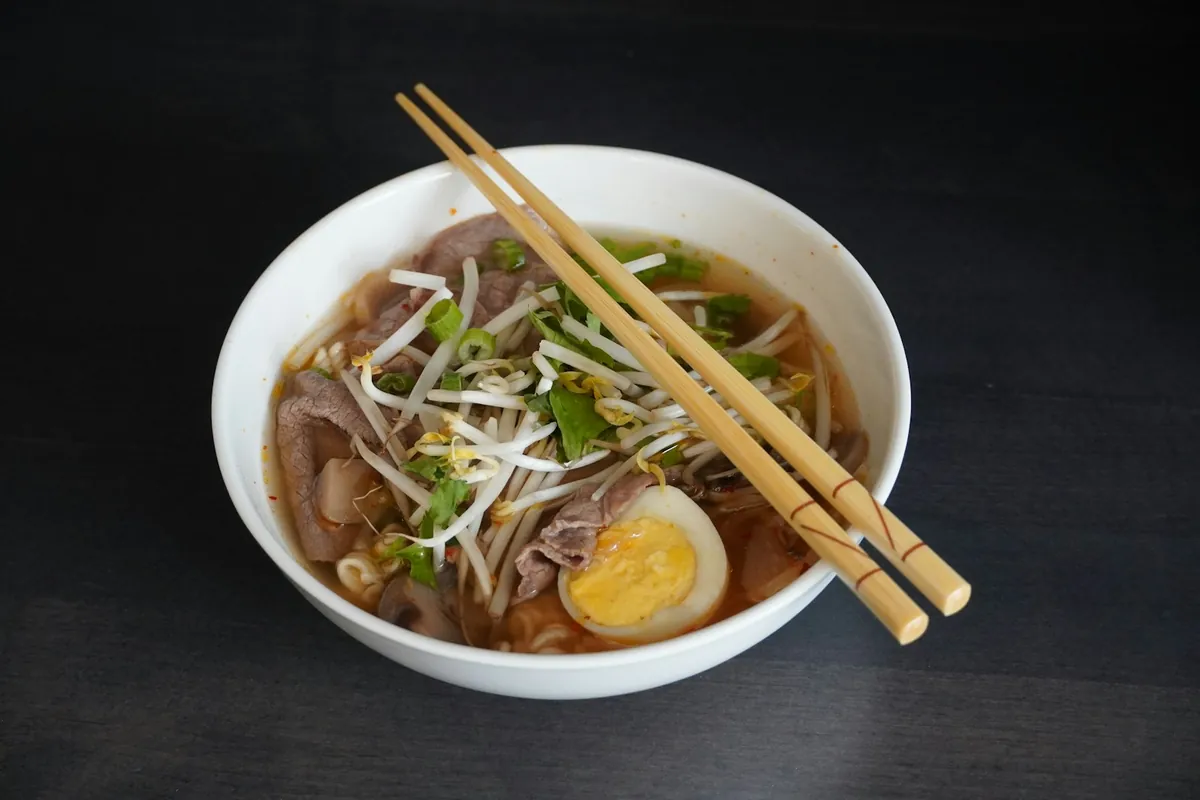
Hot and sour soup
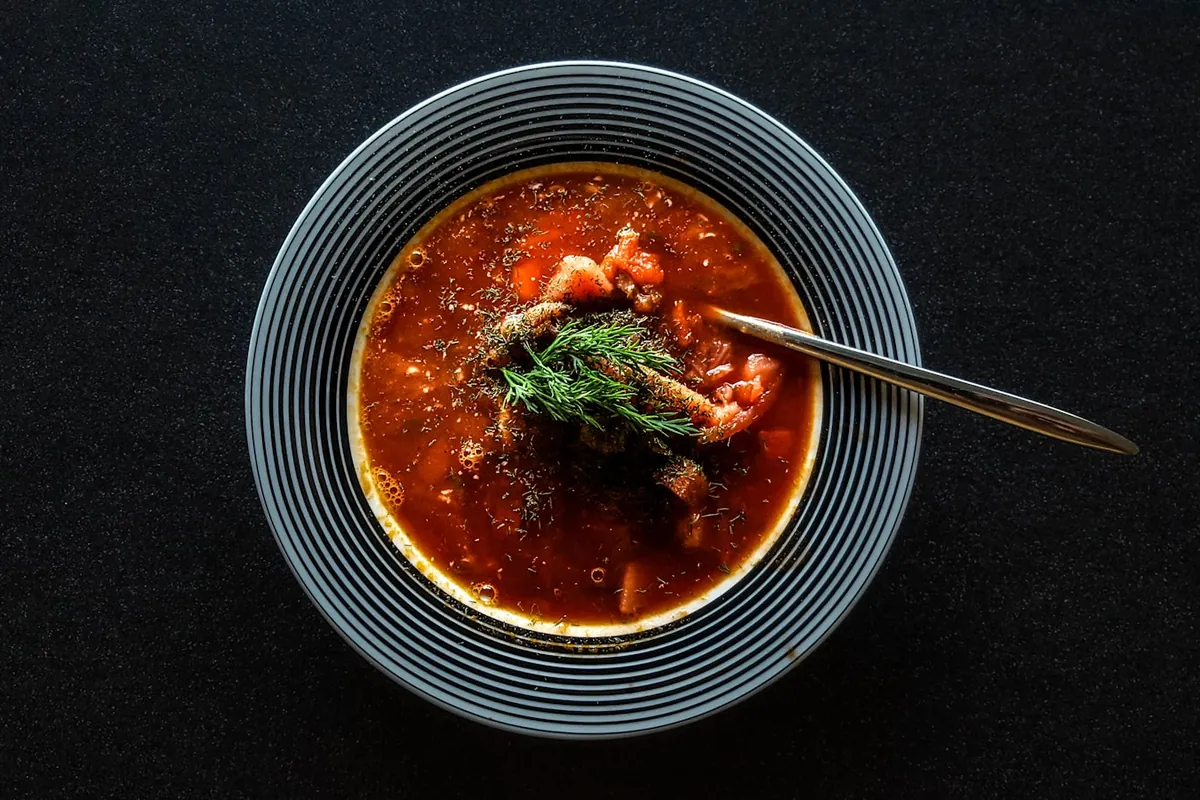
The one with real character. Hot and sour soup is darker and thicker than the other two, sharpened with vinegar and warmed with white pepper — and it is worth knowing that the heat comes mostly from pepper rather than chili, so it reads as a warming sharpness rather than a burn.
The texture is part of the point: typically it carries shredded ingredients such as bamboo shoots, mushrooms and bean curd, so every spoonful has something in it.
If you have never had it, order a small one alongside something familiar. It is the most distinctive soup on the menu and the one people either adopt permanently or decide is not for them.
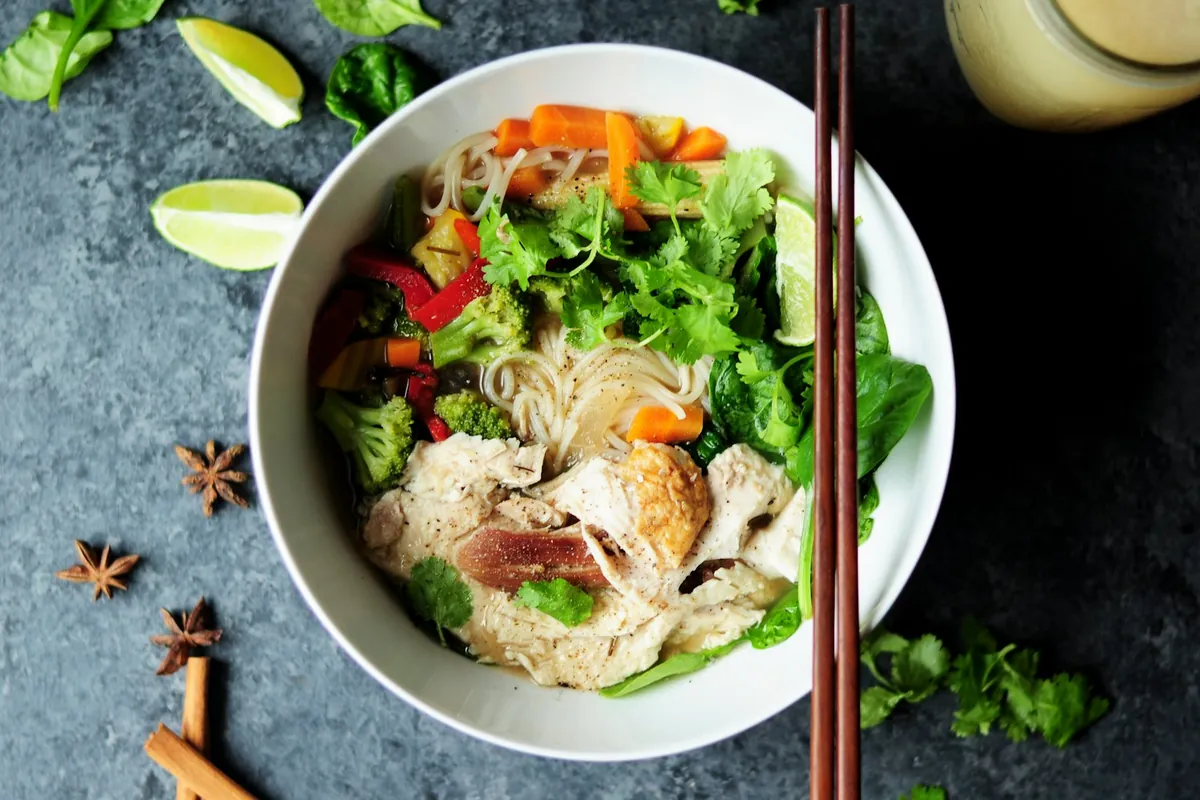
Side by side
| Soup | Broth | Flavor | Contains | Best for |
|---|---|---|---|---|
| Wonton | Clear and light | Mild, savory | Filled dumplings | A soup with substance |
| Egg drop | Lightly thickened | Very mild | Egg ribbons | Cautious eaters, children |
| Hot and sour | Darker, thicker | Tangy, peppery | Shredded vegetables, bean curd | Diners who want character |
| Vegetable | Clear | Clean, light | Mixed vegetables | The lightest start |
Wonton or egg drop? The usual dilemma
This is the choice most people are actually making, so here it is directly.
Wonton soup if
- You want something to chew, not just sip
- The soup is doing real work in the meal
- You like a clean, clear broth
- You are ordering fewer mains
Egg drop soup if
- You want a light, warming start
- Your mains are strongly flavored
- You are feeding someone cautious about new food
- You want the cheaper, simpler option
And if you genuinely cannot choose, many menus list a combined wonton egg drop soup, which is exactly what it sounds like.
How soup fits into an order
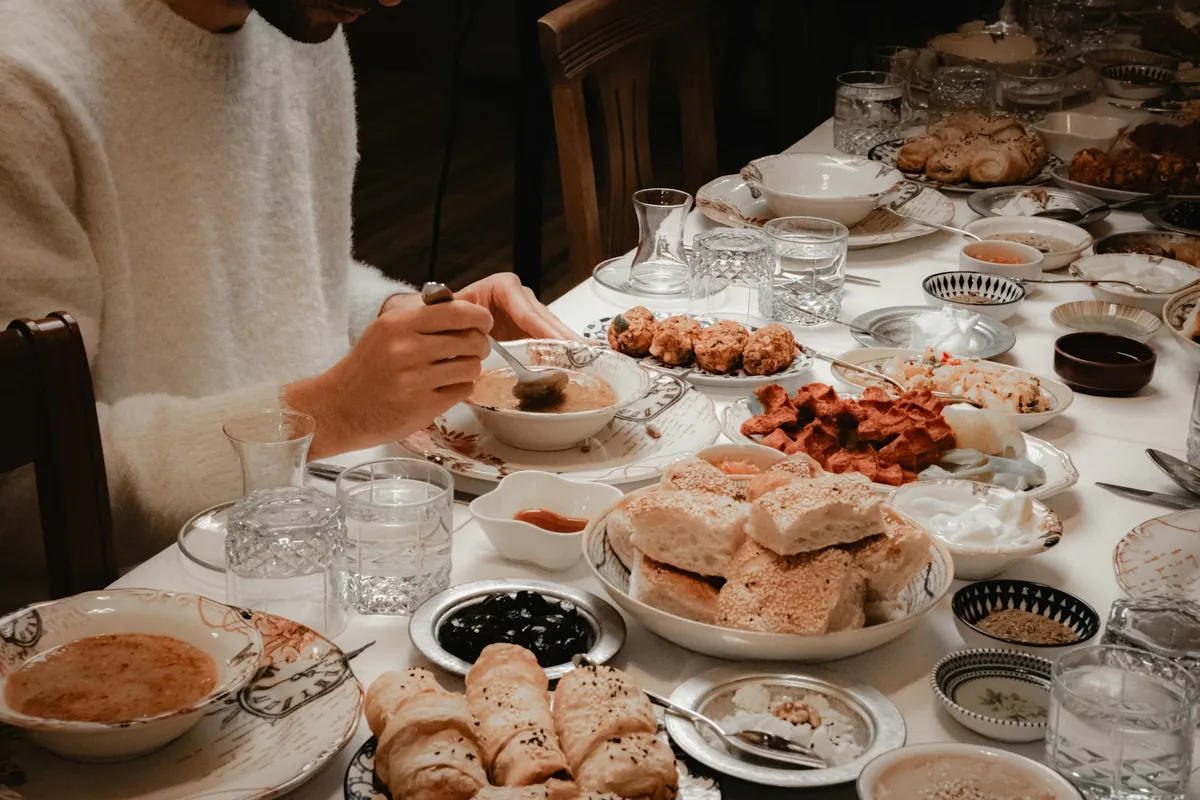
Soup is the most efficient thing on a Chinese menu. It is inexpensive, it arrives first, and it takes the edge off appetites so people order and eat more sensibly. If you are feeding a group, one large soup shared between three or four people is a better opening than a second round of fried appetizers.
Two practical notes for takeout. Soup travels least well of anything you can order, because dumplings and egg ribbons keep cooking in hot broth — so eat it first when you get home. And if you are ordering soup for a group, get one or two large portions rather than several small ones.
For the wider question of how much to order overall, our guide on how much Chinese food to order per person gives a rule that scales.
A note on ingredients and diets
Soup is the place where assumptions cause the most trouble. Broths are commonly made with chicken or pork stock even when the soup is named for a vegetable, and wonton fillings usually contain pork, shrimp or both. A soup being described as vegetable does not make it vegetarian, and none of these soups should be assumed free of shellfish, egg, wheat or soy.
If you are managing an allergy, ask the restaurant directly rather than judging from the name — the FDA’s guidance on food allergies explains why prepared foods need to be checked rather than assumed.
Frequently asked questions
What is the difference between egg drop soup and wonton soup?
Egg drop soup is a lightly thickened broth with ribbons of beaten egg stirred through it, and it is very mild. Wonton soup is a clear broth containing filled dumplings, so it is more substantial and has something to chew.
Is hot and sour soup very spicy?
It is more tangy than hot. The warmth typically comes from white pepper rather than chili, so it reads as a sharp, peppery heat rather than a burning one. Most people find it manageable even if they avoid spicy food generally.
Is wonton soup vegetarian?
Usually not. Wonton fillings commonly contain pork or shrimp, and the broth is typically meat-based. Do not assume any soup is vegetarian from its name — ask how the broth and filling are made.
Should I order small or large soup?
A small is a single serving. A large is designed to be shared and works well for three or four people as an opening course, which is usually better value than several smalls.
Does Chinese soup travel well for takeout?
Less well than anything else on the menu. Wontons soften and egg ribbons keep setting in hot broth, so soup is the item to eat first when you get home rather than last.
The short version
Wonton for substance, egg drop for mildness, hot and sour for character, vegetable for lightness. Order one large to share rather than several smalls, eat it first, and ask about the broth if it matters.
Start with soup
China King lists eleven soups in small and large sizes on Walter Reed Road in Fayetteville.
Sources
- Hot and sour soup — on the vinegar and white pepper that define it.
- U.S. Food and Drug Administration: food allergies — cited above on checking prepared foods.