Two of the most ordered items on a Chinese takeout menu have crab in the name and, in most kitchens, no crab in the food. That is not a scandal — it is how the dishes are designed — but it is worth understanding before you order, especially if anyone at your table has an allergy.
Crab rangoon is a fried wonton parcel filled with cream cheese and, usually, imitation crab. Fried crab sticks are battered and fried sticks of the same imitation crab, served plain. Imitation crab is normally made from fish, most often pollock — so these dishes typically contain fish rather than shellfish. Preparations vary, so ask if it matters.
What crab rangoon actually is
A wonton wrapper, a spoonful of filling, folded into a parcel and deep fried until the edges blister. The filling is mostly cream cheese, softened with a little seasoning, usually with shredded imitation crab mixed through it.
The proportions tell you what the dish is really about. Cream cheese dominates, and the crab is there for savory depth rather than as the main ingredient. If you have ever thought a crab rangoon tasted mostly of cream cheese, you were tasting it correctly.
The dish is American rather than Chinese in origin. It appeared on American restaurant menus in the mid-twentieth century and spread through Chinese-American takeout menus from there, which is why you will not find it in China.
What imitation crab is made of
Imitation crab is surimi: fish that has been deboned, washed, minced into a paste, then bound, flavored and formed into sticks or flakes. The fish used is most commonly Alaska pollock, a mild white fish. Color is added to the outside to suggest crab leg, and the shape is extruded rather than cut.
This matters for one practical reason. A dish named for crab that is made from fish sits in a different allergy category than the name suggests. Fish and crustacean shellfish are two separate major food allergens under United States labeling law, and someone avoiding shellfish is not necessarily safe with surimi, while someone avoiding fish very much is not.
Some products do contain crab extract for flavor, and some restaurants use real crab meat. There is no way to know from the menu. If an allergy is involved, ask the restaurant directly about the specific dish rather than reasoning from the name in either direction.
Fried crab sticks
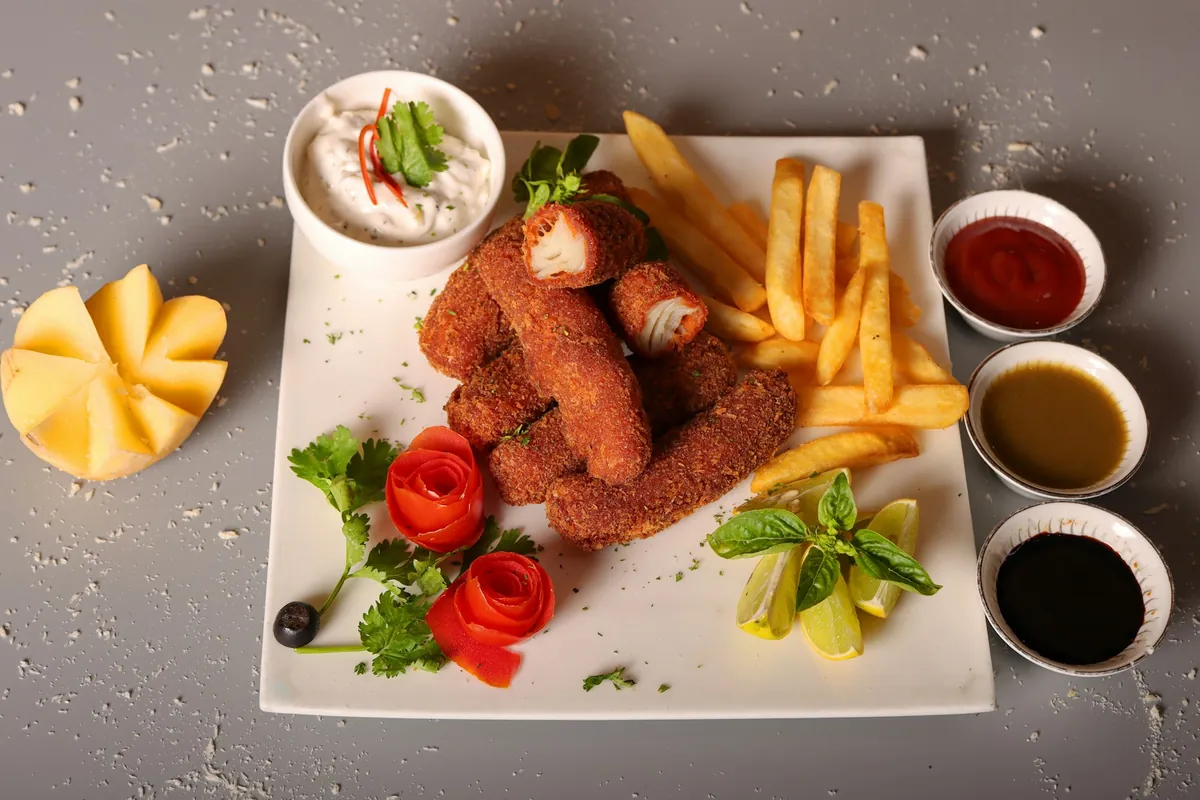
The simpler of the two. Sticks of imitation crab, battered and deep fried, served without a filling and usually without sauce. They come from the fried-foods section rather than the appetizer list, alongside the wings and fried shrimp.
They eat like a savory, slightly sweet fish stick with a firmer bite. Children tend to like them for the same reasons they like chicken fingers: mild, handheld, and not challenging. They are also among the cheapest hot items on most menus.
| Dish | Contains | Flavor | Section | Best for |
|---|---|---|---|---|
| Crab rangoon | Cream cheese, usually imitation crab, wonton wrapper | Rich, mildly sweet | Appetizers | Sharing; the crowd favorite |
| Fried crab stick | Imitation crab, batter | Mild, savory, slightly sweet | Fried foods | Children; a cheap hot snack |
Why crab rangoon is so consistently popular
It hits several things at once that few other menu items do. It is hot, crisp, rich and mild, it needs no cutlery, and it is portioned in a way that makes sharing easy. There is nothing on it to dislike unless you dislike cream cheese.
It is also one of the few appetizers that works for people who are cautious about Chinese food. Nothing about the flavor is unfamiliar, which is why it so often gets ordered for a table that includes children or hesitant eaters. Our guide to Chinese food for children and picky eaters covers the rest of that ground.
The trade-off is richness. Cream cheese fried in a wrapper is heavy, and six of them will take the edge off anyone’s appetite before the main dishes arrive.

What to order them with
Crab rangoon works with
- A sharp or tangy main, such as sweet and sour
- A clear soup, which cuts the richness
- A vegetable dish for contrast
- Duck sauce, if the kitchen provides it
Order fewer if
- You have already chosen another fried appetizer
- The main dishes are heavy or sauced
- You are ordering for two rather than a group
- Someone is avoiding dairy
For how these fit into a full order, see our guide to Chinese appetizers and how much to order per person.
Takeout notes
Crab rangoon is one of the worst travelers on the menu, for a specific reason: the filling holds heat and releases steam into the wrapper from the inside. In a closed container it goes soft faster than almost anything else fried.
Order them if you are eating soon. Vent the container immediately. If you are collecting food for later, they are the item to skip rather than the item to reheat — reheating turns the filling greasy without restoring the crispness.
Fried crab sticks survive the trip a little better, because there is no wet filling behind the batter, though they still soften.

Frequently asked questions
Is there real crab in crab rangoon?
Usually not. Most versions use imitation crab, which is made from fish rather than shellfish, and the filling is mostly cream cheese in any case. Some restaurants do use real crab meat, so ask if you need to know for certain.
What is imitation crab made of?
Surimi — fish that has been deboned, washed, minced into a paste and then bound, flavored and formed. Alaska pollock is the most common fish used. Color is added to the outside to resemble crab leg meat.
Is crab rangoon safe if I have a shellfish allergy?
Do not assume either way. Imitation crab is normally made from fish rather than shellfish, but some products contain crab extract, some kitchens use real crab, and shared fryers are common. Ask the restaurant about the specific dish before ordering.
Is crab rangoon Chinese?
Not originally. It is an American creation that spread through Chinese-American takeout menus in the twentieth century. You will not find it on menus in China, though it has become one of the most recognizable items on American Chinese menus.
How many crab rangoon should I order?
Roughly two per person as a starter. They are richer than they look, and six of them will blunt the appetite of a table of three before the main dishes arrive. Order the larger count only if they are the main thing you want.
The short version
Crab rangoon is a fried cream cheese parcel with a little imitation crab in it. Fried crab sticks are the same imitation crab, battered and fried plain. Both are mild, both are popular for good reason, and neither usually contains crab.
Eat them first, while they are hot, and vent the container the moment you leave the counter.
Crab rangoon in Fayetteville
China King lists crab meat rangoon by the six or twelve, and fried crab sticks by the order.
Sources
- FDA: Food allergies — on fish and crustacean shellfish as separate major allergens.
- Surimi — on how imitation crab is made and what it is made from.