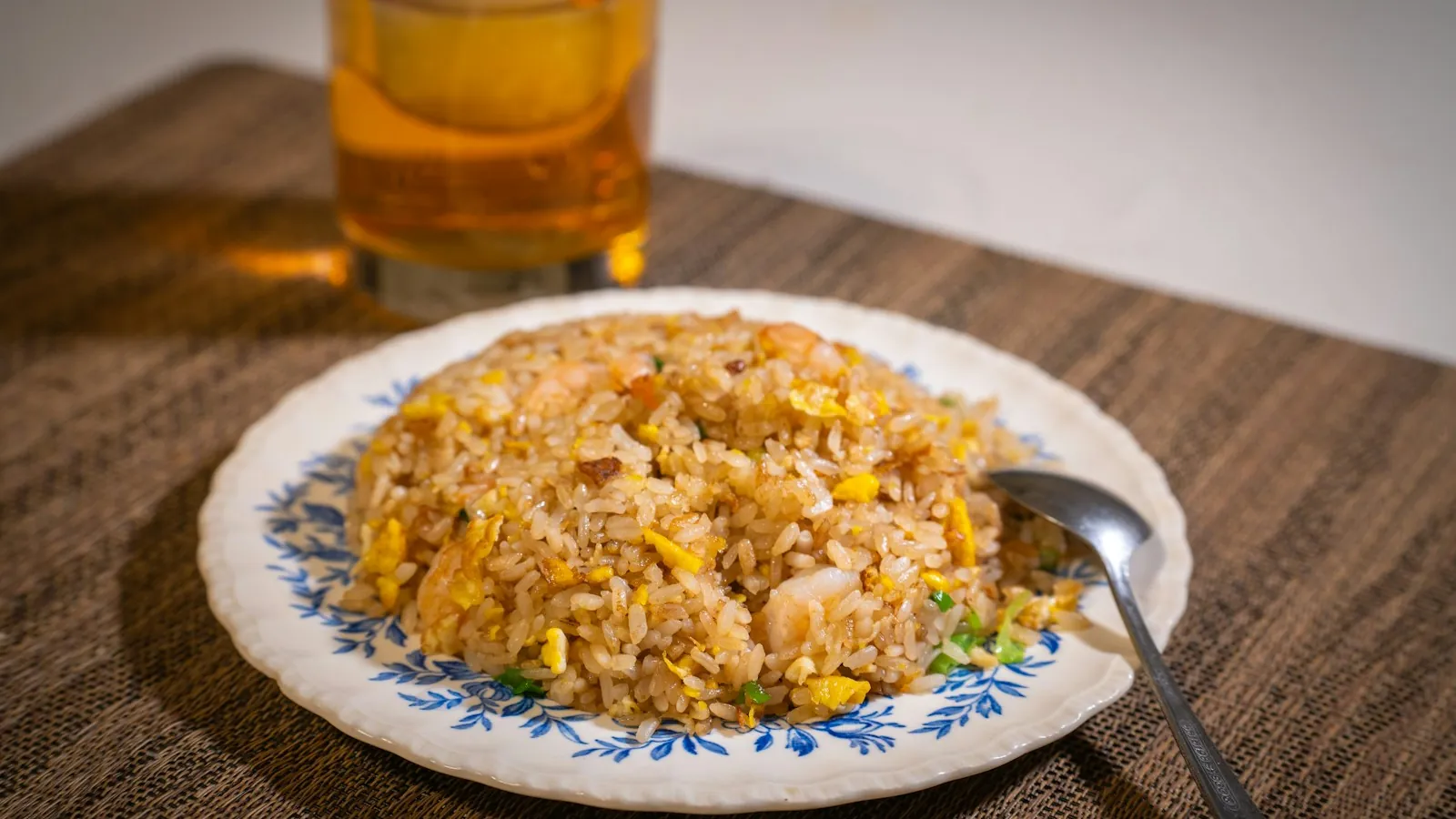
Fried rice is the most ordered side dish in Chinese restaurants and the one people are least likely to think about. It is worth thinking about, because the difference between a good fried rice and a disappointing one comes down to a few things you can actually spot.
Chinese fried rice is cooked rice stir-fried over high heat with egg, a protein and small diced vegetables, seasoned with soy sauce. The rice is cooked and cooled first, then fried, which is what keeps the grains separate instead of sticky. It is a complete dish in its own right, not just a side.
Why the rice is cooked first
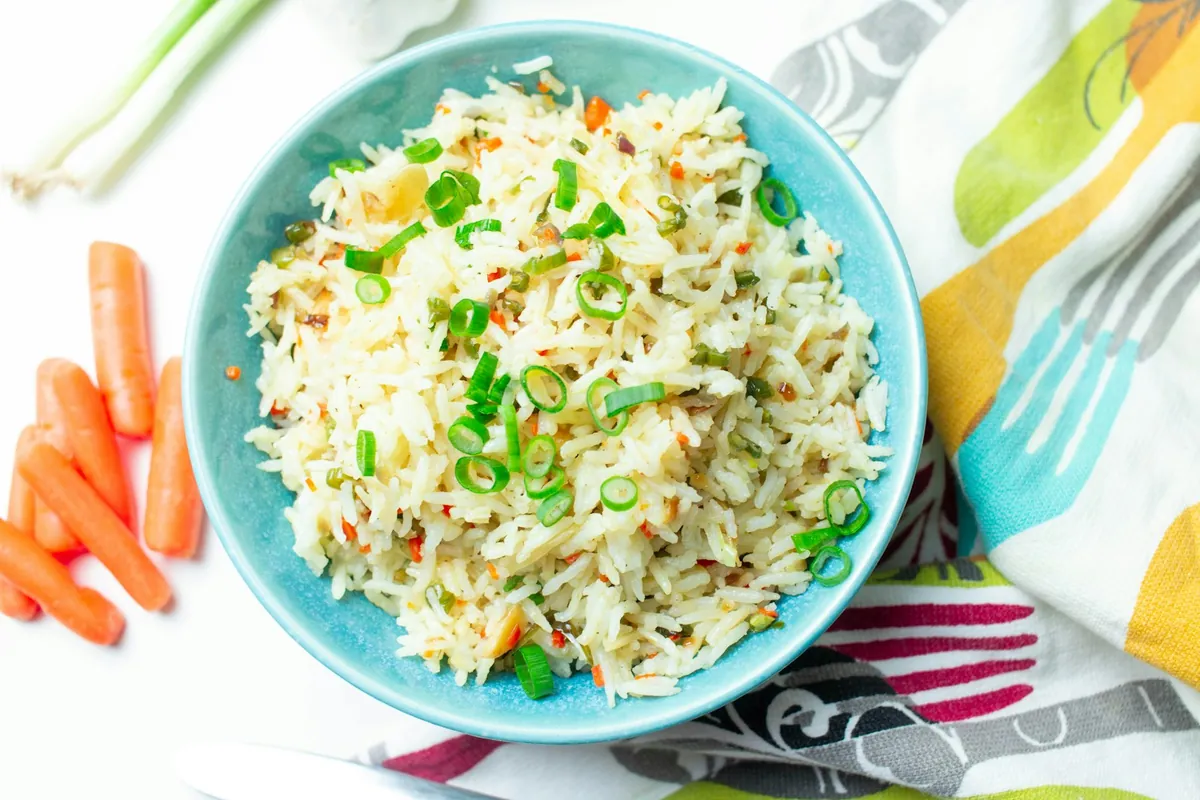
This is the single technical detail that explains everything about fried rice. Freshly cooked rice is soft and full of moisture, and if you put it straight into a wok it steams and clumps. Rice that has been cooked and then cooled has firmer, drier grains that separate under heat and take on color instead of turning to paste.
That is why fried rice was historically a way of using yesterday’s rice, and why a kitchen that makes it properly is not cooking rice to order for it.
What goes in
- Rice — cooked, cooled, broken up so no clumps go into the wok.
- Egg — scrambled through the rice, adding richness and color.
- A protein — roast pork, chicken, beef, shrimp, or a mix in a house special.
- Small vegetables — peas, carrots, onion and scallion, diced fine so they match the grain.
- Seasoning — soy sauce, and sometimes a little sesame oil at the end.
Everything is cut to roughly the size of a grain of rice or slightly larger. That is not fussiness: it is what lets you get a bit of everything on a spoon.

How to tell good fried rice
Three things, all visible before you taste it.
- Separate grains. The rice should be loose, not compacted into a block. Clumping means it was too wet going in.
- Even color, not uniform brown. Good fried rice is lightly seasoned and unevenly toasted, with pale grains among the darker ones. Rice that is uniformly dark brown has usually been drowned in soy sauce to compensate.
- Visible egg and vegetables throughout rather than concentrated in one corner.
The versions you will see on a menu
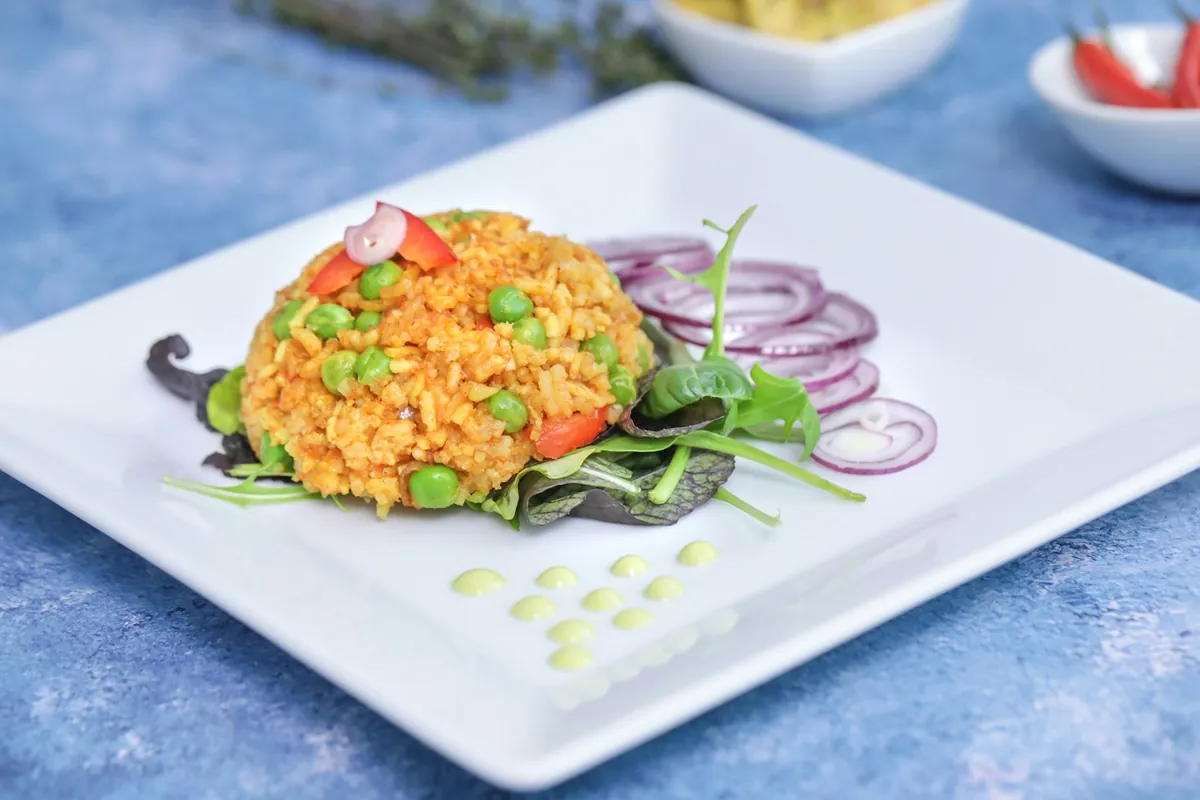
Fried rice is listed by what is in it, and the differences are more meaningful than they look.
| Version | What it adds | Best for |
|---|---|---|
| Roast pork | Slightly sweet, well-seasoned pork | The classic; the most flavorful base version |
| Chicken | Mild, lean protein | Cautious eaters and children |
| Shrimp | A distinct seafood flavor | Diners who want the rice to stand out |
| Beef | The heaviest and most savory | Eating the rice as the main dish |
| House special | A mix of proteins | Sharing, or when you cannot choose |
| Vegetable | No meat added | A lighter plate (check the seasoning if it matters) |
| Plain | Rice, egg and seasoning only | A base alongside sauced dishes |
Why the color varies between restaurants
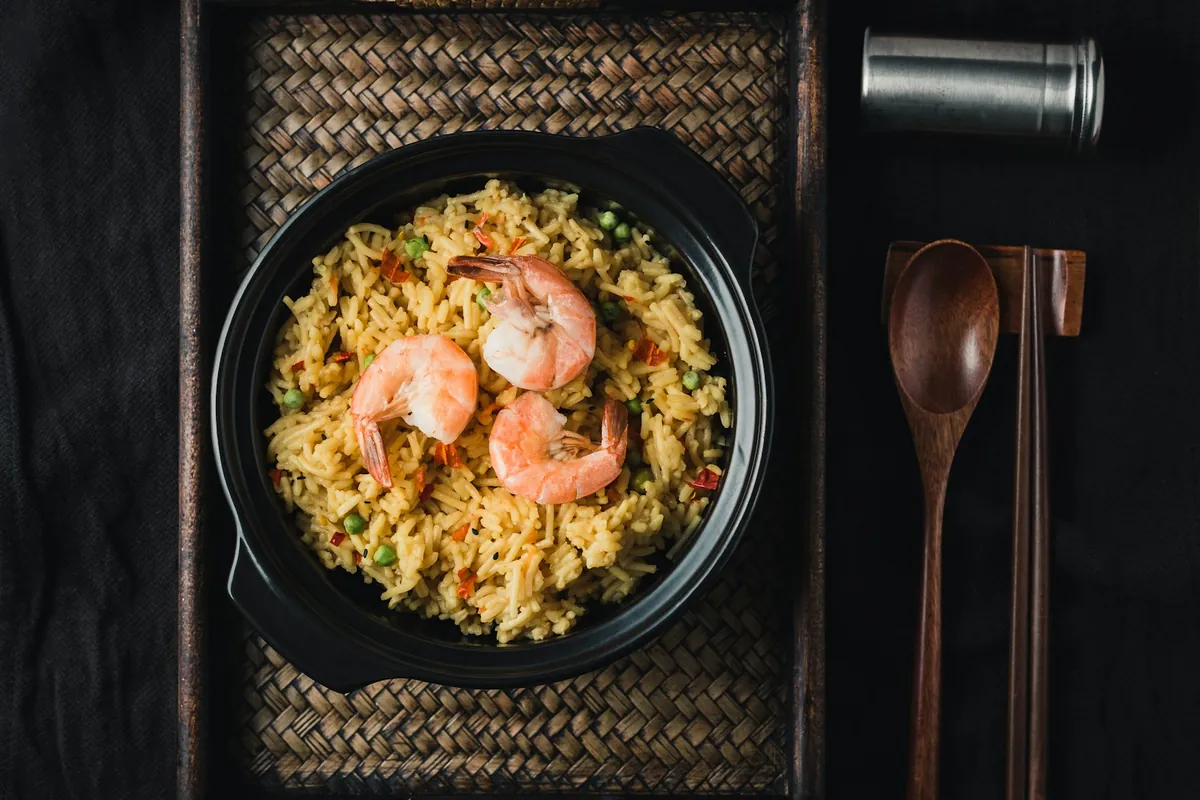
Order fried rice in three different places and you will get three different shades, from pale gold to deep brown. That is not a quality signal on its own — it reflects different house styles.
Lighter fried rice is seasoned mostly with salt and the flavor of the wok itself, letting the egg and protein come through. Darker fried rice uses more soy sauce, which brings color and a saltier, deeper taste. Neither is more authentic than the other; regional styles across China differ just as widely.
What you can judge is consistency. Color should vary slightly grain to grain, because that is what happens when rice is tossed in a hot wok. Uniform color throughout usually means the sauce was added as a liquid and stirred in, rather than the rice being fried in it.
Fried rice or plain white rice?
This is the choice that actually affects your meal, and most people get it backwards.
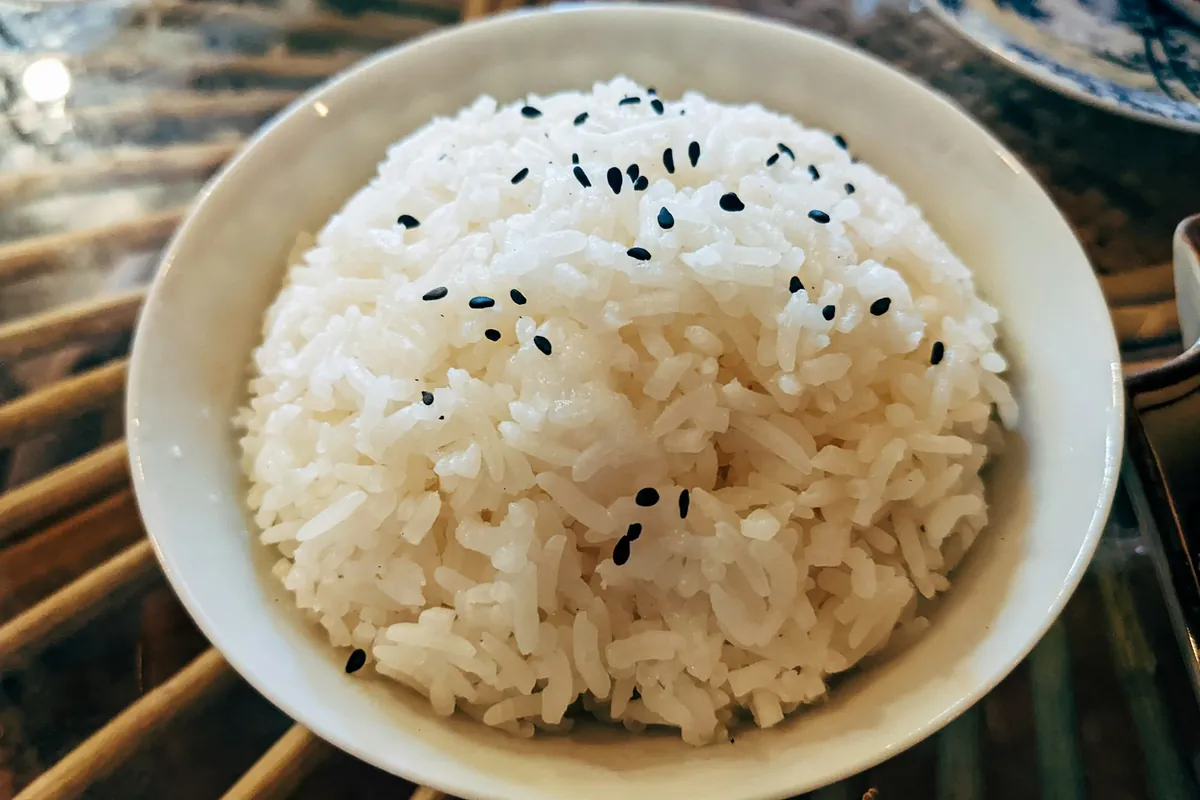
Plain white rice is a base. It has no seasoning of its own, so it absorbs sauce and lets the entrees taste like themselves. If you have ordered dishes in a brown sauce, a garlic sauce or anything sweet, plain rice is what you want underneath them.
Fried rice is a dish. It is already seasoned, already has egg and protein in it, and it competes with a sauced entree rather than supporting it. Order it when you want it for its own sake, not as a neutral base.
Order fried rice when
- You want it as a dish in its own right
- You are ordering few or no sauced entrees
- You want leftovers that reheat well
- You are feeding people who will eat it plain
Order plain rice when
- Your entrees are sauced
- You want the entrees to be the focus
- You are ordering several dishes to share
- You want the cheaper option
It is the best leftover on the menu
Fried rice reheats better than almost anything else you can order. It is low in moisture, it does not rely on a crisp coating, and it does not sit in a sauce that softens it. If you are deliberately ordering extra to keep, this is the dish to do it with.
Refrigerate it promptly rather than leaving it out while you finish the rest of the meal, and follow standard guidance on storing and reheating cooked rice from a source such as the USDA’s food safety information center.
Frequently asked questions
Why is restaurant fried rice better than homemade?
Mostly heat. A restaurant wok burner runs far hotter than a domestic hob, which dries and toasts the grains in seconds rather than steaming them. Using properly cooled rice is the other half, and that part is easy to copy at home.
Is fried rice a side dish or a main?
It can be either, which is why it causes confusion. With egg and a protein in it, a large fried rice is a meal. If you want something that acts purely as a base for sauced dishes, order plain white rice instead.
Is fried rice gluten-free?
Usually not. Rice contains no wheat, but soy sauce commonly does, and woks are shared between dishes throughout a service. Treat it as a wheat-containing dish unless the restaurant confirms otherwise.
What is house special fried rice?
It normally means more than one protein in the same dish — commonly a combination such as pork, chicken and shrimp. It is the version to order when you are sharing or cannot decide between the single-protein options.
The short version
Cooked and cooled rice, high heat, egg, small vegetables and restraint with the soy sauce. Order it when you want it as a dish; order plain rice when you want a base for something sauced.
And if you are ordering extra for tomorrow, this is the one to pick.
Fried rice in Fayetteville
China King lists nine fried rice dishes in small and large sizes on Walter Reed Road.
Sources
- Fried rice — on the dish’s method and regional variations.
- USDA National Agricultural Library: human nutrition and food safety — cited above on storing and reheating cooked rice.