Nuts appear on a Chinese takeout menu in more places than the dish names suggest, and in fewer places than people fear. Both halves of that matter — the first if you are avoiding nuts, the second if you are looking for them.
Two kinds of dish conventionally contain nuts: the ones that say so, such as chicken or shrimp with cashew nuts and almond dishes, and Kung Pao, which contains peanuts or cashews without always naming them. If you have a nut allergy, ask the restaurant about every dish — shared woks and oils mean the menu cannot answer that question.
The cashew dishes
Chicken with cashew nuts is the most familiar. Diced chicken, mixed vegetables, whole roasted cashews, and a light savory sauce — usually a clear or pale sauce rather than a heavy brown one. The shrimp version is the same construction with shrimp.
The cashews are not a garnish. They go in near the end of cooking so they keep their crunch, and in a good version they are generous enough that every few bites includes one. The whole point of the dish is textural contrast: soft protein, yielding vegetables, and something that snaps.
Flavor-wise these sit at the mild end of the specials page. There is no chili, no sweetness to speak of, and nothing assertive in the sauce, precisely so the cashews come through. If you like moo goo gai pan, this is its close relative with crunch added — our guide to moo goo gai pan covers that one.
Kung Pao is the one to know about
This is the practical warning in the article, and it is worth stating plainly: Kung Pao dishes conventionally contain peanuts or cashews, and the name does not say so.
Kung Pao chicken and Kung Pao shrimp are built around three things — the protein, dried chilies, and nuts. The nuts are structural to the dish rather than optional, in the same way the chilies are. Someone scanning a menu for the word “nut” will not find it there.
Our guide to Szechuan, Hunan and Kung Pao covers how those dishes differ. For this article the relevant point is narrow: if you are avoiding nuts, Kung Pao is the dish name that most commonly catches people out.
| Dish | Nut | Named in the dish title? | Role |
|---|---|---|---|
| Chicken with cashew nuts | Cashew | Yes | Central; textural |
| Shrimp with cashew nuts | Cashew | Yes | Central; textural |
| Almond ding dishes | Almond | Yes | Central; textural |
| Kung Pao chicken or shrimp | Peanut or cashew | No | Structural to the dish |
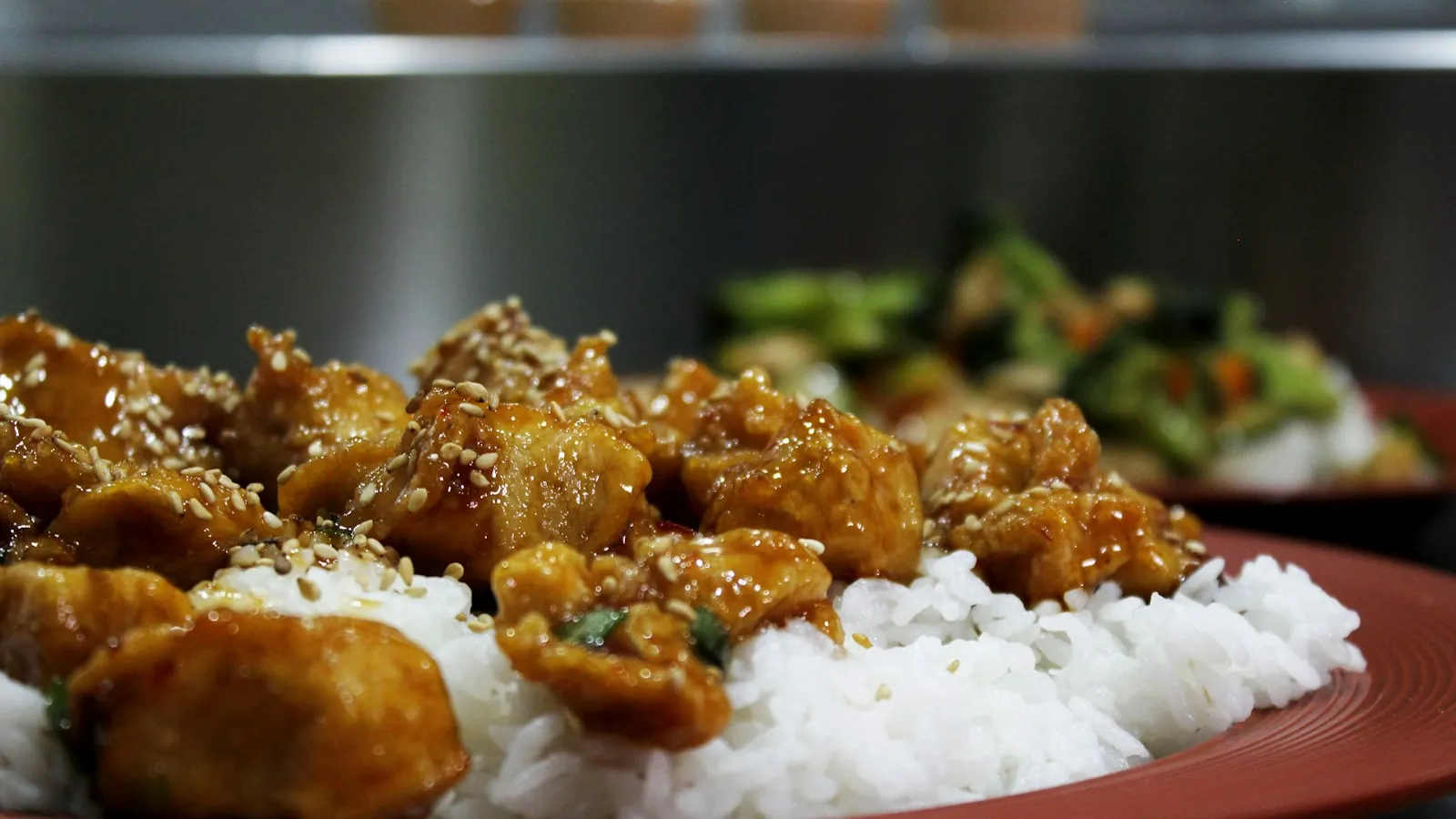
| Sesame chicken | None (sesame is a seed) | Sesame is named | Coating |
| Coconut chicken | Coconut, labeled as a tree nut | Yes | Sauce and garnish |
Two notes on that last pair. Sesame is a seed, not a nut, though it is itself a major allergen under United States labeling law. And coconut is botanically a fruit but is treated as a tree nut for labeling purposes — our guide to coconut chicken covers that.
What the table cannot tell you
Everything above describes what dishes conventionally contain. None of it tells you whether a specific dish from a specific kitchen is safe, and it is important to be honest about that gap.
A restaurant wok is used for one dish and then the next. Oil is shared. Utensils are shared. A dish containing no nuts can be cooked in a pan that held cashews a minute earlier. For someone with a mild preference that is irrelevant; for someone with a genuine nut allergy it is the entire question, and no menu and no article can answer it.
So the only reliable route is to speak to the restaurant, name the allergy, and ask about the specific dish and the shared equipment. Kitchens are used to this conversation. It is a normal question, not an imposition, and it is worth having on the phone before you order rather than at the counter after.
If you are ordering cashew dishes on purpose
They are among the better-value dishes on a specials page, because what makes them special is an ingredient rather than an elaborate technique. They also happen to be one of the mildest things on that page, which makes them useful for a mixed table.
Order a cashew dish if
- You want texture rather than a strong sauce
- The rest of the order is heavily sauced
- You want something mild from the specials page
- You are ordering for someone cautious about spice
Order something else if
- Anyone at the table avoids nuts
- You want a bold, sauce-led dish
- The food has a long drive ahead of it
- You want the cheapest option on the menu
Takeout notes
Cashew dishes are a specific case: the dish travels well and the cashews do not.
The chicken, vegetables and sauce are all fine in a container — nothing is battered, so nothing goes soggy in the usual sense. But the cashews sit in warm sauce and soften, and the crunch that is the whole reason for the dish fades within twenty minutes or so.
If you are eating in, it is not an issue. If you are collecting, eat this dish first. Our guide to pickup or delivery covers the rest of the menu, and it is one of the few cases where a dish with no fried element still has a clock on it.
Frequently asked questions
What is chicken with cashew nuts?
Diced chicken stir-fried with mixed vegetables and whole roasted cashews in a light savory sauce. The cashews go in near the end so they keep their crunch, and the sauce is deliberately mild so they come through. It is one of the gentler dishes on a specials page.
Which Chinese dishes contain nuts?
Conventionally: the cashew dishes, almond dishes, and Kung Pao dishes, which contain peanuts or cashews without naming them. Coconut is treated as a tree nut for labeling purposes. This describes what dishes usually contain, not what is safe — ask the restaurant for that.
Does Kung Pao chicken have nuts in it?
Conventionally yes — peanuts or cashews are structural to the dish rather than optional, even though the name does not mention them. It is the dish name that most often catches out people who are scanning a menu for the word “nut”.
Can I eat Chinese takeout with a nut allergy?
That is a question for the restaurant, not for a menu or an article. Woks, oil and utensils are shared between dishes, so a dish with no nuts in its recipe can still be cooked where nuts have been. Call, name the allergy, and ask about the specific dish and the shared equipment.
Is sesame chicken a nut dish?
No — sesame is a seed rather than a nut. It is worth knowing that sesame is itself a major allergen under United States labeling law, so it matters for a different set of people than the nut dishes do.
The short version
Cashew dishes are mild, textural and good value, and the crunch is the point. Almond dishes work the same way. Kung Pao contains nuts without saying so, which is the one thing on this page worth remembering.
And if an allergy is involved, none of the above is an answer — the restaurant is.
Cashew dishes in Fayetteville
China King lists chicken and shrimp with cashew nuts among the chef’s specials.
Sources
- FDA: Food allergies — on tree nuts, peanuts and sesame as major allergens.
- Britannica: cashew — on the cashew itself.