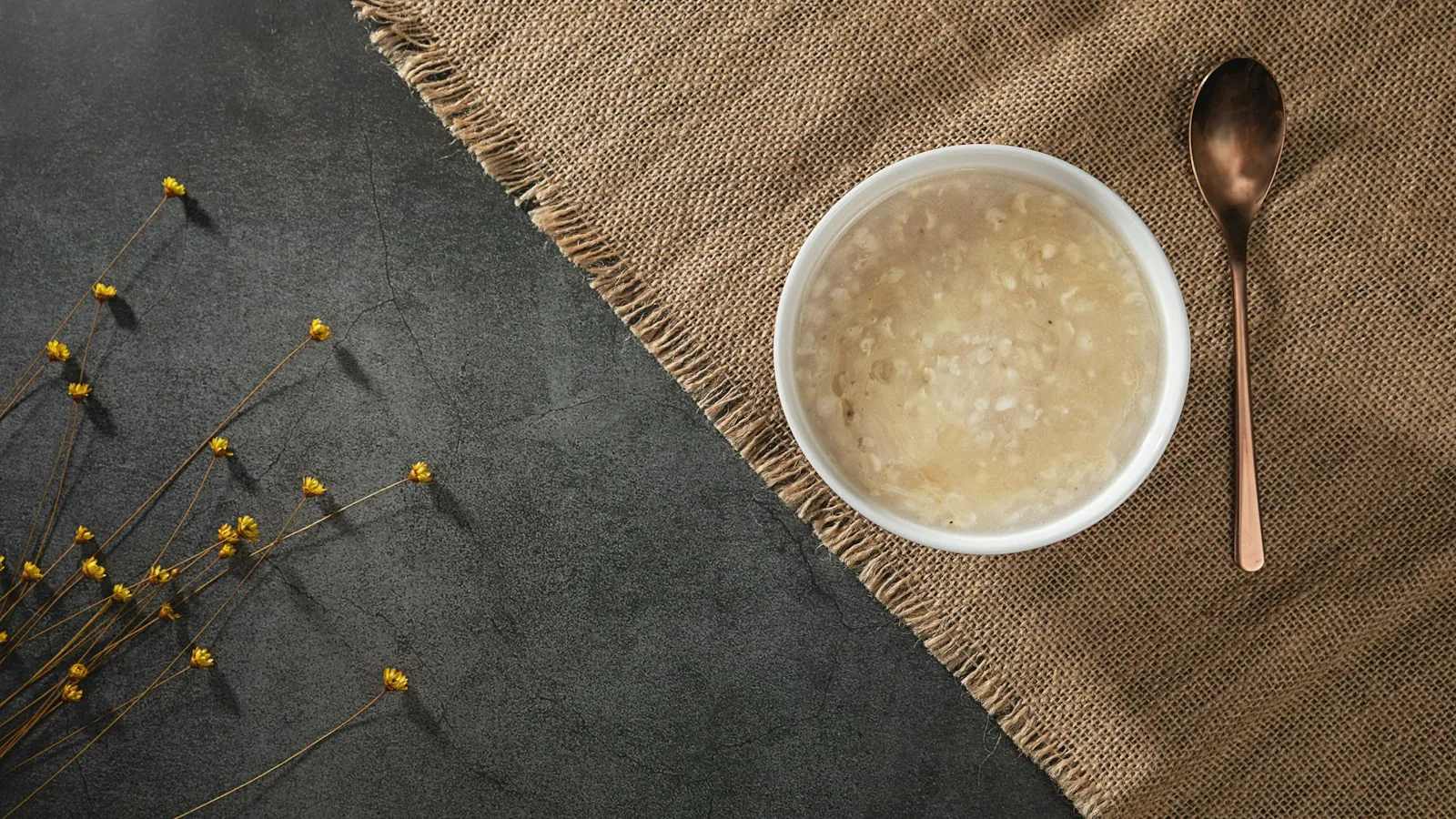
Congee is the most eaten Chinese dish that almost no American has tried. It is breakfast for a large part of the world, it is what people are given when they are ill, and it is on essentially no Chinese takeout menu in the United States.
Congee is rice simmered in a lot of water until the grains break down into a savory porridge. It is eaten plain or with toppings — ginger, scallion, preserved egg, pork, fried dough — and it is comfort food, breakfast food and sick food all at once. It takes an hour or more, which is why takeout kitchens do not carry it.
What it actually is
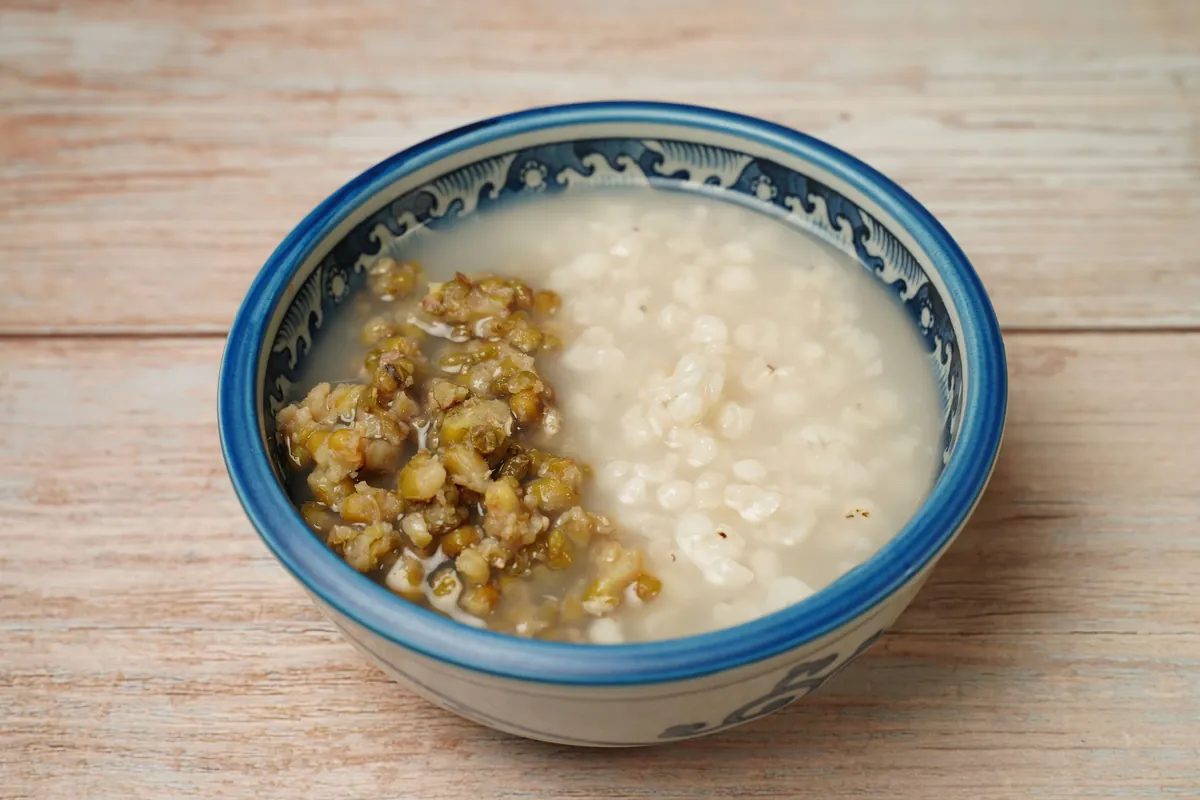
Rice and water, in a ratio somewhere between one to eight and one to twelve, simmered slowly until the grains disintegrate and the liquid thickens into something between a soup and a porridge.
That is the entire base recipe. There is no thickener, no dairy and usually no fat — the texture comes purely from starch released by rice that has been cooked far past the point where normal rice is done. Our guide to how restaurants cook rice covers the opposite end of the same technique, where the whole aim is keeping grains separate.
It goes by several names depending on the language and region: congee in English, jook in Cantonese, zhou in Mandarin. All the same thing, with regional differences in thickness and what goes on top.
Why it matters more than the recipe suggests
Because of what it is for, which is three distinct jobs.
Breakfast. Across southern China, Hong Kong and much of Southeast Asia, congee is a standard morning meal, sold from stalls and small shops the way coffee and pastries are elsewhere.
Illness. It is the near-universal food for someone unwell — easy to eat, easy to digest, warming. The cultural role is roughly that of chicken soup in Jewish and American traditions, and it is deeply felt.
Thrift. A cup of rice and a lot of water feeds several people. Congee has historically been a way of stretching a small amount of grain, which is part of why it is associated with both comfort and hardship.
None of those three jobs is one a Chinese-American takeout menu was built to do, which is most of the reason it never made the crossing.
What goes on top
Plain congee is deliberately bland. It is a canvas, and the toppings are the dish.
| Topping | Contributes |
|---|---|
| Shredded ginger | Warmth and a clean edge against the starch |
| Scallion | Freshness and color contrast |
| Youtiao (fried dough) | Crunch, dipped in as you go |
| Century egg and pork | The classic Cantonese combination; rich and savory |
| Soy sauce or white pepper | Seasoning, added at the table |
| Peanuts, pickles, dried fish | Salt and texture |
The youtiao pairing is the one worth knowing, because it is the same fried dough that reaches American menus as a “Chinese donut” — our guide to Chinese donuts covers how it got there in sugared form. In its home context it is savory and dunked into congee at breakfast.
Why it is not on a takeout menu
Three reasons, in order of how decisive they are.
Time. Congee needs an hour or more of slow simmering and cannot be assembled to order. A takeout kitchen is built around dishes that leave the wok in ninety seconds — our guide to how takeout kitchens work covers that system, and congee sits entirely outside it.
Demand. American Chinese menus were shaped by what customers ordered, and a savory rice porridge was never going to be it. Our guide to how American Chinese food came to be covers how that selection worked.
Transport. It travels acceptably, being liquid, but it thickens as it cools and the fried-dough element is ruined by the trip. It is a sit-down or at-home food.
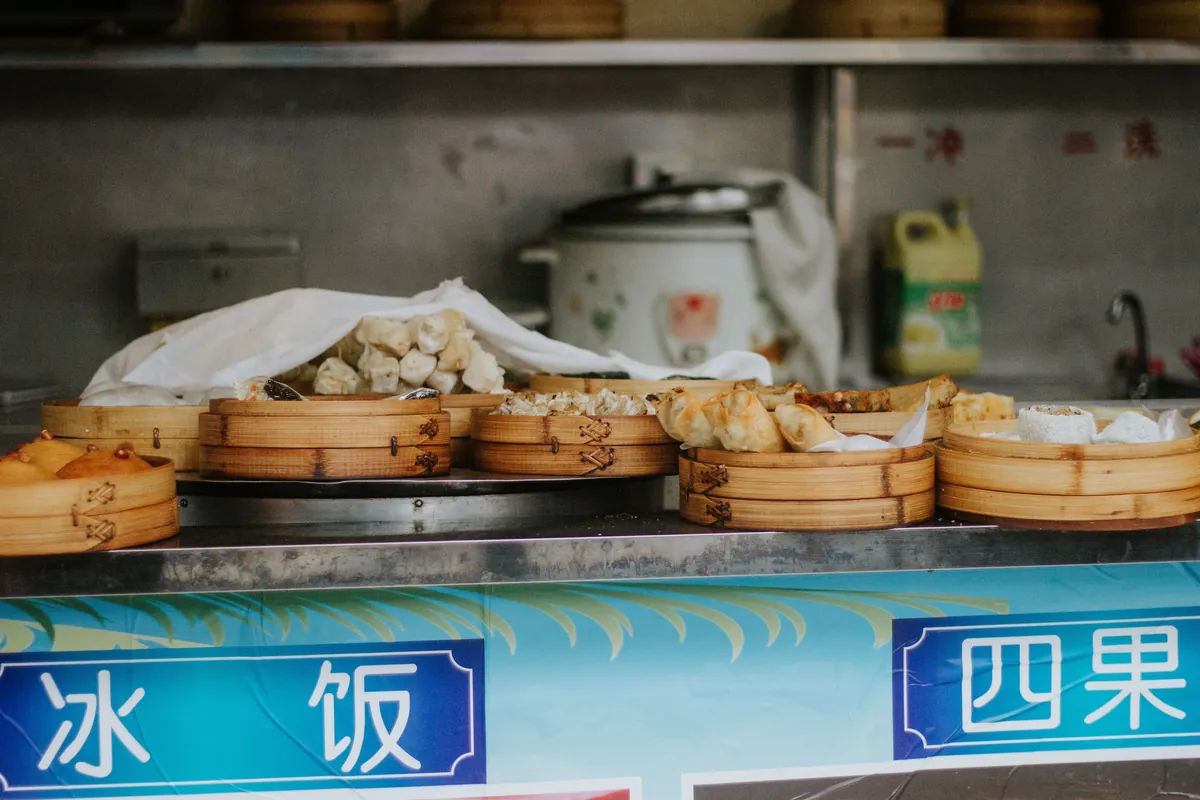
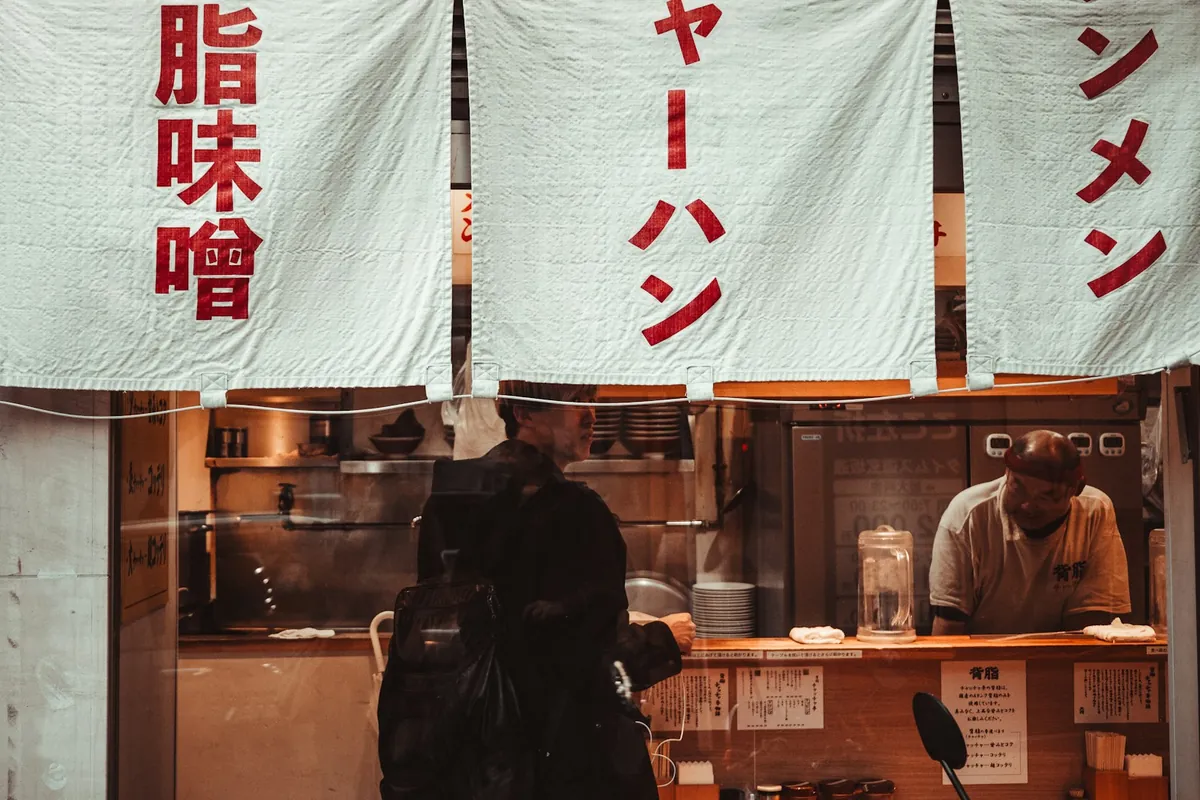
Where you will find it: Cantonese and Hong Kong-style restaurants in larger cities, dim sum houses, and Asian supermarkets with hot counters. Our guide to dim sum covers the other daytime format in the same tradition.
Making it at home
This is the argument for the article, because congee is one of the few genuinely worthwhile Chinese dishes that is easier at home than in a restaurant.
What it needs
- Rice and water, roughly one to ten
- A pot and an hour, mostly unattended
- Stirring occasionally near the end
- Salt or soy at the table, not in the pot
What it does not need
- Any special equipment
- High heat, or a wok
- Precision of any kind
- Ingredients you cannot buy locally
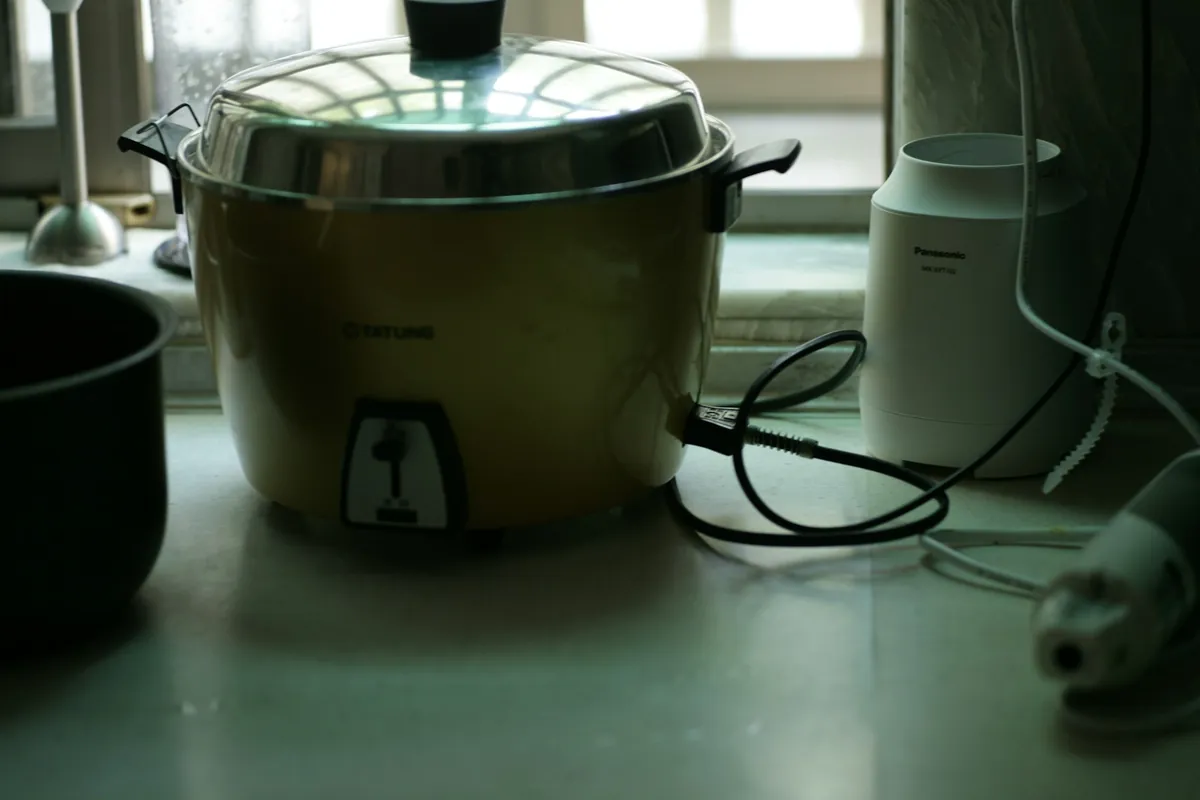
Leftover rice works and cooks faster, which is a good use for the rice you held back and did not turn into fried rice. A slow cooker overnight is the low-effort route. Stock instead of water makes it richer, and a slice of ginger in the pot does more than it should.
The one technique note: stir it toward the end. Agitation breaks the grains down and thickens the whole thing, which is the difference between rice soup and actual congee.
How to eat it
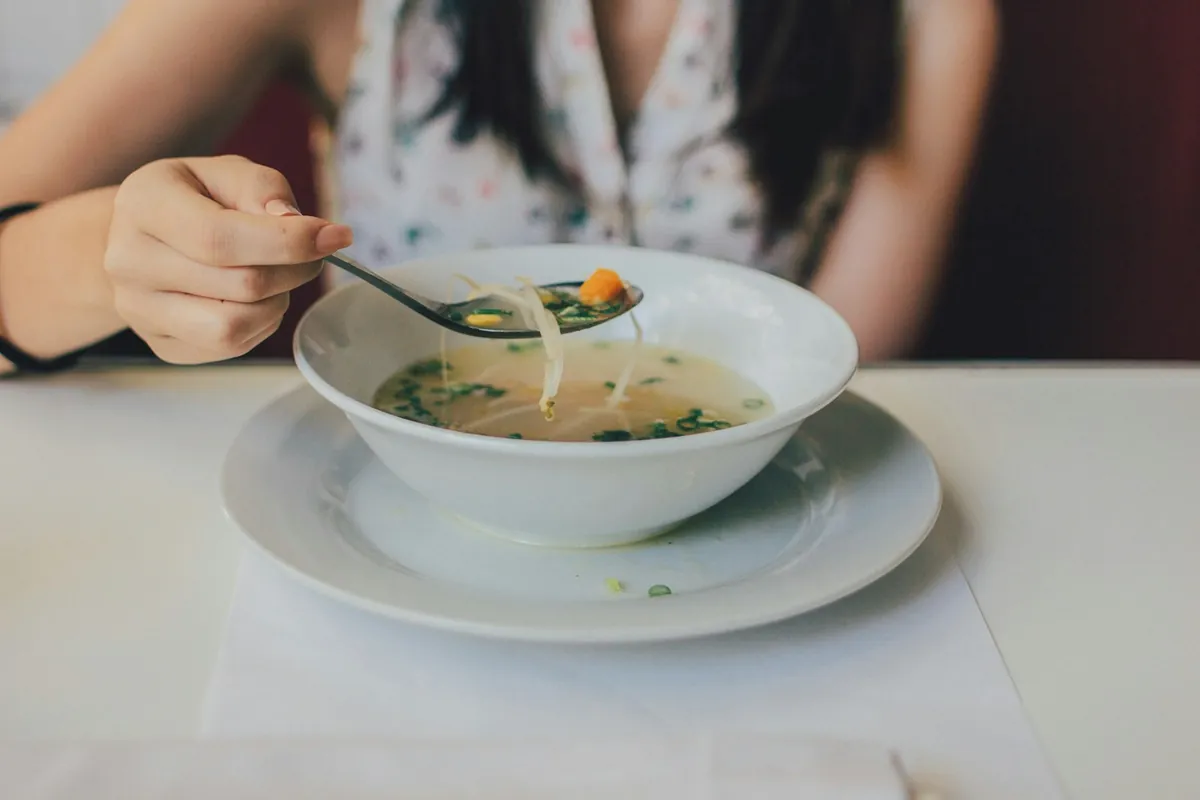
Hot, in a bowl, with a spoon rather than chopsticks, and with the toppings added at the table rather than stirred in by the kitchen.
Season it yourself. Congee is served under-seasoned on purpose so that each person adjusts it, which is why a bowl arrives with soy sauce and white pepper nearby. Someone who tries plain congee and finds it bland has not done anything wrong — they have just not finished making it.
It is also worth eating it the way it is meant to be eaten: slowly, early, and preferably when you are not well. It is not a dish that impresses. It is a dish that looks after you.
Frequently asked questions
What is congee?
Rice simmered in a lot of water — roughly one part rice to ten parts water — until the grains break down into a savory porridge. It is eaten with toppings added at the table, and it is breakfast, comfort food and sick food across much of Asia.
Why is congee not on Chinese takeout menus?
It takes an hour or more of slow simmering and cannot be assembled to order, which does not fit a kitchen built around ninety-second wok dishes. American Chinese menus were also shaped by what customers ordered, and savory rice porridge was never a strong seller.
What is the difference between congee and jook?
None — they are the same dish under different names. Congee is the English term, jook is Cantonese and zhou is Mandarin. Regional versions differ in thickness and toppings rather than in what the dish fundamentally is.
Is congee supposed to be bland?
The base is, deliberately. It is a canvas, and the toppings and seasoning are added at the table so each person adjusts their own. Plain congee tasting of very little means it has not been finished, not that something went wrong.
Can I make congee at home?
Easily, and it is one of the few Chinese dishes genuinely easier at home than in a restaurant. Rice, water, a pot and an hour, mostly unattended. Leftover rice cooks faster, and stirring toward the end is what turns rice soup into congee.
The short version
Rice cooked far past done, in a lot of water, until it becomes porridge. Bland by design, finished at the table, and eaten at breakfast or when you are unwell.
No takeout kitchen carries it because it cannot be made to order. It is also one of the easiest Chinese dishes to make yourself.
Order from China King
No congee — but the soups are the closest thing we have.
Sources
- Congee — on the dish, its names across languages and its regional variations.
- Britannica: rice — on rice and its starch behavior when cooked.