
Nearly every article on this site ends up making the same aside: this dish is American, that one is Hawaiian by way of a tiki bar, the other has a Japanese name. Put those asides together and there is a single story underneath them, and it is more interesting than the word “inauthentic” allows for.
American Chinese food developed from Cantonese cooking brought by nineteenth-century immigrants, adapted to American ingredients and tastes under severe legal and economic constraints. It is not a watered-down version of Chinese food — it is a distinct cuisine, roughly 150 years old, with its own canon.
It starts in Guangdong, not Beijing
Most nineteenth-century Chinese emigration to the United States came from one region: Guangdong province in the south, around the Pearl River Delta. That single fact explains a great deal about what is on the menu.
Cantonese cooking favors stir-frying, light savory sauces, roast meats and freshness over heavy spice. It is why the American Chinese canon is built on brown sauce and the wok rather than on the chili-heavy cooking of Sichuan or the wheat-and-lamb traditions of the north. The dishes that would later be labeled Szechuan or Hunan on American menus arrived much later and were adapted to an existing Cantonese template — which is why our guide to Szechuan, Hunan and Kung Pao treats those as flavor styles rather than strict regional recipes.
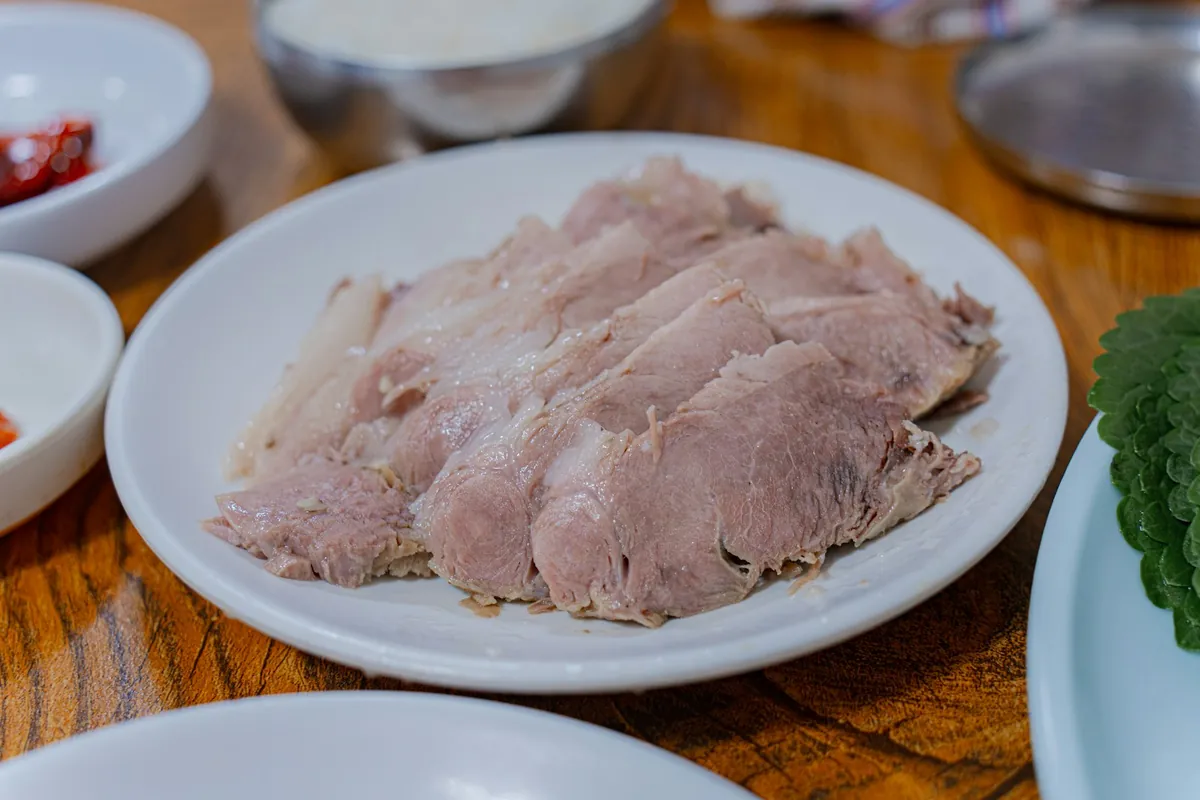
Roast pork is the clearest survivor of that lineage. It runs through eight sections of a modern menu and it is recognizably a Cantonese preparation — our guide to roast pork covers it.
Why restaurants, specifically
This is the part of the story that is usually skipped, and it is the reason the cuisine exists in the form it does.
Chinese immigrants arrived to work on railroads and in mining, and faced escalating legal exclusion — most significantly the Chinese Exclusion Act of 1882, not fully repealed until 1943. Discriminatory laws and hostility pushed Chinese workers out of many trades.
Restaurants and laundries were among the few businesses that remained open to them: little capital required, and a market nobody was competing for. Later, immigration rules granting merchant status to restaurant proprietors gave the trade a further push.
So the spread of Chinese restaurants across small-town America was not primarily a culinary phenomenon. It was what was available. That context matters when the food gets described as a compromise: the constraints were legal and economic before they were ever about taste.
Adaptation, dish by dish
Cooks worked with what American suppliers stocked and what American customers would order. Both pressures show up clearly in the canon.
| Dish | Origin | What changed |
|---|---|---|
| Chop suey | American, Cantonese roots | Built from available vegetables; largely unknown in China |
| Crab rangoon | American, mid-century | Cream cheese – an ingredient absent from Chinese cooking |
| Pu pu platter | Hawaiian name, tiki-era format | A sampler built from existing fried items |
| Fortune cookie | Japanese-American, California | Adopted by Chinese restaurants in the 1940s |
| General Tso’s chicken | Taiwanese, then heavily Americanized | Sweetened considerably for American tastes |
| Broccoli dishes | American produce substitution | Western broccoli replacing Chinese greens |
That last row is the quiet one. Chinese broccoli is a different vegetable from the Western kind, and its replacement was pure supply-chain pragmatism — the American vegetable was what the wholesaler had. It then became so central that menus give it a whole section, as our guide to the broccoli dishes describes.
The sweetness question
American Chinese food is sweeter than most Chinese regional cooking, and that is a real difference rather than a slur.
Sugar was cheap and abundant in the United States, and American palates responded to it. Dishes that had a mild sweetness in their original form acquired more of it, and a whole family of battered-and-glazed dishes developed that has no close equivalent in China — our guides to General Tso’s, sesame and orange chicken and sweet and sour cover that family.
Portion size moved the same way. American Chinese servings are large by the standards of the cooking they came from, because value for money was what the market rewarded.
Is it authentic?
The question is less useful than it sounds, and it is worth saying why.
If authentic means identical to something served in Guangdong, then no, and it has not tried to be for over a century. If it means a real cuisine with its own history, techniques, canon and internal logic, developed by real cooks under real conditions and eaten by generations of people, then it is as authentic as anything else on the table.
What it genuinely inherited
- The wok, and high-heat stir-frying
- Cantonese roast meats
- Soy, oyster and brown sauce foundations
- Shared dishes rather than individual plates
What it invented
- Chop suey and crab rangoon
- The battered sweet chicken family
- The combination plate
- The takeout carton itself
Both columns are the cuisine. Treating the right-hand one as a lesser version of the left misreads what happened: these are not failed attempts at Chinese dishes, they are successful American ones.

Where it stands now
Two things have happened in recent decades and they pull in different directions.
Later waves of immigration brought regional Chinese cooking to American cities directly — Sichuan, Hunan, northern noodle traditions — often marketed as distinct from takeout food, which has given the older cuisine a slightly old-fashioned reputation.
At the same time, American Chinese food has been increasingly recognized as a tradition worth taking seriously on its own terms, particularly by the generations who grew up in and around these restaurants. The neighborhood takeout place is now itself a piece of American culinary history.
Both things can be true. A menu like ours is a document of the first tradition, not an incomplete version of the second — our guide to ordering reads it on those terms.

Frequently asked questions
Why is American Chinese food different from food in China?
It developed from Cantonese cooking adapted to American ingredients and tastes over about 150 years. Available produce, cheap sugar and customer preferences all shaped it, and a number of dishes were invented outright in the United States rather than brought from China.
Why are American Chinese menus mostly Cantonese in style?
Because most nineteenth-century Chinese emigration to the United States came from Guangdong province in southern China. Cantonese stir-frying, roast meats and light savory sauces became the template, and later regional styles were adapted onto it.
Why are there so many Chinese restaurants in America?
Partly because discriminatory laws, including the Chinese Exclusion Act of 1882, closed most other trades to Chinese immigrants. Restaurants required little capital and remained available, and later immigration rules granted merchant status to restaurant proprietors.
Which Chinese takeout dishes were invented in America?
Chop suey and crab rangoon are the clearest cases. The pu pu platter came via mid-century Polynesian-themed restaurants, and fortune cookies came from Japanese-American bakeries in California. The battered sweet chicken dishes were heavily Americanized after arriving.
Is American Chinese food authentic?
It is not identical to regional Chinese cooking and has not tried to be for over a century. As a cuisine with its own history, techniques and canon, developed by real cooks under real constraints, it is a genuine tradition rather than an imitation of one.
The short version
Cantonese cooking, carried to America by immigrants from one province, adapted to American produce and tastes under laws that left few other trades open. Roughly 150 years of that produced a distinct cuisine with its own inventions.
The dishes that are not from China are not failures. They are the tradition.
Order from China King
Classic American Chinese cooking on Walter Reed Road in Fayetteville.
Sources
- American Chinese cuisine — on the cuisine’s development, its Cantonese roots and its invented dishes.
- Britannica: Chinese Exclusion Act — on the 1882 legislation and its consequences.