
The fortune cookie is the most recognizable symbol of Chinese food in America and one of the least Chinese things about it. That is not a knock on the cookie. It is a genuinely interesting story about how a cuisine travels.
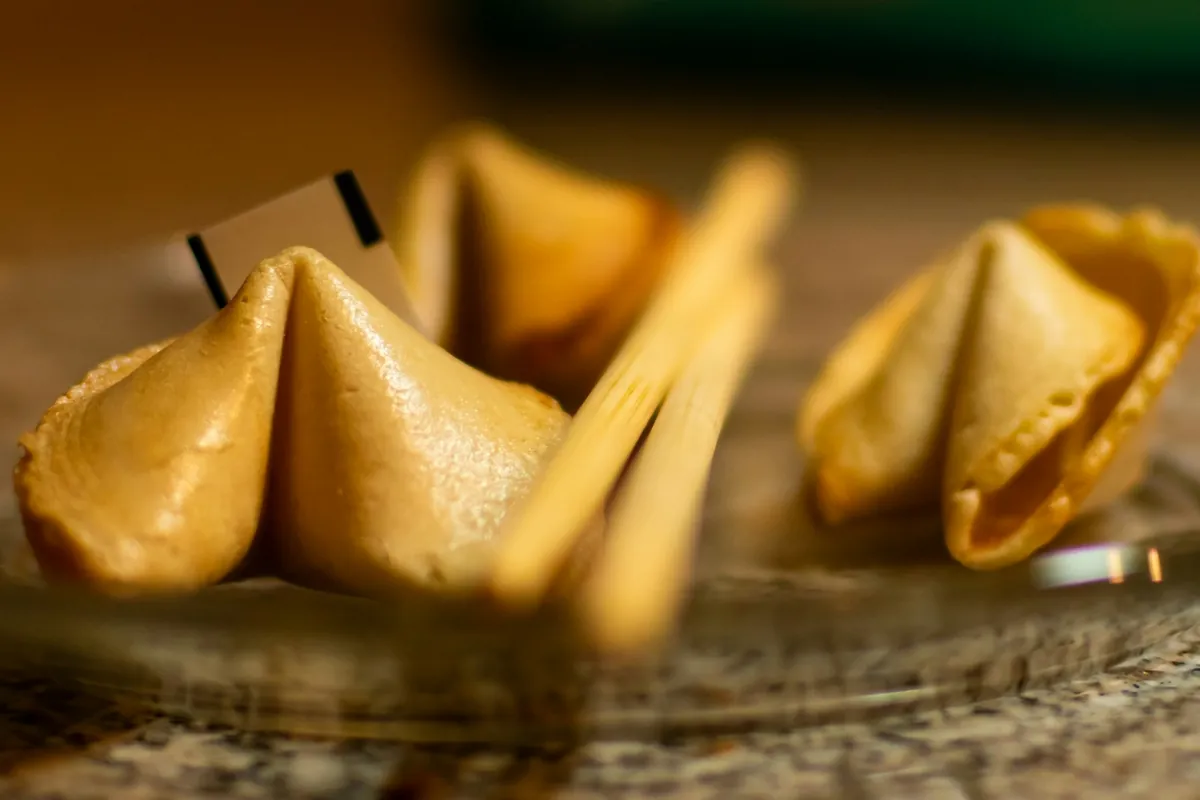
Fortune cookies are not from China. They almost certainly originated in Japanese-American bakeries in California in the early twentieth century, and spread through Chinese-American restaurants from there. Most people in China have never encountered one.
Where they actually come from
The trail leads to California, and to a Japanese antecedent rather than a Chinese one.
Japan has a long-standing tradition of folded crackers containing slips of paper, sold near temples and shrines. Those crackers are larger, darker and flavored with miso and sesame rather than vanilla, but the format is unmistakably the same idea: a folded wafer with a fortune inside.
Japanese immigrants running bakeries and tea gardens in California appear to have adapted the form in the early 1900s, sweetening the recipe for American tastes. Two cities claim the invention — San Francisco and Los Angeles — and the dispute has never been settled to anyone’s satisfaction.
How the cookie moved from Japanese-American to Chinese-American hands is less romantic. During the Second World War, Japanese-Americans on the West Coast were forcibly interned, and Chinese-American businesses took over much of the production. By the time the war ended, the fortune cookie was established as a Chinese restaurant item, and it has stayed that way.
Why they are not eaten in China
Because they were never there. A Chinese diner encountering a fortune cookie for the first time generally finds it puzzling — both the cookie, which does not resemble Chinese confectionery, and the custom of handing out printed fortunes at the end of a meal.
There have been attempts to introduce them commercially in China, marketed explicitly as an American novelty. That framing is the accurate one.
None of which makes them fake. They are a real tradition, roughly a century old, belonging to Chinese-American restaurants specifically rather than to Chinese cooking generally — the same category as crab rangoon, the pu pu platter and chop suey, which has a similarly complicated passport.
What is in them
Very little, and that is deliberate.
| Fortune cookie | Japanese tsujiura senbei | |
|---|---|---|
| Base | Flour, sugar, oil, egg white | Flour, miso, sesame |
| Flavor | Sweet, faintly vanilla | Savory |
| Size | Small | Larger |
| Fortune sits | Inside the fold | In the fold’s crease |
| Served | End of a restaurant meal | Sold near shrines and temples |
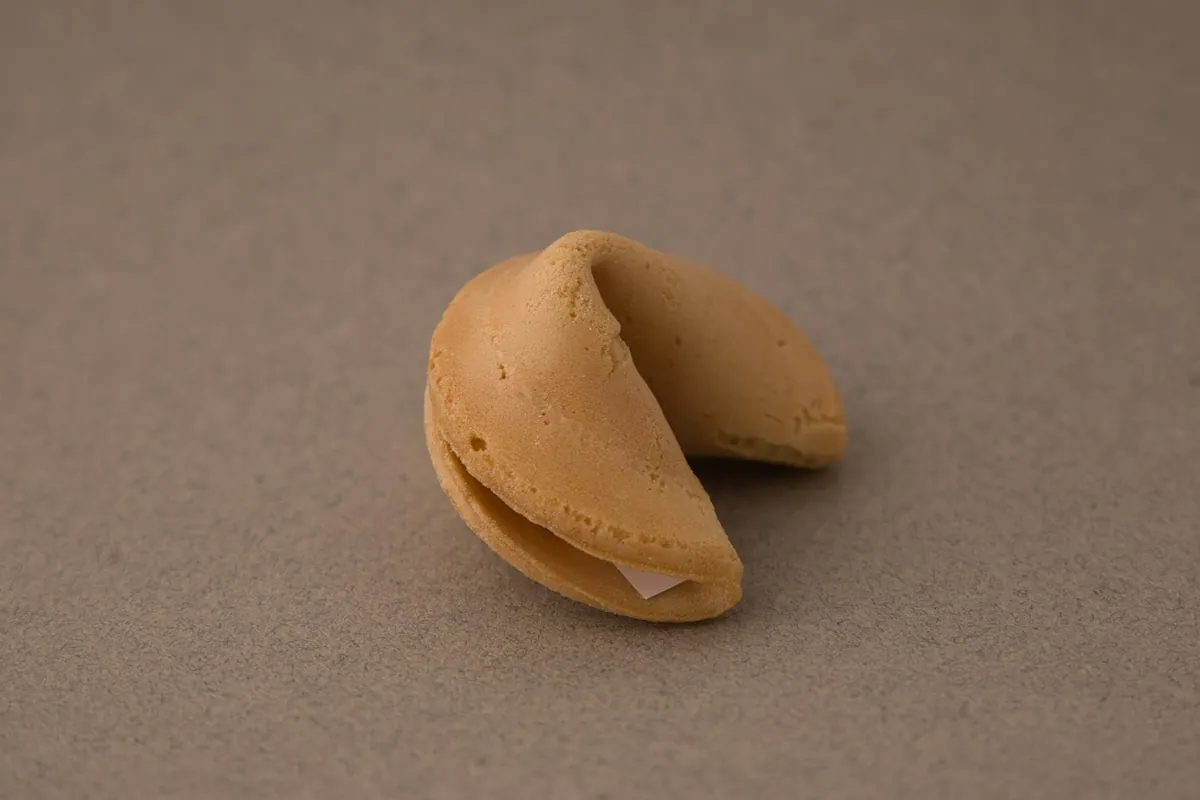
The recipe is close to a thin sugar wafer. It is baked flat as a disc, then folded around the paper while still hot and pliable — a window of a few seconds before it sets rigid. That fold is the whole engineering problem of the product, and it is why the cookies were hand-folded for decades before machinery caught up.
On ingredients: the base contains wheat and usually egg white, and commercial cookies are made on shared equipment. If anyone at your table has an allergy, the cookie is easy to overlook precisely because nobody thinks of it as food.
The fortunes themselves
Worth knowing that they are written, edited and printed commercially, largely by a small number of manufacturers, and that the same fortunes recirculate for years.
The style has drifted over time. Early fortunes were closer to genuine aphorisms or Biblical and Confucian quotations. Modern ones lean toward vague affirmations, and a fair number are not predictions at all — they are statements. “You have a natural talent for the arts” is not a fortune in any strict sense.
The lucky numbers printed on the back are a later addition, and they are genuinely used: lottery officials have occasionally noticed unusual clusters of winners sharing a set of numbers that came from a batch of cookies.

Why restaurants hand them out
Two practical reasons, on top of the tradition.
The first is that a Chinese takeout menu has no dessert course. The format grew around shared savory dishes, so there is no structural place for a sweet finish — our guide to Chinese donuts covers the one sweet item that does appear, filed under appetizers for exactly that reason. The cookie fills the gap at almost no cost.
The second is that it signals the end of the meal, which is useful in a restaurant and oddly useful in a takeout bag too. It is the last thing you find, and it tells you the order is complete.
Things that are true
- They originated in California, not China
- The format is adapted from a Japanese cracker
- They are folded hot, within seconds of baking
- They contain wheat and usually egg
Things that are not
- That they are an ancient Chinese tradition
- That fortunes are written per restaurant
- That every Chinese restaurant worldwide serves them
- That the cookie has any dietary significance

Keeping them
Fortune cookies are dry and sealed, which makes them one of the few things from a takeout order that keeps indefinitely in a drawer. What ruins them is humidity: a cookie that has absorbed moisture goes soft and leathery, and unlike fried food it does not come back.
Keep the wrapper sealed and they last for months. Once opened, eat it — the appeal is entirely in the snap.
Frequently asked questions
Are fortune cookies Chinese?
No. They almost certainly originated in Japanese-American bakeries in California in the early twentieth century, adapted from a Japanese folded cracker containing paper fortunes. They spread through Chinese-American restaurants later and are not eaten in China.
Who invented the fortune cookie?
It is disputed. Both San Francisco and Los Angeles claim the invention, and the credited figures are Japanese-American bakers and garden proprietors in the early 1900s. The dispute has never been definitively settled.
Why do Chinese restaurants give you fortune cookies?
Partly tradition, and partly because a Chinese takeout menu has no dessert course. The cookie fills that gap cheaply and signals the end of the meal. In a takeout bag it also functions as a marker that the order is complete.
What are fortune cookies made of?
Flour, sugar, oil and usually egg white — close to a thin sugar wafer, faintly vanilla. They are baked flat and folded around the paper within seconds, while still hot enough to bend. They contain wheat, so ask if that matters.
Do fortune cookies go stale?
Sealed, they keep for months — they are dry and there is nothing in them to spoil. Humidity is the enemy: a cookie that absorbs moisture goes soft and leathery, and it will not crisp up again.
The short version
A Japanese cracker, adapted in California, adopted by Chinese-American restaurants during the Second World War, and now the most recognizable symbol of a cuisine it did not come from.
Roughly a century of genuine tradition. Just not the tradition most people assume.
Order from China King
Classic Chinese-American cooking on Walter Reed Road in Fayetteville.
Sources
- Fortune cookie — on the Japanese antecedent, the California origin and the competing claims.
- Japanese cuisine — background on the tradition the folded cracker comes from.