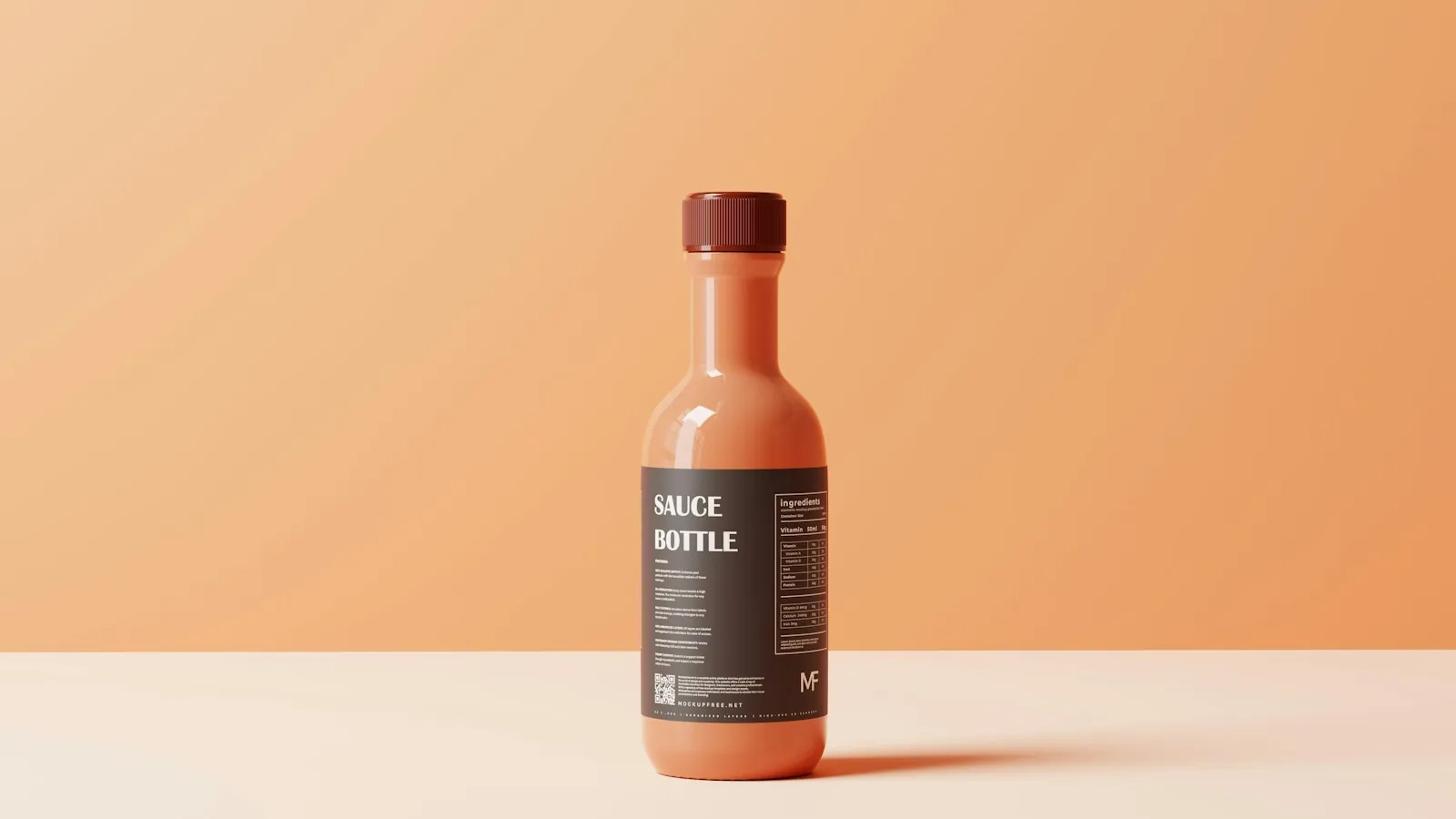
Two small packets arrive with almost every Chinese takeout order in America. One is orange and sweet, one is yellow and dangerous. Neither is explained anywhere on the menu, and most people have no idea what is in either.
Duck sauce is a sweet, tangy fruit-based sauce — usually apricot or plum with vinegar and sugar. It contains no duck. Hot mustard is mustard powder mixed with water, which makes it far sharper than any jarred mustard and short-lived once opened.

Duck sauce, and why there is no duck in it
The name describes what it was served with, not what it is made from. Duck sauce accompanied roast duck, and the name stuck to the sauce rather than to the dish.
What is in it is fruit: apricot or plum most commonly, sometimes peach or pineapple, cooked down with vinegar, sugar, ginger and often a little chili. The result is thick, glossy, orange, sweet-first with a sour edge behind it. Commercial packets are usually sweeter and simpler than a restaurant’s own version.
Functionally it does the job that sweet and sour sauce does, and the two are close relatives. Duck sauce is generally thinner, fruitier and less aggressively sweet — our guide to sweet and sour covers the heavier version.
If the no-duck thing sounds familiar, it should. Lobster sauce contains no lobster and crab rangoon usually contains no crab — our guides to Chinese sauces and crab rangoon cover both. Menu names describe associations at least as often as ingredients.

Hot mustard, and why it is so much stronger
This one genuinely catches people out, and there is a chemical reason rather than simply “it is spicy”.
Chinese hot mustard is mustard powder mixed with cold water shortly before serving. When ground mustard seed meets water, an enzyme reaction releases the sharp compounds responsible for the burn. Jarred mustards contain vinegar and other acids, which slow that reaction down and hold the heat at a stable, milder level.
Freshly mixed mustard with nothing to restrain it is therefore much sharper — and the heat goes upward into the sinuses rather than sitting on the tongue the way chili heat does. That is why a small amount feels disproportionate, and why the sensation passes quickly.
The same chemistry explains the other thing people notice: it fades. An opened packet loses its edge within an hour or so, because the volatile compounds simply dissipate. Mustard you mixed yesterday is not the mustard you mixed today.
What goes with what
| Dish | Duck sauce | Hot mustard | Why |
|---|---|---|---|
| Egg rolls, spring rolls | Yes | Yes | The classic pairing for both |
| Fried wontons | Yes | Yes | Plain wrapper takes either |
| Chicken fingers | Yes | Use sparingly | Unseasoned batter needs a sauce |
| Crab rangoon | Yes | Rarely | Sweet against the cream cheese |
| Spare ribs | Optional | Yes | Mustard cuts the fat |
| Fried rice, lo mein | No | No | Already seasoned; sauce muddles it |
The rule underneath that table is simple: these are for dry fried food. Anything that arrives already sauced does not want a third sauce on it, and adding duck sauce to lo mein is the most common misuse of a condiment on the American table.
The other packets
Depending on the restaurant you may also get soy sauce, sweet and sour sauce, chili oil or chili paste.
Soy sauce is worth a word of caution, and not the one people expect. It is not a general-purpose seasoning for Chinese food — the dishes are already seasoned with it during cooking, and adding more to fried rice mostly adds salt. It exists in the packet for the plain steamed rice and for people who want it, not because the food needs it.
Chili oil and chili paste, where offered, are the genuinely useful additions. They let you raise the heat of a mild dish without ordering a spicy one, which is exactly the flexibility a mixed table needs — our guide to Szechuan, Hunan and Kung Pao covers the dishes built around heat.
Asking for what you want
Which condiments arrive is entirely up to the kitchen, and it varies between restaurants and between orders. Some include a standard set, some include one packet per item, some include none unless asked.
Worth asking for
- Extra duck sauce if you ordered several fried items
- Hot mustard, which is often not included by default
- Chili oil, if the kitchen has it
- More than one type, so a table can choose
Not worth stockpiling
- Hot mustard packets, which lose their heat
- Soy sauce, which the food rarely needs
- Anything for a dish that arrives sauced
- More than you will use in one meal
The practical point: ask when you order rather than hoping. It costs nothing and it is the difference between a plate of chicken fingers with something to dip and a plate of chicken fingers without.

Storage, briefly
Duck sauce packets keep for a long time unopened — they are high in sugar and acid, both of which preserve. An unopened packet in a drawer months later is fine.
Hot mustard does not keep in any meaningful sense once opened, as described above. And once either is squeezed onto a plate that has held food, treat it the way you would treat the food: refrigerate leftovers promptly rather than leaving them out, since the Food and Drug Administration advises against perishable food sitting at room temperature for more than two hours.
Frequently asked questions
What is duck sauce made of?
Fruit — usually apricot or plum, sometimes peach or pineapple — cooked with vinegar, sugar and ginger, often with a little chili. It contains no duck. The name comes from the dish it was traditionally served with rather than from an ingredient.
Why is Chinese hot mustard so much stronger than regular mustard?
Because it is mustard powder freshly mixed with water and nothing else. Jarred mustards contain vinegar, which slows the reaction that produces the sharpness. With no acid to restrain it, freshly mixed mustard is far sharper — and the heat rises into the sinuses rather than staying on the tongue.
Does hot mustard go bad?
It loses its heat rather than spoiling. The compounds responsible for the sharpness are volatile and dissipate within an hour or so of being mixed or opened, which is why saved packets are disappointing and why restaurants mix it fresh.
Is duck sauce the same as sweet and sour sauce?
They are close relatives rather than the same thing. Duck sauce is generally thinner, fruitier and less intensely sweet; sweet and sour sauce is thicker and built to coat food rather than to be dipped into. Many kitchens use them interchangeably.
Should I put soy sauce on fried rice?
Usually not. Fried rice is seasoned with soy sauce during cooking, so adding more mostly adds salt. The packet is there for plain steamed rice and for personal preference rather than because the dish is unfinished.
The short version
Duck sauce is fruit, vinegar and sugar with no duck in it. Hot mustard is powder and water, which is exactly why it is so much sharper than the jarred kind and why it fades so fast.
Both are for dry fried food. Neither belongs on a dish that arrived with a sauce already.
Order from China King
Ask about condiments when you order — hot mustard in particular is often not automatic.
Sources
- Britannica: mustard — on mustard seed and the compounds that make it sharp.
- FDA: Safe food handling — on holding times for perishable food.