Three ingredients start almost every savory dish in a Chinese kitchen, and none of them appears in the dish name. Ginger, garlic and scallion go into the hot oil before anything else, and by the time the food arrives they have dissolved into the background of the flavor rather than sitting on top of it.
Ginger, garlic and scallion are the aromatic base of Chinese cooking — the equivalent of onion, celery and carrot in French cooking. They go into hot oil first, for seconds rather than minutes, to flavor the oil that then cooks everything else.
What “aromatics” actually means
Ingredients cooked at the start to flavor the fat, rather than to be eaten as components in their own right.
Most cuisines have a version. French cooking has onion, celery and carrot; Spanish and Italian cooking have their own variants; Cajun cooking has onion, celery and bell pepper. Chinese cooking has ginger, garlic and scallion, and the principle is the same: get the flavor into the oil, and the oil carries it through the dish.
The difference is timing. A French base is often sweated slowly for many minutes to soften and sweeten. A Chinese one goes into oil that is already very hot and stays there for perhaps fifteen to thirty seconds — long enough to release aroma, not long enough to brown or burn.
That short window is why they are prepped in advance and added all at once. Our guide to how takeout kitchens work covers the prep system that makes it possible.
What each one contributes
| Aromatic | Contributes | Cut | Also used |
|---|---|---|---|
| Ginger | Warmth, a clean pungency, a faint citrus edge | Sliced, julienned or minced | To temper strong flavors in seafood and meat |
| Garlic | Depth and savory weight | Minced or sliced | As the lead flavor in garlic sauce dishes |
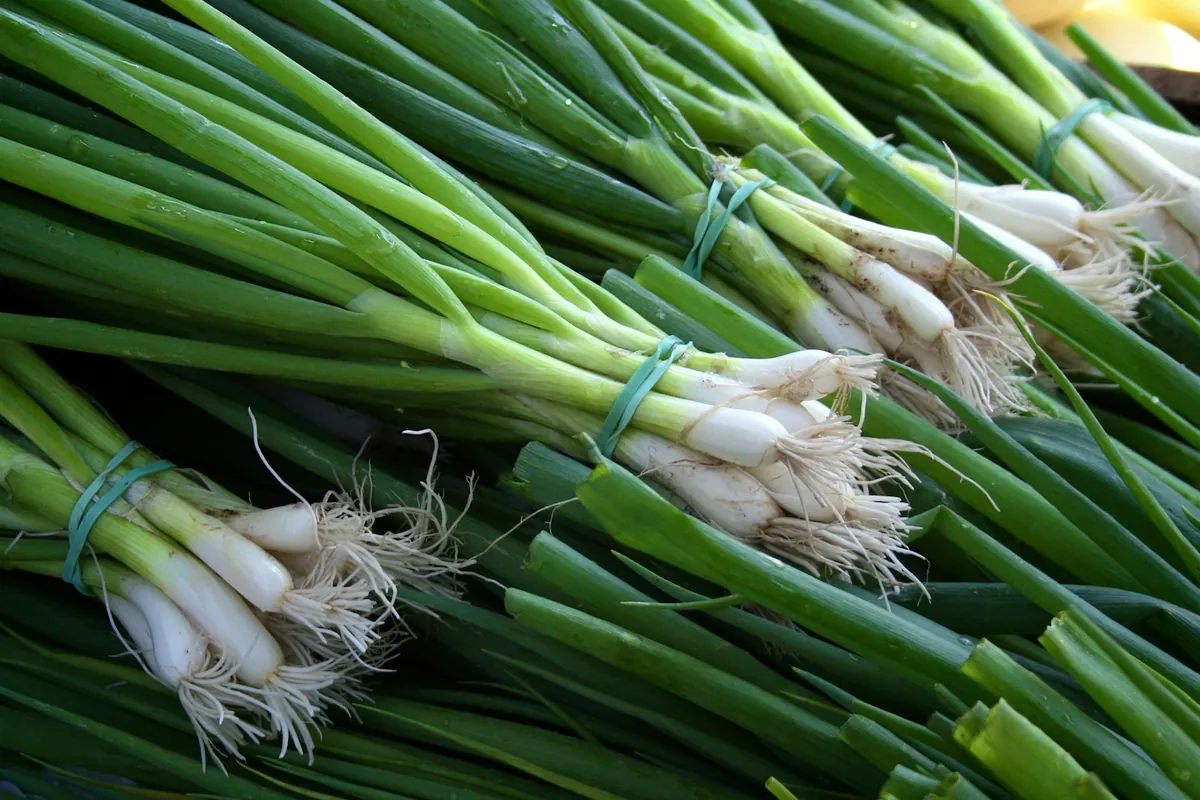
| Scallion | Fresh sharpness; a green finish | Cut into lengths or rings | Raw, scattered at the end, as a garnish |
Scallion is the one that does two jobs. The white part goes in early with the ginger and garlic as an aromatic; the green part is often held back and scattered over at the end, where it stays raw and sharp. If a dish arrives with bright green rings on top, that is the second use.
Ginger has a job beyond flavor that is worth knowing: it is used deliberately with fish and stronger meats, where it tempers what Chinese cooking calls the off-note. That is why a steamed fish arrives buried in ginger shreds — not decoration, function.
Why you taste them without seeing them
Because they are usually cooked to the point of disappearing.
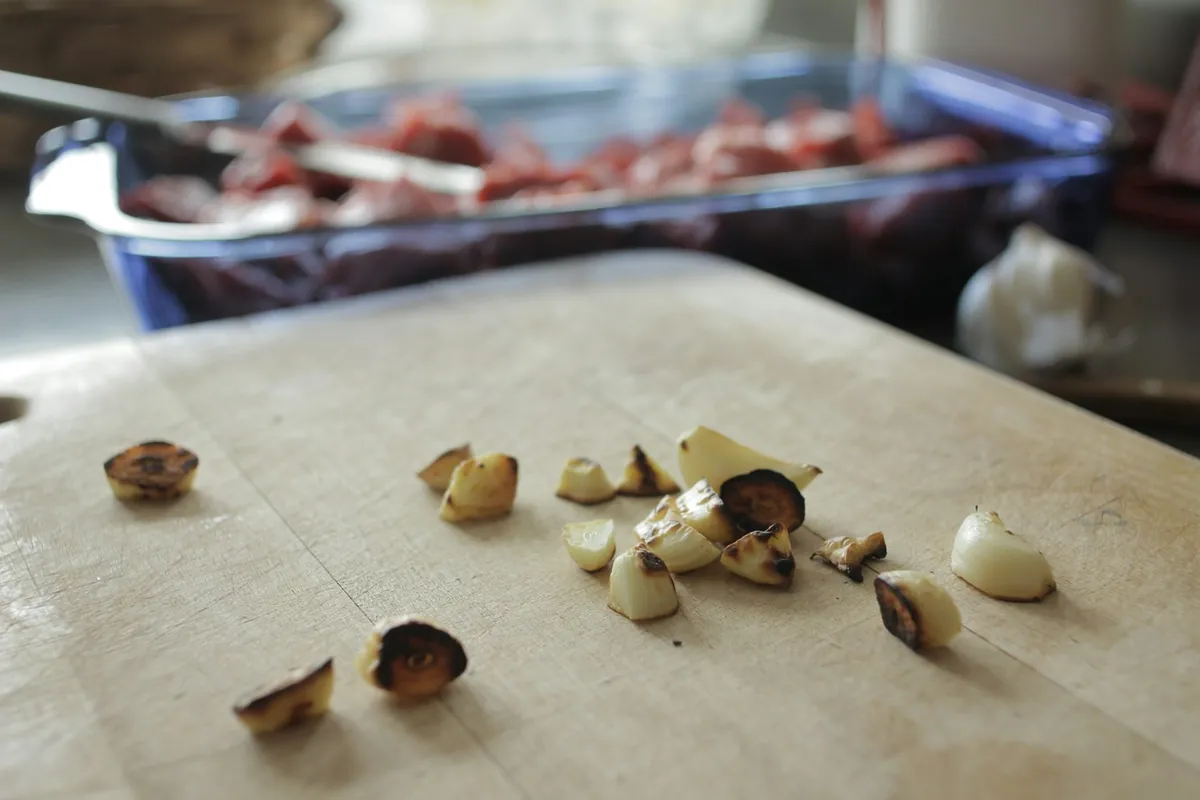
Minced garlic and ginger dropped into very hot oil for twenty seconds release most of their aromatic compounds into the fat and then largely dissolve into the sauce. You are tasting them in every mouthful and rarely encountering a recognizable piece.
When you do get a distinct piece — a slice of ginger, a length of scallion — it is usually intentional, added later or cut larger. Chinese cooking distinguishes between aromatics you eat and aromatics you do not, and larger ginger slices in a braise are generally the second kind. They are not meant to be eaten whole, and nobody minds if you push them to the side.
Garlic sauce is the exception where the aromatic becomes the point of the dish rather than its background — our guide to the garlic sauce dishes covers that section, which is the largest single use of one aromatic on the menu.
The home-cooking mistakes
Three, and they are all about timing rather than quantity.
What works
- Prep everything before the pan gets hot
- Very hot oil, then aromatics, then seconds
- Protein straight in after them
- Green scallion tops held back for the end
What goes wrong
- Chopping garlic while the pan heats
- Cooking aromatics for minutes, not seconds
- Adding them to cold or barely warm oil
- Letting garlic brown, which turns it bitter
Burnt garlic is the single most common failure. It goes from fragrant to acrid in a few seconds at wok temperature, and once it is bitter the whole dish is. If you are unsure, add the garlic a moment after the ginger — ginger is more forgiving of heat.
The other reliable fix is having everything cut and within reach before you start. A stir-fry gives you no time to prepare anything mid-cook, which is the real reason home versions go wrong — our guide to cooking oils covers the other half of getting the pan right.

Buying and keeping them
All three are cheap, and all three are usually bought badly.
Ginger should be firm with tight, smooth skin. Wrinkled ginger is old and fibrous. It keeps for weeks in the refrigerator and freezes well — frozen ginger grates easily and does not need peeling, which is a genuine convenience.
Garlic should be firm with no green shoot in the center. That shoot is a sign of age and tastes bitter; if a clove has one, cut it out. Pre-minced garlic in jars is a different, duller ingredient and is not a good substitute here, where the whole point is a fresh aromatic hitting hot oil.
Scallions are the most perishable of the three. Keep them upright in a little water in the refrigerator and they last considerably longer than lying in a drawer. The roots regrow if you plant the white ends, which is a small pleasure rather than a serious food strategy.
Frequently asked questions
What are the aromatics in Chinese cooking?
Ginger, garlic and scallion. They go into hot oil at the start of a dish to flavor the fat, which then carries that flavor through everything else — the same role onion, celery and carrot play in French cooking.
Why do you cook aromatics for only a few seconds?
Because the oil is already very hot. Fifteen to thirty seconds releases their aroma into the fat; much longer and the garlic browns and turns bitter. It is the opposite of a slowly sweated French base.
Why is there ginger with fish dishes?
Function rather than decoration. Ginger is used deliberately with fish and stronger meats to temper what Chinese cooking treats as an off-note, which is why a steamed fish often arrives covered in ginger shreds.
Are you meant to eat the big pieces of ginger?
Not usually. Chinese cooking distinguishes between aromatics you eat and aromatics that flavor a dish and are left behind. Larger ginger slices in a braise are generally the second kind, and pushing them aside is normal.
Why does my home stir-fry taste bitter?
Most often burnt garlic. It goes from fragrant to acrid within seconds at wok temperature, and once bitter it takes the whole dish with it. Add garlic a moment after the ginger, which handles heat better.
The short version
Ginger, garlic and scallion, into very hot oil, for seconds. They flavor the fat and then largely disappear, which is why you taste them everywhere and see them almost nowhere.
Prep before the pan is hot, and watch the garlic. Everything else about a stir-fry is more forgiving than that.
Order from China King
Garlic sauce is where one aromatic becomes the whole dish.
Sources
- Britannica: ginger — on the rhizome and its use in cooking.
- Stir frying — on the technique and the order ingredients enter the pan.