
Most people order Chinese food exactly as written on the menu, and then wish one thing had been different. Less heat. Sauce on the side. No onions. The requests are usually reasonable and the answer usually depends on something you cannot see: whether the change happens before the wok or in it.
Requests that change what goes into the wok are easy — hold a vegetable, swap a protein, adjust the chili. Requests that change how a dish is finished are harder, because the sauce may be the cooking method. Ask when you order, not after, and ask the restaurant rather than assuming either way.

Why some requests are easy and others are not
A takeout kitchen assembles most dishes from components prepared in advance: cut proteins, portioned vegetables, sauces held ready. Our guide to how takeout kitchens work covers that system in detail, and it is the key to predicting what is possible.
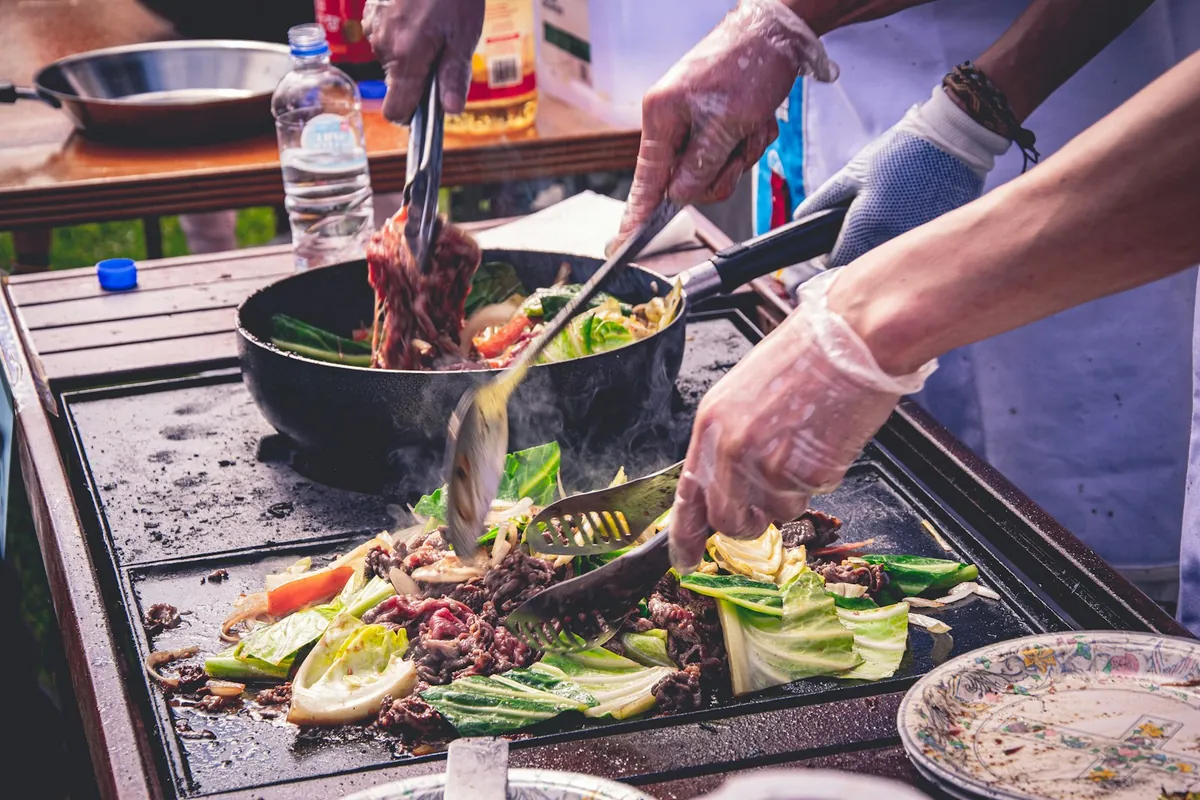
If your request means putting a different component in the pan, it costs the kitchen nothing. Substituting chicken for beef in a section dish is trivial, because both are prepped and waiting.
If your request means changing the technique, it is a different matter. A dish finished by tossing fried chicken in a sticky glaze cannot have that sauce served separately, because the tossing is the last cooking step. Asking for it on the side means asking for a different dish.
What each request actually involves
| Request | Usually | Why |
|---|---|---|
| Swap the protein | Easy | All proteins are prepped and held |
| Hold a vegetable | Easy | Vegetables are added by hand |
| Less or more chili | Usually easy | Chili is often added rather than pre-mixed |
| Plain rice instead of fried | Easy | Both are cooked in bulk |
| Sauce on the side | Depends on the dish | Fine if poured over; impossible if tossed in |
| Less oil | Sometimes | Wok cooking needs oil to work at all |
| No soy sauce | Hard | Often already in the held sauce base |
| Steamed instead of stir-fried | Only if the menu has it | A different station and cooking time |
The two rows worth dwelling on are the last ones. “No soy sauce” is difficult not because anyone is unwilling but because the brown sauce was made yesterday with soy in it — our guide to Chinese sauces covers what is in them. And steaming is a real alternative only where the menu already carries steamed dishes, as ours does.
The heat question, handled well
Spice level is the most commonly requested change and the most poorly communicated one, in both directions.
“Not spicy” is unambiguous and easy. “Medium” is not: it means different things in different kitchens, and a Szechuan-style dish at medium may still be hotter than someone expects. Our guide to Szechuan, Hunan and Kung Pao covers which dishes are built around heat rather than merely seasoned with it.
The better approach is to describe the outcome instead of picking a number. “Mild enough for a child” and “as hot as you make it” both convey more than a scale does. And if you want heat added at the table rather than in the pan, chili oil on the side is the request that always works — our guide to the condiment packets covers those.
How to ask
Works well
- Saying it when you order, not on collection
- One clear change per dish
- Naming the dish code as well as the name
- Asking whether something is possible, not insisting
Works badly
- Several modifications on one dish
- Requests during a dinner rush
- Assuming a note in an online order was read
- Asking after the food is cooked
That third point deserves emphasis. Free-text notes in online ordering systems are read inconsistently across the industry — sometimes they reach the kitchen ticket, sometimes they sit in a field nobody prints. If a modification actually matters, phone it. Our guide to pickup or delivery covers when to call versus order online.

Allergies are a different conversation
Worth separating clearly from preferences, because they are not the same request.
A preference is satisfied by leaving something out. An allergy requires knowing what else the pan, the oil and the utensils have touched, and a takeout kitchen shares all three across dozens of dishes in an evening. Leaving cashews out of a dish does not address the wok that held them ten minutes earlier.
So an allergy is a phone conversation with the restaurant about the specific dish and the shared equipment, not a line item on an order. Our guides to nuts on the menu and shellfish both explain why, and neither claims a dish is safe.
What not to bother asking for
Two things, said plainly to save you the trouble.
A dish that is not on the menu, built from scratch, during service. Kitchens will sometimes oblige regulars in quiet hours, but as a general request it asks a fast-assembly kitchen to become something else for one order.
And crispness after delivery. No modification protects a battered dish from twenty minutes in a closed container — sauce on the side helps, but physics wins. If crisp matters, collect it. Our guide to storing and reheating covers what happens afterwards.
Frequently asked questions
Can you ask for Chinese food to be less spicy?
Usually yes, because chili is often added during cooking rather than pre-mixed into a sauce base. “Not spicy” is clearer than “mild”, and describing the outcome — mild enough for a child — communicates better than a number.
Can I get the sauce on the side?
It depends on the dish. If the sauce is poured over at the end, usually yes. If the dish is finished by tossing fried pieces in a glaze, the tossing is the last cooking step, so serving it separately means a different dish. Ask about the specific one.
Can I swap the protein in a dish?
Usually easily. Chicken, beef, pork and shrimp are all prepped and held ready, so putting a different one in the pan costs the kitchen nothing. Price may change if you move to a more expensive protein.
Should I put special requests in the online order notes?
Not if the request really matters. Free-text notes are read inconsistently across the industry — sometimes they reach the kitchen ticket and sometimes they sit in a field nobody prints. Phone anything important.
Can I ask for a dish to be made without oil?
Not really — wok cooking depends on oil to transfer heat, so a genuinely oil-free stir-fry is not a stir-fry. If you want a lighter preparation, the steamed section of the menu is built that way from the start.
The short version
Changes to what goes into the pan are easy. Changes to how a dish is finished may not be possible at all, because the sauce is sometimes the cooking.
Ask when you order, keep it to one change per dish, phone anything that matters, and treat an allergy as a conversation rather than a request.
Order from China King
Call with the dish code and ask — it is the reliable way to get a change onto the ticket.
Sources
- Stir frying — on why the technique depends on oil and very high heat.
- FDA: Food allergies — on major allergens and cross-contact.