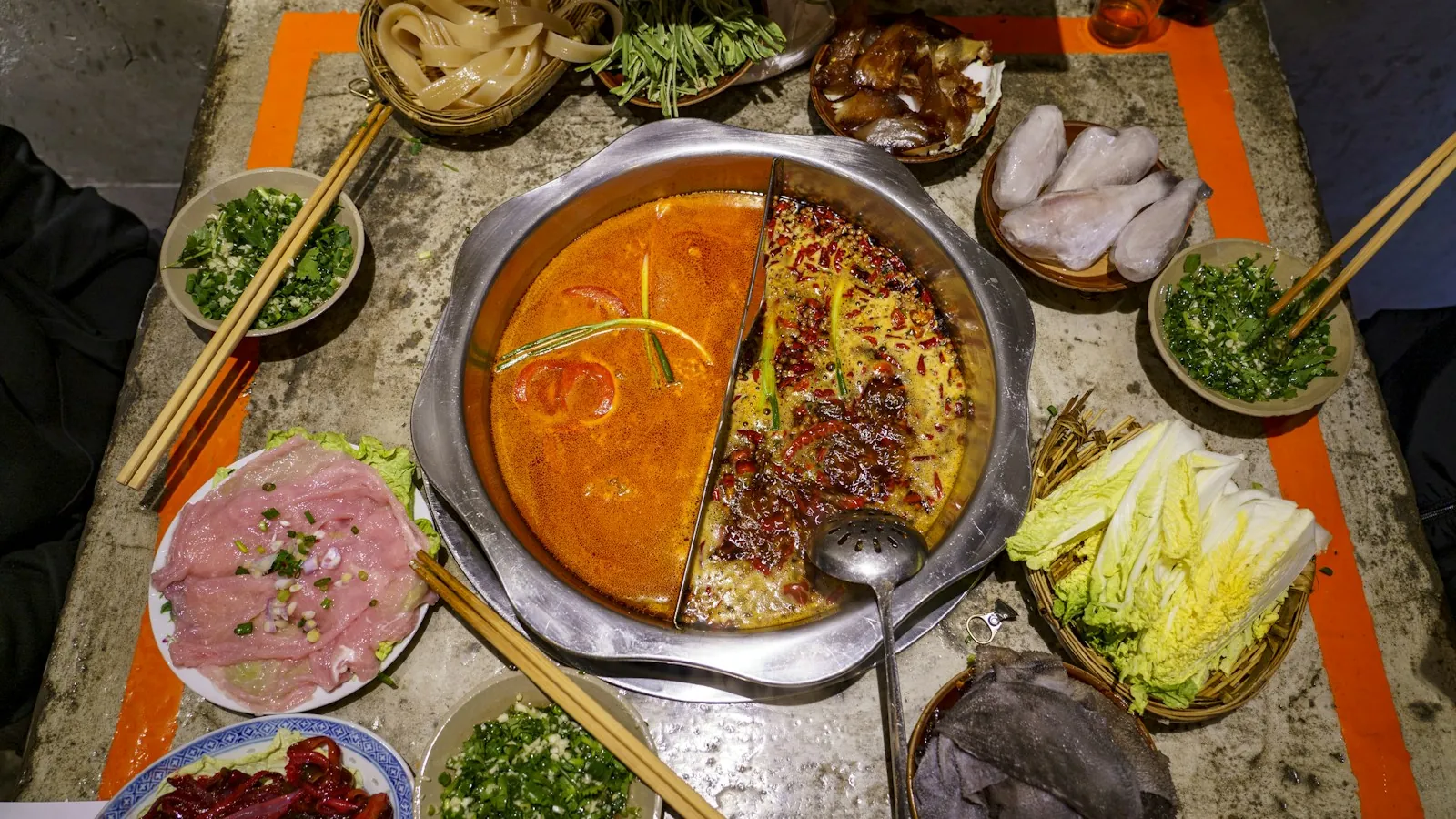
Hot pot is the most social meal in Chinese cooking and the one least like anything on a takeout menu. The reason is structural rather than culinary: at a hot pot table, the restaurant does not cook your food. You do.
Hot pot is a simmering pot of seasoned broth set into the middle of the table. Raw ingredients — thin-sliced meat, seafood, vegetables, noodles — arrive uncooked, and each person cooks their own in the broth as they go. It cannot be takeout, because the cooking is the meal.
How a hot pot meal works
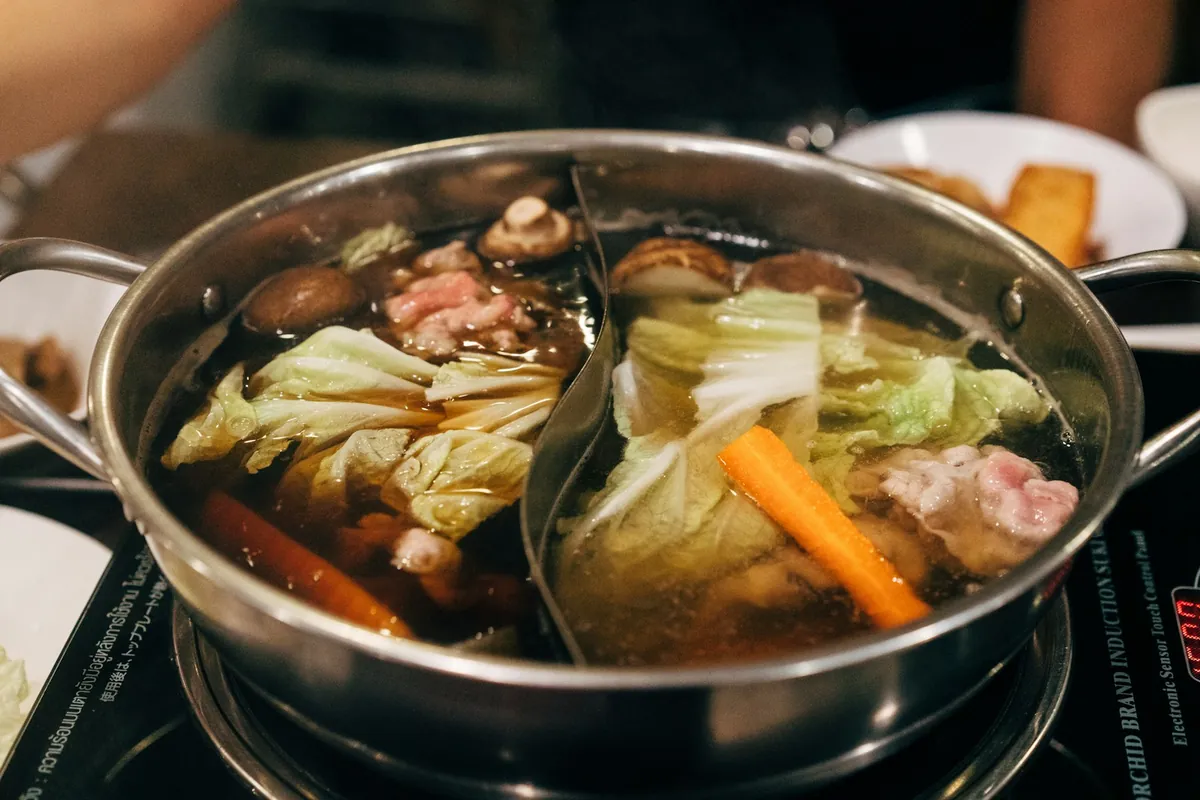
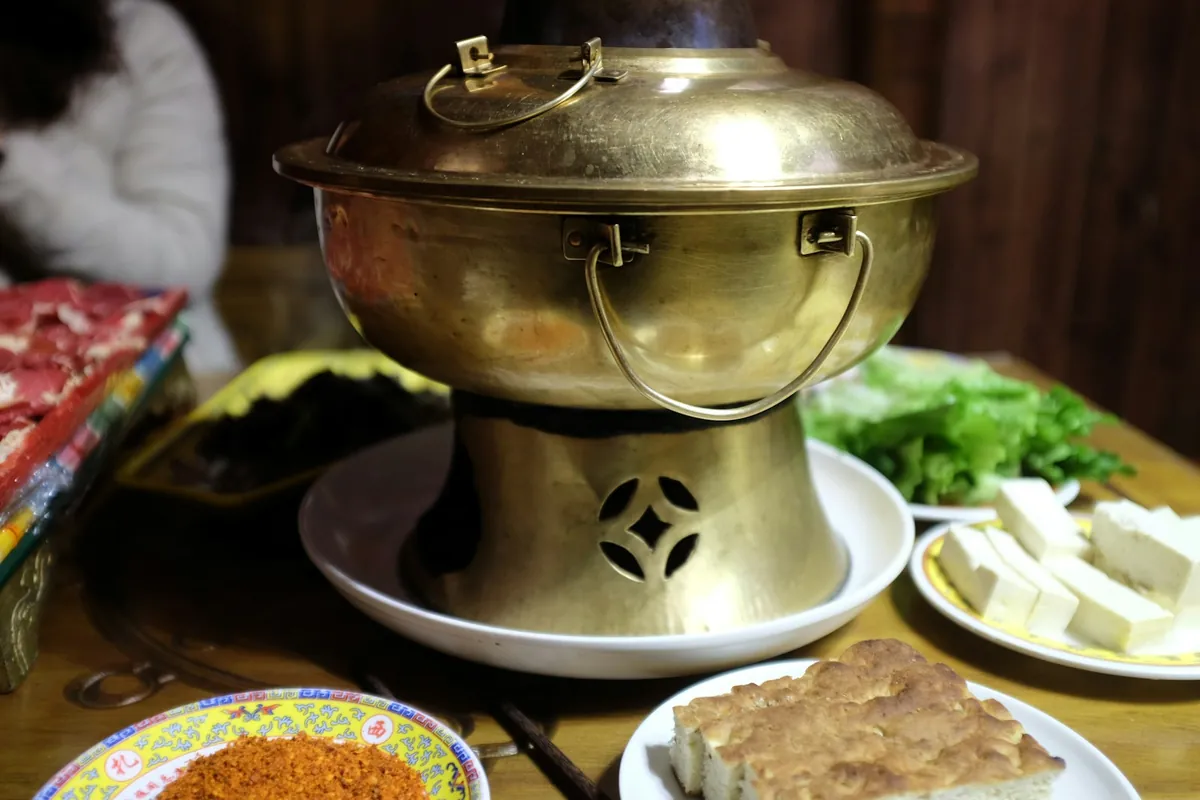
A burner sits in or on the table with a pot of broth on it, kept at a simmer for the whole meal. Around it go plates of raw ingredients and a set of small bowls for dipping sauces.
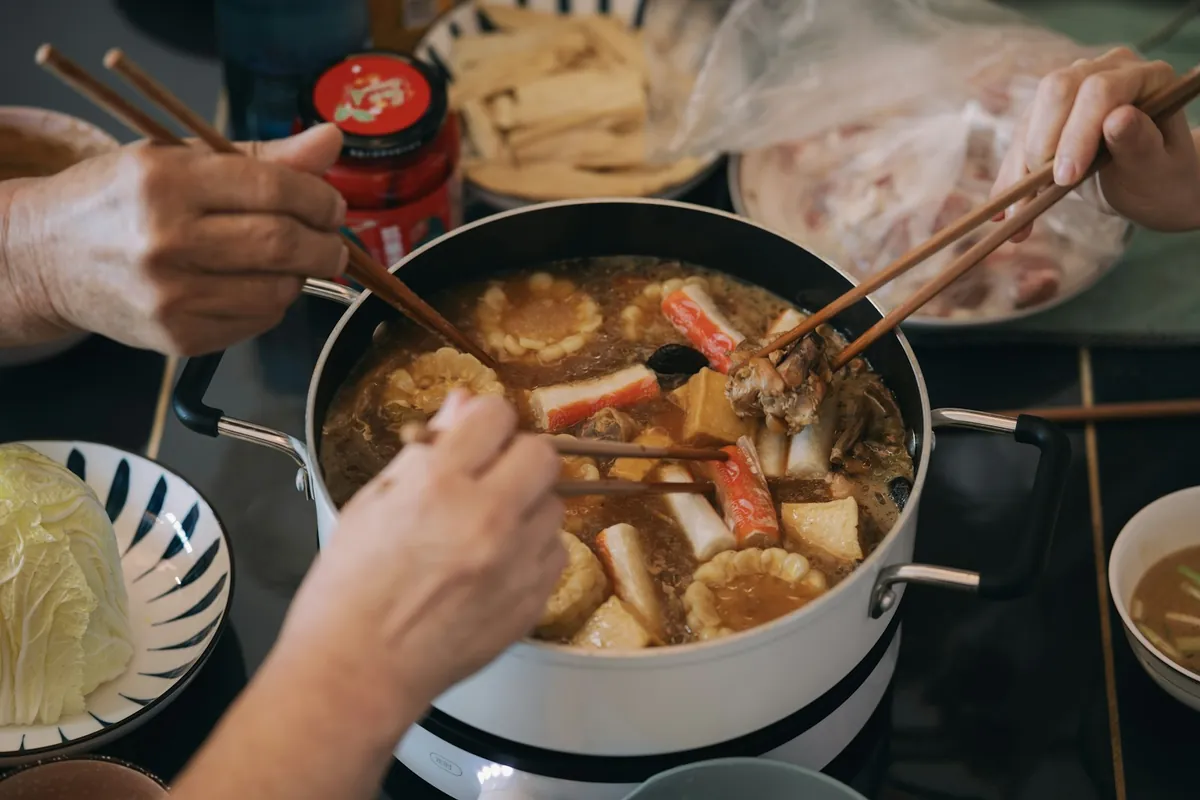
You pick something up, put it in the broth, wait until it is cooked — seconds for thin-sliced beef, minutes for a dense vegetable — fish it out, dip it, eat it. Then repeat, for an hour or two, while talking.
The order matters a little. Meat and dense vegetables go in early because they season the broth. Noodles go in last, because by then the broth has become the best thing in the room and the noodles absorb it.
Many restaurants offer a divided pot with two broths, so a table can have one mild and one fiercely spicy side without anyone compromising. That is a genuinely elegant solution to the problem every shared meal has.
The broths and the sauces
Two decisions shape the meal, and only one of them is made by the kitchen.
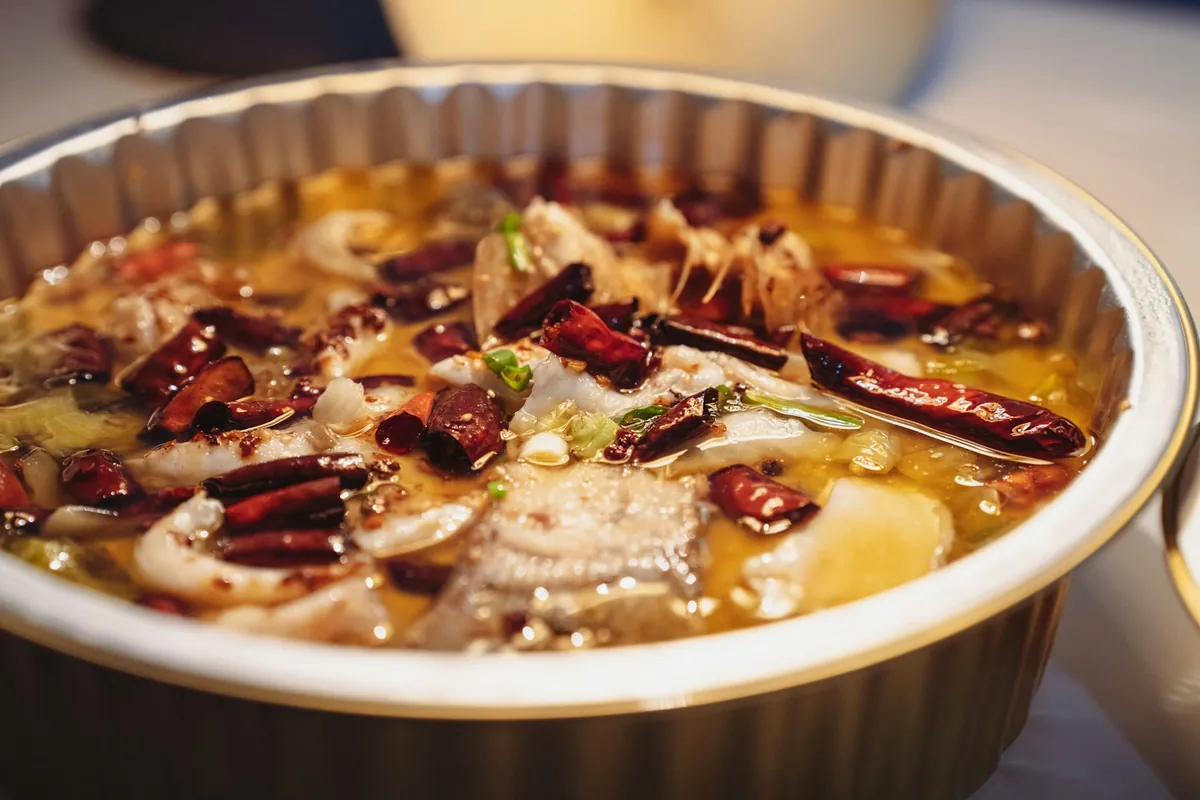
The broth is chosen when you order: a mild bone or mushroom broth, a tomato broth, or the numbing chili broth associated with Sichuan cooking. That last one contains Sichuan peppercorn, which produces a tingling numbness distinct from chili heat — our guide to Szechuan, Hunan and Kung Pao covers that sensation.
The dipping sauce is built by you, at a sauce station, from components: sesame paste, soy, chili oil, garlic, scallion, cilantro, vinegar, sometimes raw egg. There is no correct combination, and regulars have a formula they return to. This is the part first-timers find most disorienting and the part they most enjoy once someone explains it.

What arrives at the table
| Ingredient | Cooks in | Notes |
|---|---|---|
| Thin-sliced beef or lamb | Seconds | Sliced paper-thin, often served frozen in rolls |
| Fish balls, meatballs | A few minutes | Go in early; they need to float |
| Shrimp and shellfish | 1–2 minutes | Overcook quickly |
| Leafy greens | Under a minute | Add in small batches |
| Mushrooms, lotus root | Several minutes | Add early for flavor |
| Tofu, tofu skin | 2–3 minutes | Absorbs the broth well |
| Noodles | 2–3 minutes | Last, in the seasoned broth |
The left-hand column is the whole skill of hot pot. Nothing is difficult, but timing is on you, and the most common first-timer mistake is putting everything in at once and then fishing overcooked shrimp out of a crowded pot.
Why it cannot be takeout
Three reasons, and the first is decisive.
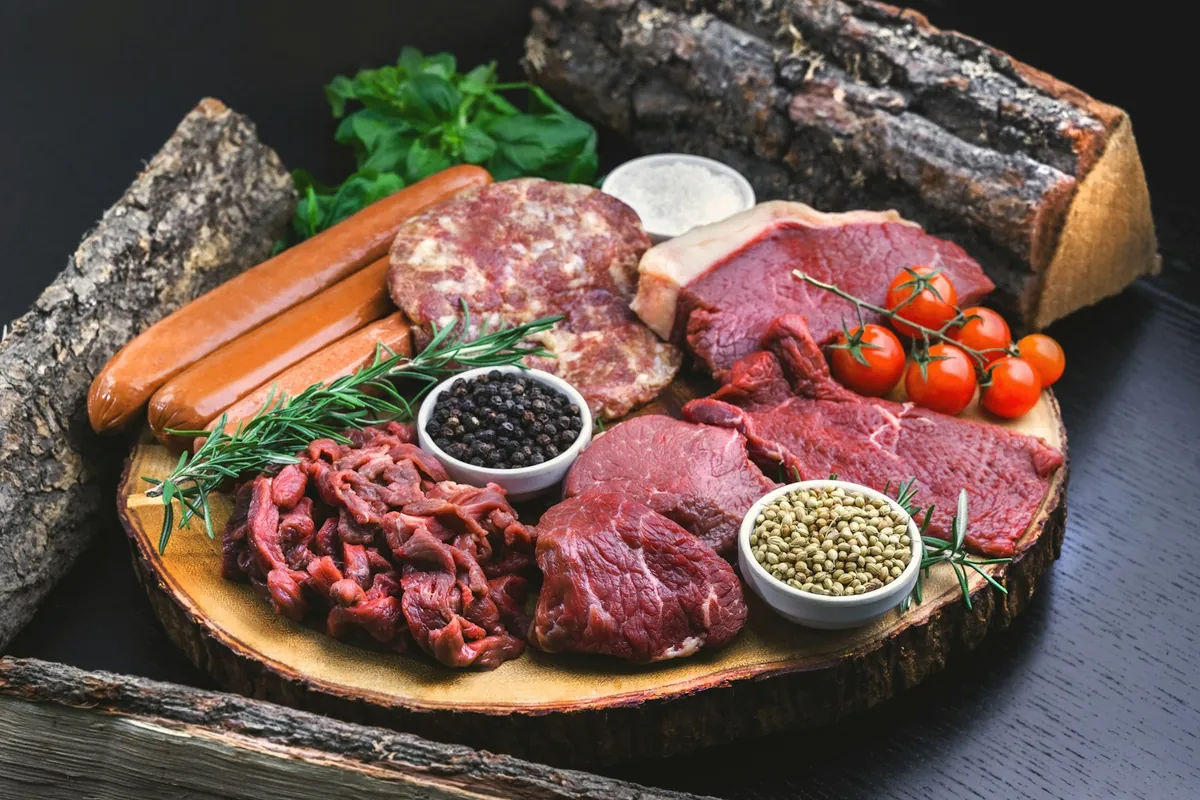
The diner is the cook. Every other format on a restaurant menu involves a kitchen cooking food and handing it over. Hot pot inverts that: the kitchen supplies raw ingredients and heat, and the cooking happens at the table over an hour. Package that and you have a bag of raw meat.
It needs a live heat source. A simmering pot on the table is the entire apparatus. There is no takeout equivalent of continuous heat, and the food is not food until it meets it.
It occupies a table for a long time. Hot pot restaurants are built around long sittings, which is a different business from a takeout counter turning orders over in twelve minutes — our guide to how takeout kitchens work covers that economics.
Some places do sell hot pot kits to take home, which is a real thing and worth knowing about. But that is selling you groceries and a recipe, not serving you a meal.
Hot pot next to the other formats
It is worth placing it against the two other things this site has written about, because the three are commonly confused as “real Chinese food” in contrast to takeout.
What each format is
- Hot pot — you cook, at the table, for hours
- Dim sum — kitchen cooks, small plates, daytime
- Takeout — kitchen cooks, packed, minutes
- All three are real and none substitutes
What takeout can offer instead
- Soups, for broth-based comfort
- Steamed dishes, for clean simple cooking
- A family pack, for the sharing element
- Nothing at all for the cooking-together part
Our guides to dim sum and Chinese soups cover the closest available things. If what you want from hot pot is a shared table and a long meal, a family pack delivers some of that; if what you want is cooking together, nothing on a takeout menu does.
Going for the first time
Four things worth knowing, since the format assumes familiarity.
Order less than you think at the start. Ingredients arrive quickly and you can always add more, whereas a table covered in raw plates creates pressure.
Use the divided pot if it is offered, even in a group that all like spice — the mild side stays usable for delicate ingredients that the chili broth would overwhelm.
Expect to smell of it. A simmering pot of chili broth for two hours ends up in your clothes and hair, and regulars plan for that.
And keep a slotted spoon in the pot rather than dropping ingredients loose if you can. Losing a fish ball in an opaque broth for twenty minutes is the standard hot pot indignity.
Frequently asked questions
What is Chinese hot pot?
A simmering pot of seasoned broth in the middle of the table, with raw ingredients served alongside. Each person cooks their own food in the broth as they go, dips it in a sauce they mixed themselves, and eats it — over an hour or two.
Why is hot pot not available as takeout?
Because the diner does the cooking. The restaurant supplies raw ingredients and a live heat source, and the cooking happens at the table. Packaged up, that is a bag of raw meat rather than a meal. Some places sell take-home kits, which is groceries plus a recipe.
What do you dip hot pot food in?
A sauce you build yourself from a station: sesame paste, soy, chili oil, garlic, scallion, cilantro, vinegar and sometimes raw egg. There is no single correct combination, and most regulars have a formula they return to.
What order should you cook hot pot ingredients in?
Meat, meatballs and dense vegetables early, since they season the broth. Delicate items like leafy greens and shrimp in small batches as you go, because they overcook in a minute or two. Noodles last, when the broth is at its best.
Is hot pot spicy?
Only if you choose a spicy broth. Mild bone, mushroom and tomato broths are standard options, and many restaurants offer a divided pot so one table can have both. The Sichuan-style broth adds a numbing tingle as well as heat.
The short version
A pot of broth, a burner, plates of raw ingredients, and a table of people cooking their own dinner for two hours. Broth chosen by the kitchen, sauce built by you.
It is the one Chinese format that genuinely cannot be packed into a bag, because the cooking is the meal.
Order from China King
No hot pot — but the soups are the closest thing we have to a broth-led meal.
Sources
- Hot pot — on the format, its regional broths and how a meal proceeds.
- Britannica: Chinese cuisine — on regional Chinese cooking traditions.