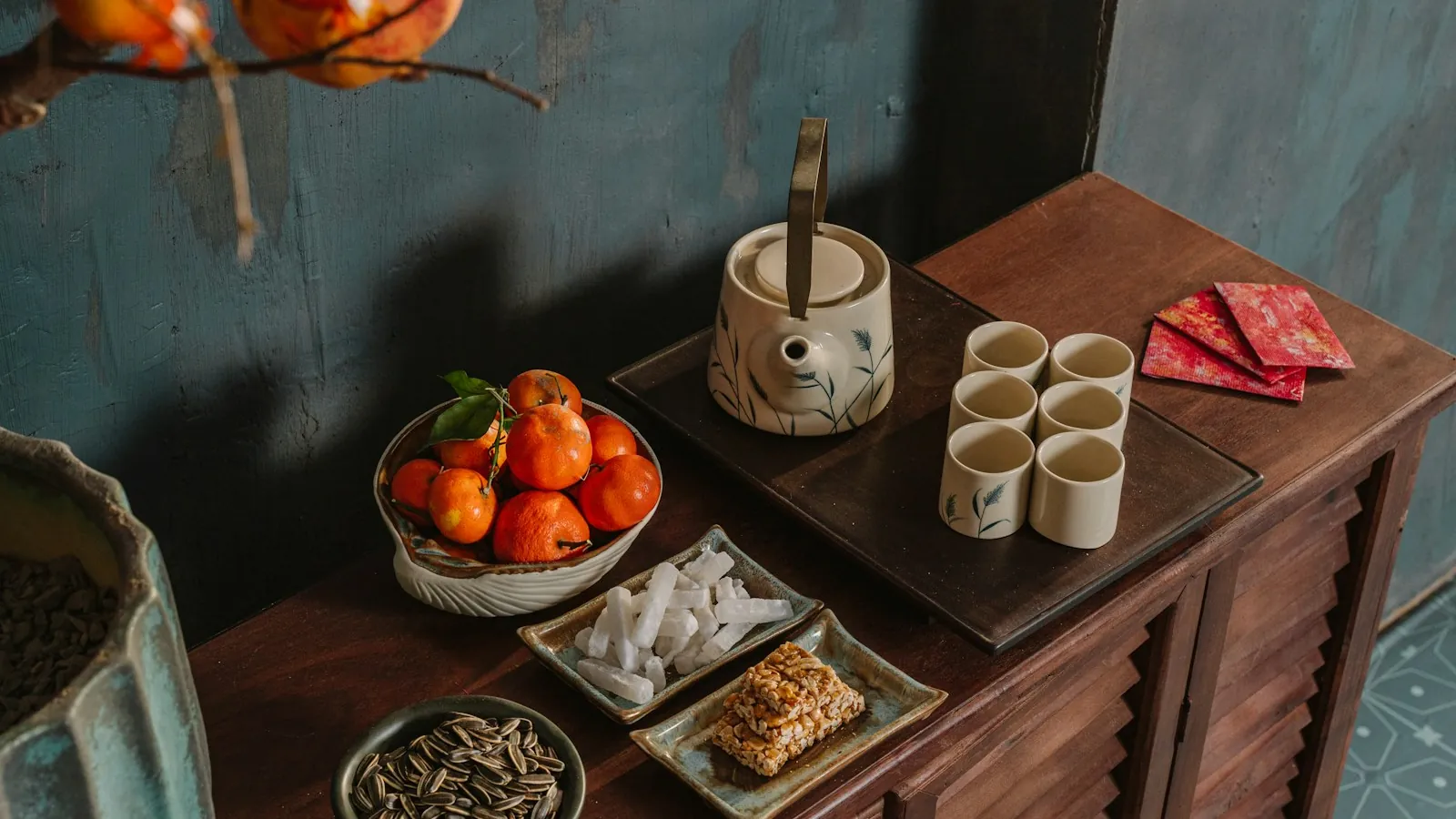
Lunar New Year is the most important holiday of the year across much of East Asia, and the food is not incidental to it. Almost every dish on the table is there for a reason, and most of those reasons are puns.
Lunar New Year falls between late January and mid February, following the lunar calendar rather than a fixed date. The traditional foods are chosen for what their names sound like or what they look like: dumplings resemble old money, whole fish sounds like “surplus”, and long noodles stand for a long life.
Why the date moves
The holiday follows a lunisolar calendar, falling on the second new moon after the winter solstice. In the Gregorian calendar that lands somewhere between about January 21st and February 20th, which is why it is a different date every year and why it is worth checking rather than assuming.
The celebration runs for roughly fifteen days, ending with the Lantern Festival, though the concentrated part is New Year’s Eve and the first few days. That length matters practically: a family-run restaurant that closes for the holiday may close for several days rather than one.
It is called Lunar New Year rather than Chinese New Year in many contexts because it is observed well beyond China — in Korea, Vietnam, Singapore and elsewhere, with different names and partly different foods.

The foods, and the wordplay behind them
Mandarin and Cantonese are rich in homophones, and a great deal of New Year symbolism works by sound. A dish is served because its name resembles a word for wealth, surplus or togetherness.
| Food | Association | Why |
|---|---|---|
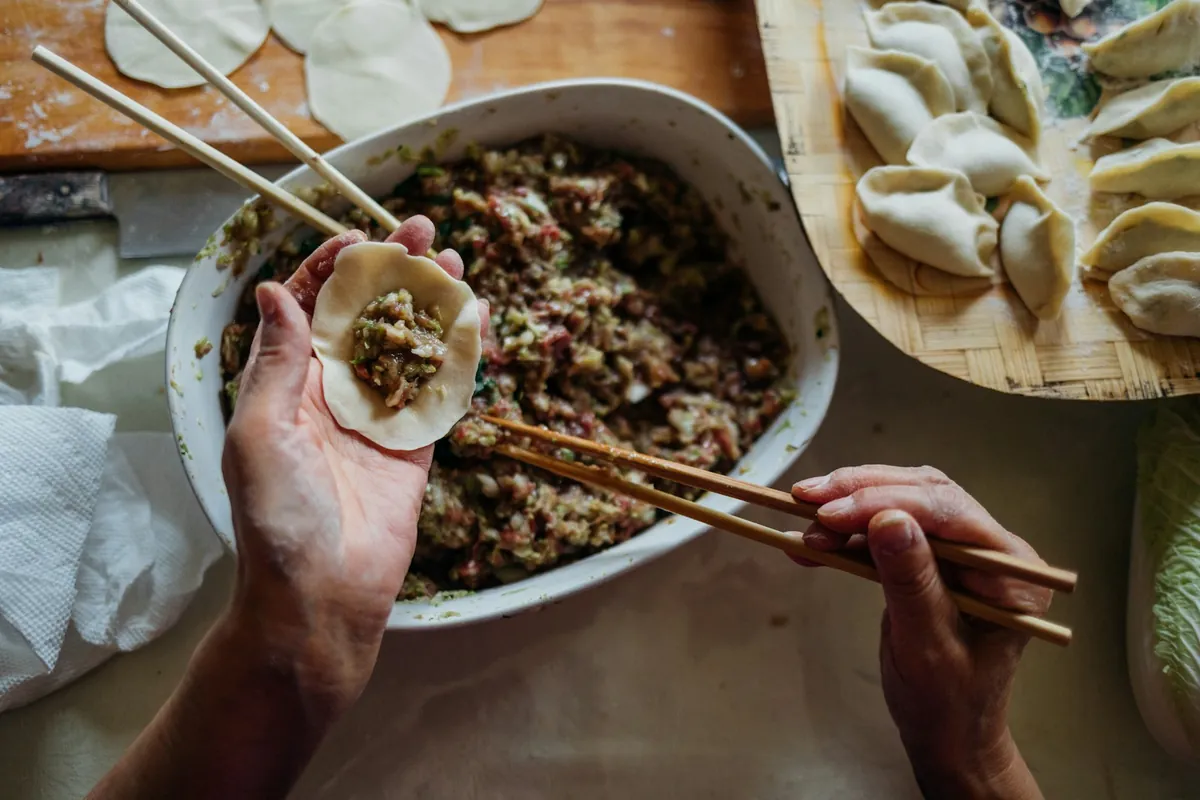
| Dumplings | Wealth | Shaped like old ingot-style money; often folded by the whole family |
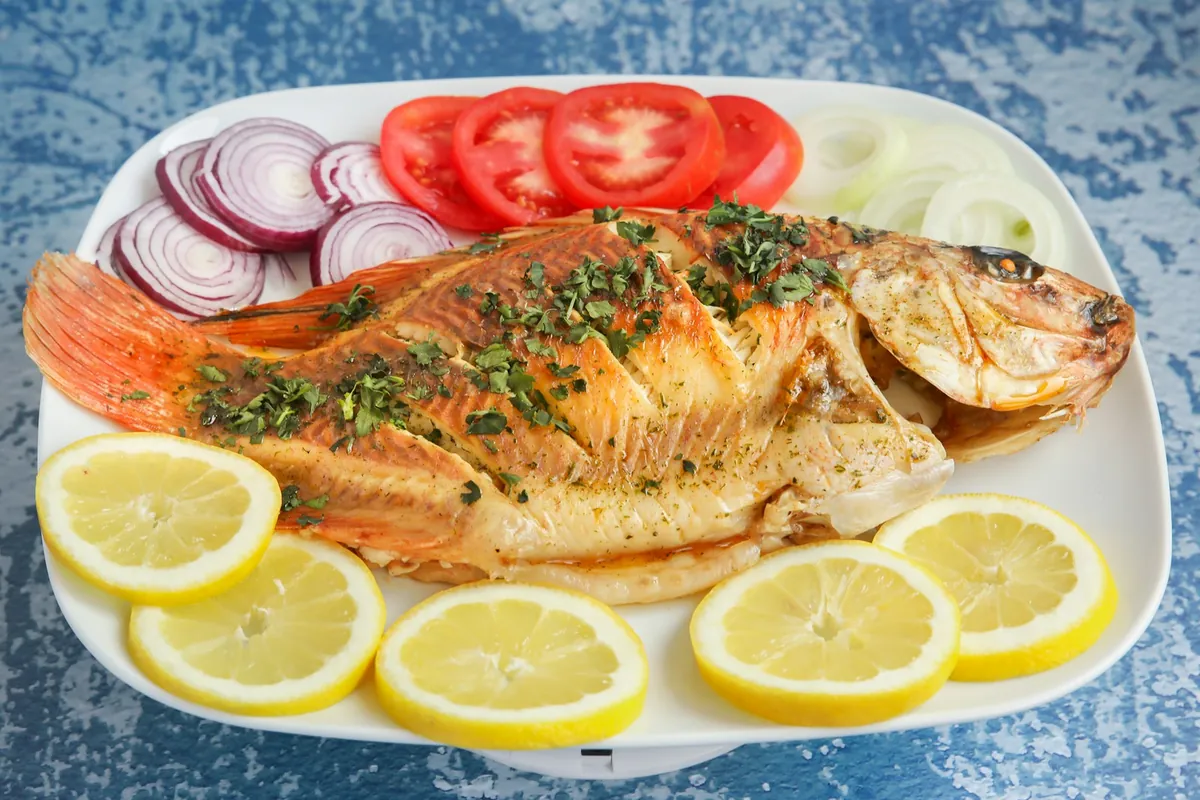
| Whole fish | Surplus, abundance | The word for fish sounds like the word for surplus; served whole, head and tail intact |
| Long noodles | Long life | Served uncut — and traditionally not bitten through |
| Spring rolls | Wealth | Golden color and bar shape, resembling gold bars |
| Sticky rice cake (nian gao) | Advancement | The name sounds like “higher year” |
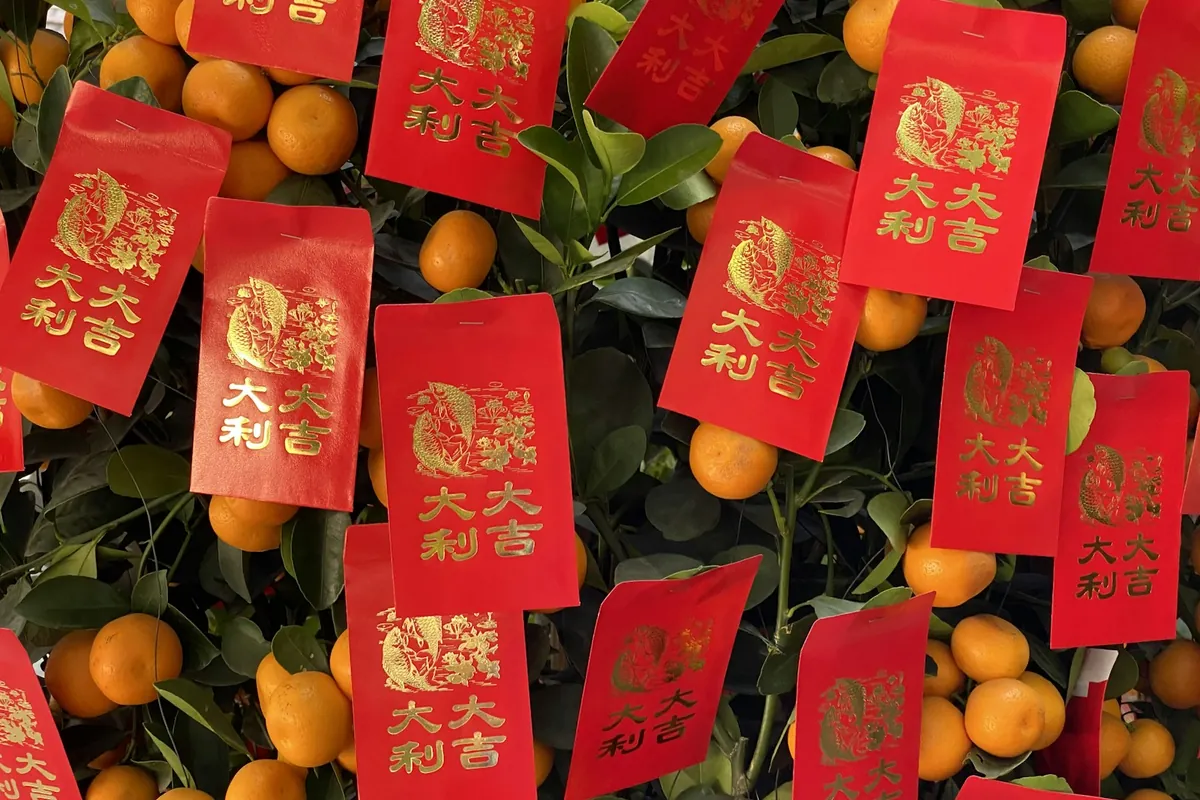
| Tangerines and oranges | Luck, wealth | Names resemble words for luck and gold; round and gold-colored |
| Sweet rice balls (tangyuan) | Family togetherness | Round shape and a name suggesting reunion |
Two conventions are worth knowing because they surprise people. The fish is served whole and often deliberately not finished — leaving some represents surplus carried into the next year. And the long noodles are meant to be slurped without biting through, which is the opposite of table manners in most Western contexts.
What is avoided
The symbolism cuts both ways, and the avoidances are as specific as the inclusions.
Cutting the noodles is avoided, since it shortens what they represent. Porridge is often avoided because of an association with poverty. In some households, sweeping the floor or washing hair on the first day is put off, on the basis that it sweeps away the year’s incoming luck.
None of this is treated as literal cause and effect by most people who observe it. It is ritual, done because it is what the family does.
What you will and will not find on a takeout menu
This is worth being straightforward about: most of the dishes above are not on an American Chinese takeout menu, and that is not an omission.
A whole steamed fish with the head on, sticky rice cake, tangyuan — these are home-cooking and celebration-restaurant dishes. American takeout menus were built for a different job. Our guide to how American Chinese food came to be covers why the two diverged.
What you will find are the relatives. Dumplings are on most menus, as are spring rolls and long noodles, and all three carry their New Year meaning wherever they are served.
On a takeout menu, and traditional
- Dumplings, boiled or fried
- Spring rolls and egg rolls
- Long noodles — lo mein
- Whole shrimp dishes, for liveliness
Usually not on a takeout menu
- Whole steamed fish, head and tail on
- Nian gao, the sticky rice cake
- Tangyuan, sweet rice balls
- The full multi-course New Year’s Eve meal
Our guides to dumplings and wontons, egg rolls and spring rolls and lo mein and the noodle sections cover the three that translate directly.
Marking it with a takeout order
If you want to observe the holiday from an American Chinese menu, the honest approach is to lean on the dishes that genuinely carry the symbolism rather than to approximate the rest.
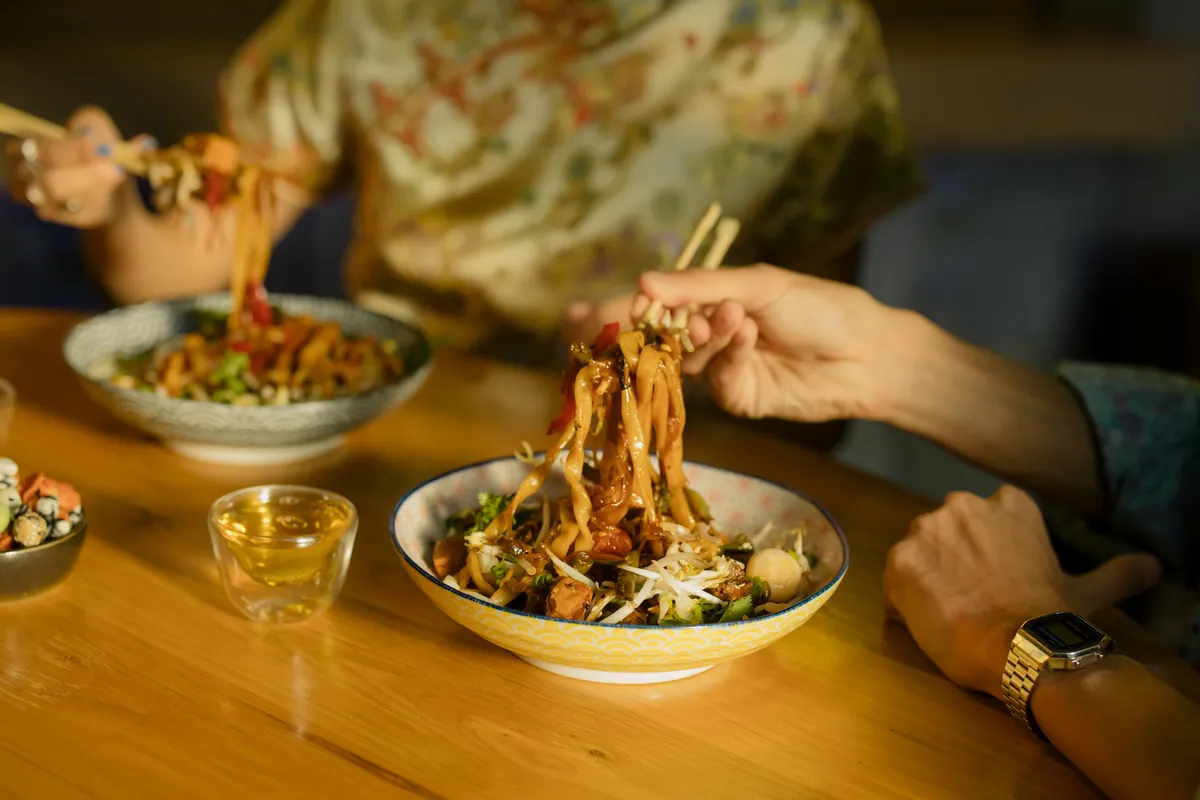
Dumplings for wealth, long noodles left uncut for long life, spring rolls for the gold-bar association, and something whole rather than chopped if the menu offers it. That is a real meal with real associations, and it does not pretend to be a New Year’s Eve banquet.
One practical caution that matters more than any of the above: the restaurant itself may be closed. Lunar New Year is the holiday a family-run Chinese restaurant is most likely to take off, sometimes for several days. Our guide to holidays and Chinese restaurants covers that pattern, which runs opposite to the Christmas one.

The red envelopes and the rest
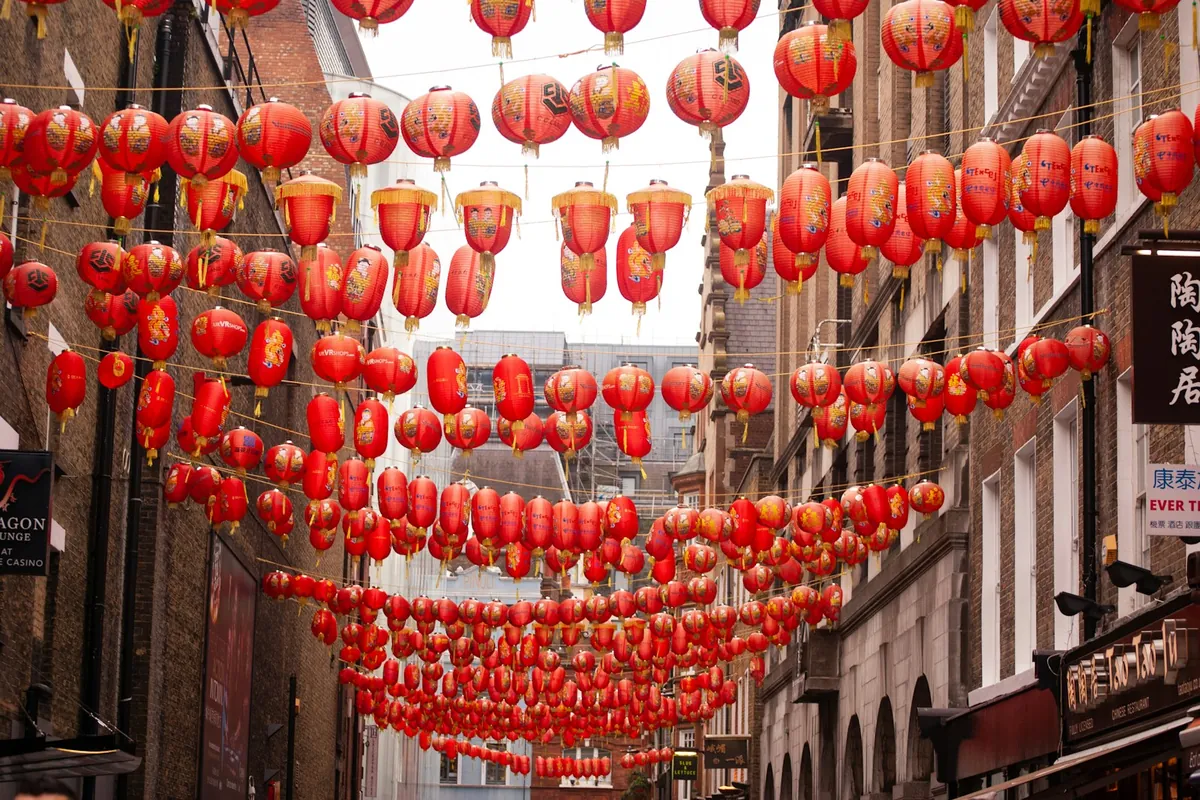
Food is the center of it but not all of it. Red envelopes of money are given, usually from married adults to children and unmarried relatives. Homes are cleaned before the holiday rather than during it, and red and gold dominate the decoration — red for luck, gold for wealth.
The color association is why so many Chinese restaurants anywhere in the world are decorated in red and gold all year round. It is not a design cliche — it is the same symbolism, permanently installed.
If you are unsure how to acknowledge the holiday, the general-purpose greeting in Mandarin is xin nian kuai le; in Cantonese, gong hei fat choy.
Frequently asked questions
When is Lunar New Year?
It falls on the second new moon after the winter solstice, which places it between roughly January 21st and February 20th depending on the year. Because it follows a lunisolar calendar, the Gregorian date changes annually and is worth checking.
Why are dumplings eaten at Chinese New Year?
Their shape resembles old ingot-style money, so they are associated with wealth. Folding them is also often a family activity on New Year’s Eve, which gives them a second association with togetherness.
Why is fish served whole?
The word for fish sounds like the word for surplus, and serving it whole — head and tail intact — represents completeness from beginning to end. Some of it is traditionally left uneaten, to carry surplus into the coming year.
Why should you not cut Lunar New Year noodles?
Long uncut noodles stand for a long life, so cutting or biting through them works against the symbolism. They are traditionally slurped whole, which is the opposite of what Western table manners would suggest.
Can I get Lunar New Year dishes from a takeout menu?
Some of them. Dumplings, spring rolls and long noodles are on most takeout menus and carry their traditional meaning. Whole steamed fish, sticky rice cake and sweet rice balls are generally home or celebration-restaurant dishes rather than takeout ones.
The short version
A holiday whose date moves with the moon, and a menu built almost entirely on wordplay: dumplings for money, fish for surplus, uncut noodles for long life, oranges for luck.
Dumplings, spring rolls and lo mein carry that meaning onto a takeout menu. And check the restaurant is open — this is the week it is most likely not to be.
Order from China King
Dumplings, egg rolls and lo mein — call to check our hours around the holiday.
Sources
- Britannica: Chinese New Year — on the date, the length of the celebration and its customs.
- Chinese New Year — on the traditional foods and the wordplay behind them.