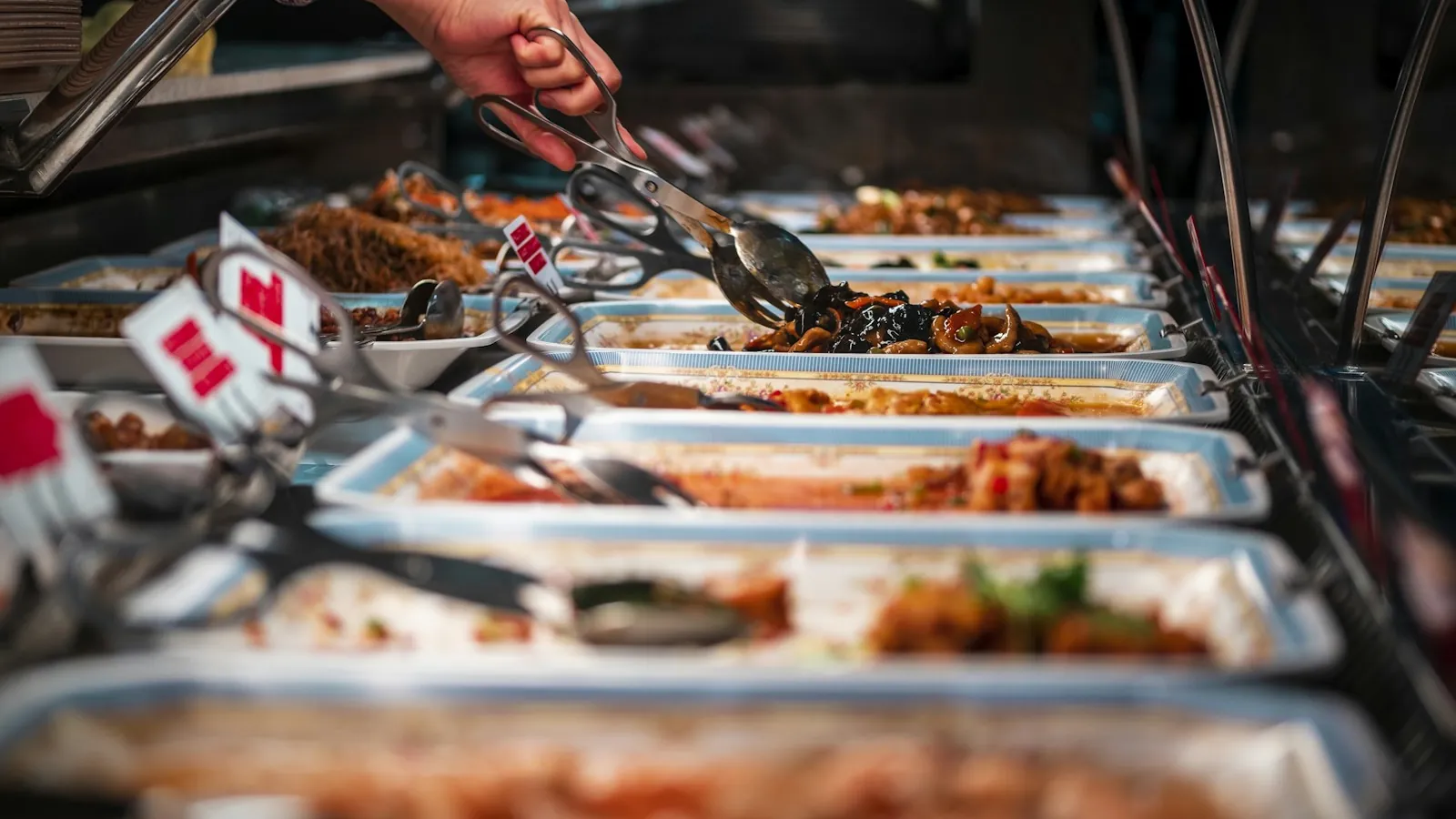
Two ways to eat American Chinese food: a counter that cooks your order when you place it, or a room of steam trays you walk along with a plate. They serve broadly the same dishes and they are not the same experience, and the difference comes down to one variable — how long ago the food was cooked.
A buffet gives you variety, no waiting and a fixed price. Takeout gives you food cooked to order, which matters enormously for anything fried or delicate. Buffets win on breadth and immediacy; takeout wins on the food. Which is better depends on what you came for.
The one variable that explains everything
Buffet food is held. Takeout food is cooked when you order it.
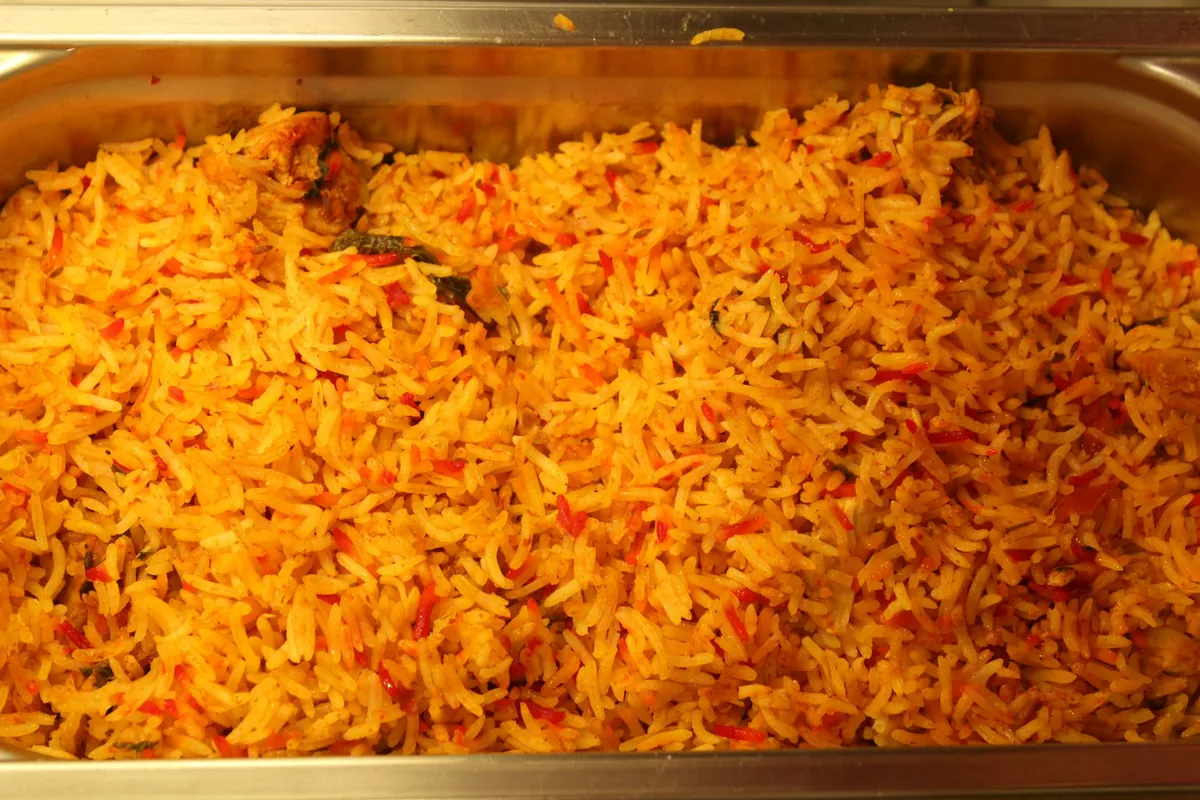
Everything else follows from that. A steam tray keeps food at a safe serving temperature for a long period, and while it does so the food continues to change: sauces thicken and then thin as they weep, coatings soften, vegetables lose their bite, and anything crisp stops being crisp within about the first twenty minutes.
That is not a criticism of any particular buffet. It is a physical constraint of the format, and a well-run buffet manages it by cooking in small batches and replacing trays frequently. A poorly run one manages it by not.
Takeout has its own version of the same clock, but it starts later and it runs in your car rather than in a tray — our guide to pickup or delivery covers that, and the fix is the same in both cases: eat the fried things first.
What each format is genuinely good at
| Dish type | Buffet | Cooked to order |
|---|---|---|
| Battered fried dishes | Poor — softens fastest | Much better |
| Sauced stir-fries | Acceptable | Better |
| Fried rice, lo mein | Good — holds well | Good |
| Roasted ribs | Good — glaze protects them | Good |
| Soups | Good — liquid holds heat | Good |
| Steamed dishes | Poor — keeps cooking | Much better |
| Variety in one meal | Unbeatable | Costly |
Read the two columns and the strategy writes itself. At a buffet, favor the things that hold — noodles, fried rice, ribs, soup, sauced dishes. From a takeout counter, that is exactly when to order the things that do not hold: the battered dishes, the steamed dishes, anything whose appeal is texture.
Our guides to the battered chicken dishes and steamed dishes cover the two categories that suffer most in a tray.
The economics
The two formats make money in opposite ways, and it shapes what they put in front of you.
A buffet sells a fixed price and controls cost through what it stocks: high-volume, low-cost, hold-well dishes in large quantity. That is why the fried rice tray is enormous and the shrimp tray is small and near the end.
A takeout kitchen sells per dish and controls cost through prep efficiency — shared sauces, prepped proteins, components combined to order. Our guide to how takeout kitchens work covers that system, and it is why a menu can carry two hundred items in a small space.
Neither is a trick. They are two answers to the same problem, and each produces a different kind of value: breadth for one, freshness for the other.
Getting the most out of a buffet
If you are going, a few things genuinely help.
Worth doing
- Go at the start of a service period, not the end
- Take a small first plate and survey everything
- Favor trays that are visibly being refilled
- Prioritize dishes that hold: noodles, rice, ribs, soup
Worth skipping
- Battered dishes sitting in sauce
- Anything steamed, which overcooks in a tray
- A tray with a crust forming at the edges
- Filling the first plate with rice
The timing point does most of the work. Arriving as a service period opens means trays that were filled minutes ago; arriving as it closes means trays that have been held for two hours, and no strategy fixes that.
On food safety, the mechanism is the same one that applies to leftovers: hot food needs to stay hot. A tray that is lukewarm rather than steaming is worth avoiding, and our guide to storing and reheating covers the FDA guidance on holding temperatures generally.
When to choose which
Reasonably clear-cut once you know what you are optimizing for.
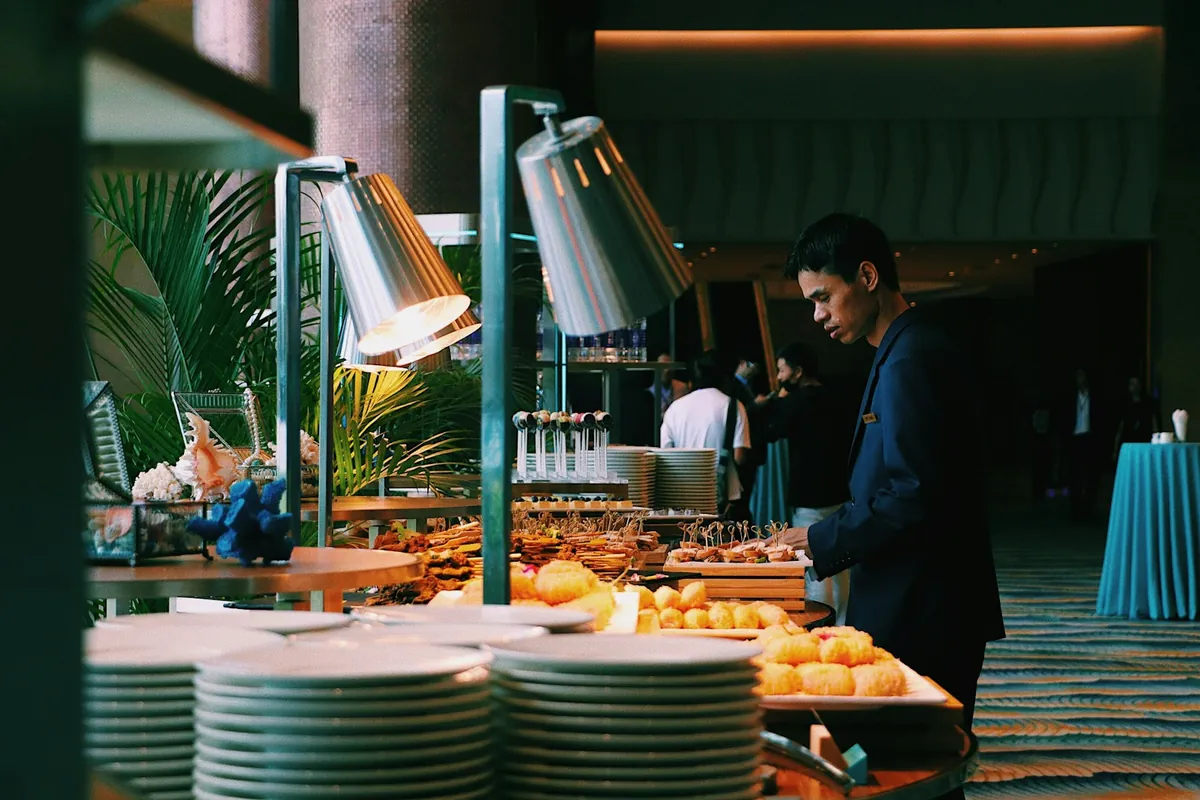
A buffet suits a group that cannot agree, a first visit to the cuisine where you want to taste widely, children who want to choose visually, and a situation where nobody wants to wait.
Takeout suits knowing what you want, caring about one specific dish being right, eating at home, wanting leftovers, and any order built around fried or steamed food.
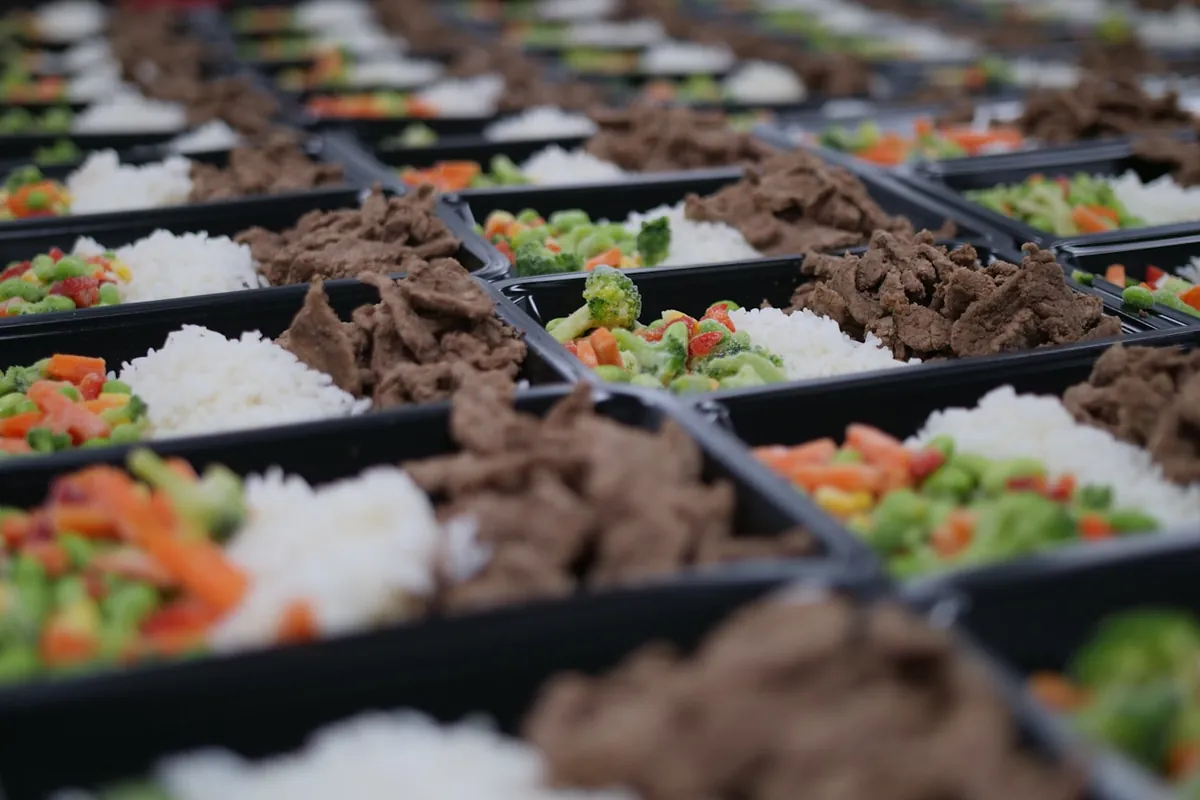
There is also a middle option people overlook: a takeout family pack gives you much of a buffet’s variety at a fixed price, cooked to order, at the cost of choosing in advance. Our guides to family packs and how much to order cover that route.

Frequently asked questions
Is a Chinese buffet or takeout better?
They optimize for different things. A buffet gives you variety, no waiting and a fixed price; a takeout kitchen cooks to order, which matters a great deal for battered and steamed dishes. Buffets win on breadth, takeout wins on the food itself.
Why does buffet Chinese food taste different?
Because it was cooked earlier and held in a steam tray. Held food keeps changing: coatings soften, vegetables lose their bite and sauces weep. A well-run buffet manages this with small batches and frequent refills, but it cannot eliminate it.
What should I eat at a Chinese buffet?
The dishes that hold well: fried rice, lo mein, roasted ribs, soups and sauced stir-fries. Skip battered dishes sitting in sauce and anything steamed, since both degrade fastest in a tray. Take a small first plate and survey before committing.
When is the best time to go to a buffet?
Early in a service period, when trays have just been filled. Arriving near closing means food that has been held for hours, and no ordering strategy compensates for that. Trays being actively refilled are the ones to target.
Is there a middle option between the two?
A family pack from a takeout menu. It gives you several dishes at a fixed price, cooked to order, which is most of a buffet’s variety without the holding time — the trade-off being that you choose in advance rather than by walking along a counter.
The short version
One variable explains the whole comparison: buffet food is held, takeout food is cooked when you order. Everything else — the softened coatings, the fixed price, the variety — follows from that.
Eat the things that hold at a buffet. Order the things that do not from a kitchen that cooks to order.
Order from China King
Cooked to order, which is why the fried dishes are worth ordering here.
Sources
- FDA: Safe food handling — on holding hot food at safe temperatures.
- American Chinese cuisine — on the buffet’s place in the American Chinese restaurant trade.