There is a bottle in Chinese kitchens that looks like soy sauce, is not soy sauce, and is responsible for a flavor most Western cooks cannot place. Chinese black vinegar is the sour half of a great deal of this cuisine, and it behaves nothing like the vinegars a Western pantry holds.
Chinese black vinegar is made from fermented glutinous rice, wheat or sorghum and aged until dark. The best-known is Chinkiang, from Zhenjiang. It is malty, smoky and mildly sweet rather than sharp — closer to balsamic than to white vinegar, and much less acidic than either.
What it tastes like
Round rather than sharp, which is the thing that surprises people most.
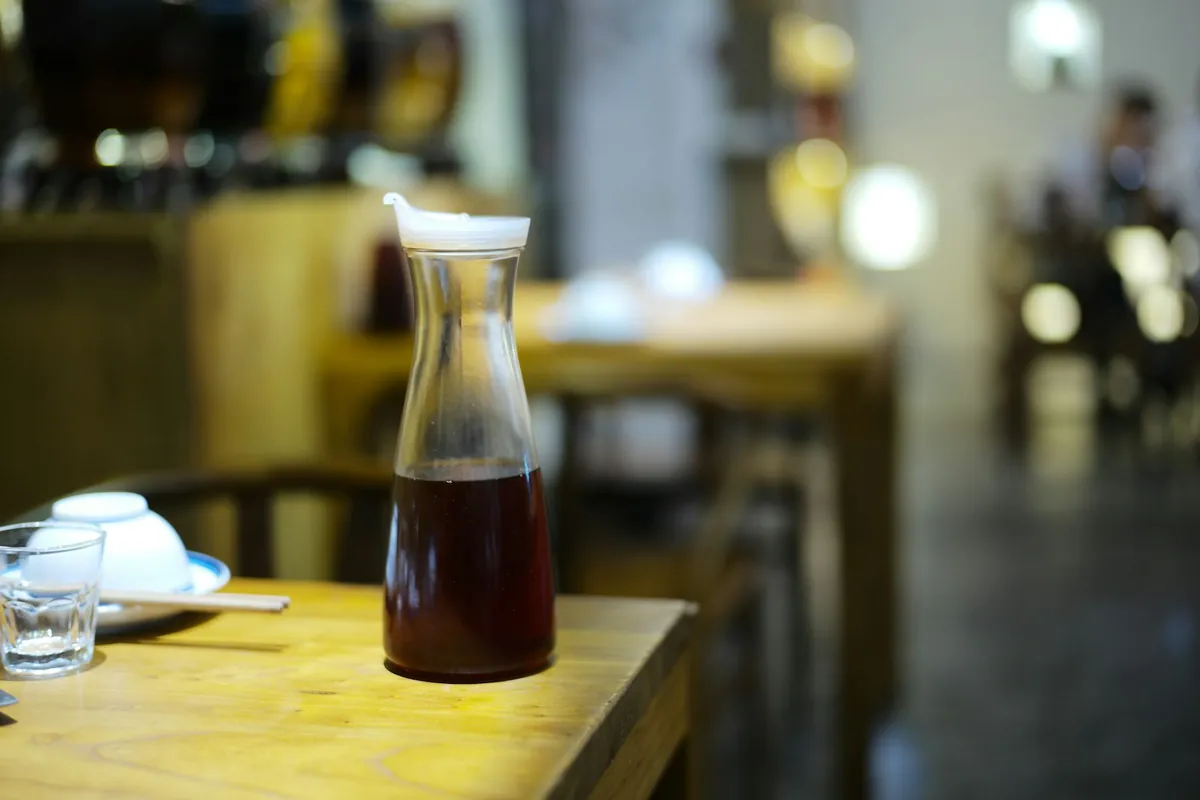
Western cooking treats vinegar primarily as acid — something that cuts and brightens. Chinese black vinegar does that too, but its dominant character is malty depth with a smoky, almost woody edge and a distinct background sweetness. It is aged, sometimes for years, and that ageing rounds it off.
The closest familiar comparison is a decent balsamic, though black vinegar is less sweet, less syrupy and considerably cheaper. If you have tasted the dipping vinegar served with dumplings and wondered why it was not sour in the way you expected, this is why.
It is dark brown to nearly black, thin rather than viscous, and it smells strongly of fermentation before it smells of acid at all.
Chinkiang, and the other kinds
| Vinegar | Made from | Character | Used for |
|---|---|---|---|
| Chinkiang black | Glutinous rice, aged | Malty, smoky, lightly sweet | Dipping; braises; noodles |
| Shanxi aged | Sorghum, aged longer | Deeper, more intense | The connoisseur choice |
| Clear rice vinegar | Rice | Mild, clean, faintly sweet | Sweet and sour; pickling |
| Red vinegar | Rice, with red yeast | Tart, light | Cantonese dipping; shark fin substitutes |
| Western white vinegar | Distilled alcohol | Sharp, one-dimensional | Not used in this cooking |
Chinkiang is the one to buy first and the one most recipes mean when they say “Chinese black vinegar”. It is named for Zhenjiang in Jiangsu province, where it has been made for centuries and carries a protected regional designation. The older romanization persists on bottles the same way “Peking” does on menus.
Note the last row. Distilled white vinegar is not a substitute for black vinegar in any dish that matters — it provides acidity and none of the depth, and the result tastes thin and harsh.
Where it turns up
More places than most people realize, usually without being named.
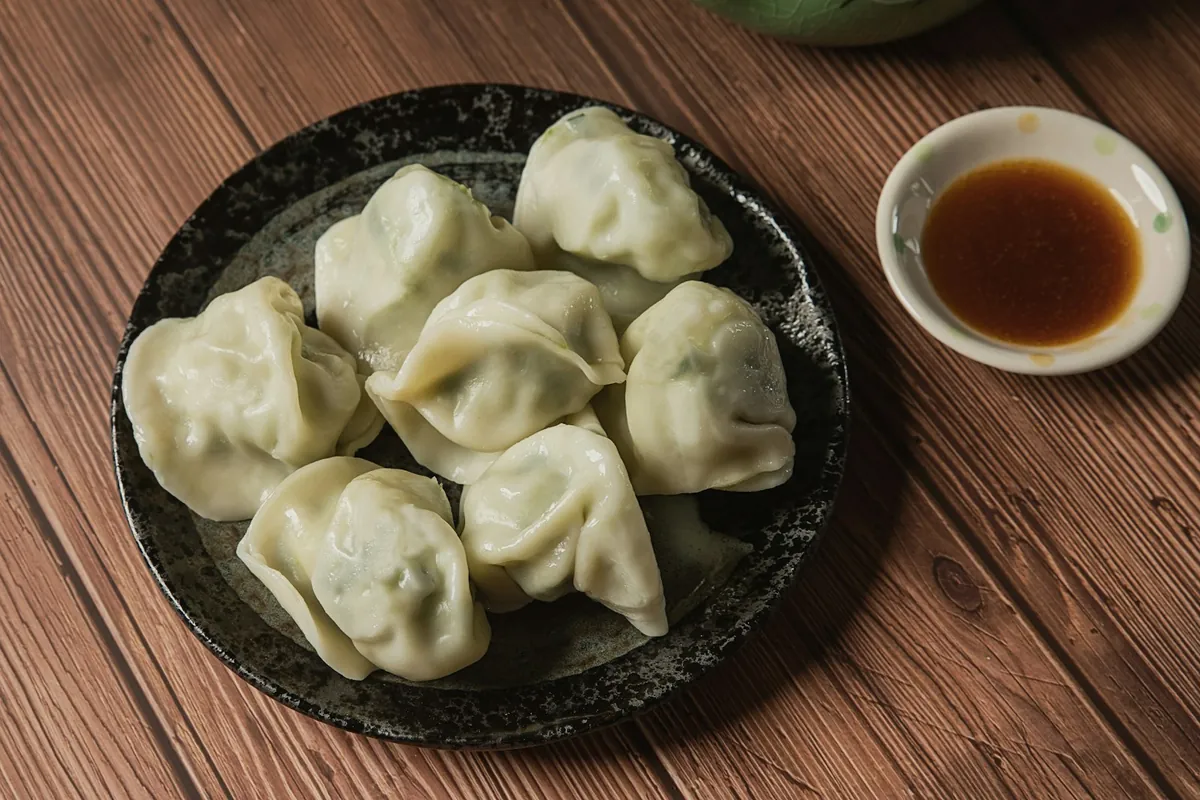
As a dip. The small dish of dark liquid served with dumplings and soup dumplings is black vinegar, often with shredded ginger in it. Our guide to soup dumplings covers why the acidity matters so much against a rich pork filling.
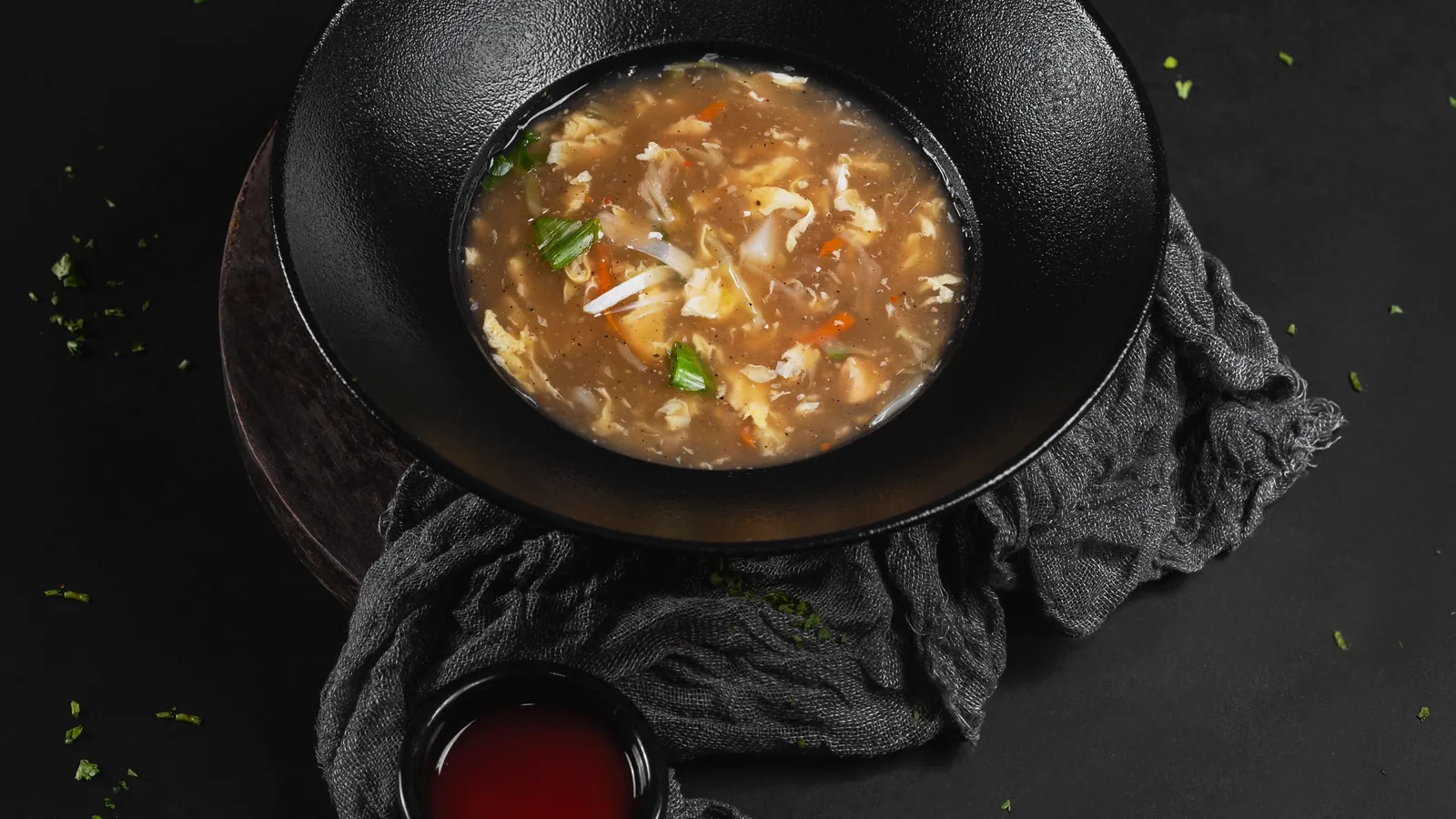
In hot and sour soup. The sour in hot and sour soup is black vinegar, and the hot is white pepper rather than chili — a pairing that surprises people who assume both come from the same place. Our guide to Chinese soups covers that section.

In braises. A splash at the end of a rich braise lifts the whole dish, in the same way a squeeze of lemon does in Western cooking.
In cold noodle dishes. Where it does much of the seasoning work alongside sesame paste and soy.
Where it is generally not: the sweet and sour dishes on an American takeout menu, which use lighter rice vinegar or distilled vinegar for a sharper, cleaner sourness. Our guide to sweet and sour covers those.
Using it at home
Works well
- Straight, as a dip, with a little ginger
- A splash at the end of a braise
- In cold noodle dressings
- Mixed with soy and sesame oil
Works badly
- As a general-purpose vinegar
- In salad dressings expecting sharpness
- Boiled hard, which flattens the aroma
- As a swap for white vinegar in pickling
The rule with cooking it is the same as with sesame oil: add it late. Its aromatic compounds are volatile, and long boiling drives them off, leaving only sourness. Our guide to cooking oils covers the same principle for the other late-addition ingredient.
The classic dumpling dip is worth knowing because it takes ten seconds: black vinegar with a little finely shredded fresh ginger, and nothing else. Soy sauce is optional and often unnecessary — the vinegar is doing the work.
Buying it and substituting
Cheap, widely available in Asian groceries, and increasingly in mainstream supermarkets. A bottle lasts a long time — it is a preservative by nature and does not spoil in any practical sense, though it does lose aroma over years.
Check the label for added sugar or caramel color, which some cheaper brands include. A good Chinkiang lists rice, water, salt and wheat bran and little else.
On substitutes: balsamic thinned with a little water is the closest thing in a Western pantry, and it is sweeter than ideal. Rice vinegar with a small amount of soy sauce gets you the color and some depth. Distilled white vinegar gets you neither and is worth avoiding for this purpose.
If a recipe calls for it and you have none, the honest answer is that the dish will be noticeably different rather than ruined — the same conclusion our guide to Chinese cooking wine reaches about that ingredient.
Frequently asked questions
What is Chinese black vinegar?
A vinegar made from fermented glutinous rice, wheat or sorghum and aged until dark. The best-known is Chinkiang, from Zhenjiang. It is malty, smoky and lightly sweet rather than sharp, and much less acidic than Western white vinegar.
What does black vinegar taste like?
Round rather than sharp: malty depth with a smoky, almost woody edge and background sweetness. The closest familiar comparison is a decent balsamic, though black vinegar is less sweet, less syrupy and considerably cheaper.
Can I substitute white vinegar for black vinegar?
Not well. Distilled white vinegar provides acidity and none of the depth, so the dish comes out thin and harsh. Balsamic thinned with water is closer, and rice vinegar with a little soy gets you some of the color and body.
What is the sour in hot and sour soup?
Black vinegar. The heat in that soup comes from white pepper rather than chili, which surprises people who assume the two sensations come from the same ingredient.
What is the dipping sauce served with dumplings?
Usually black vinegar, often with finely shredded fresh ginger in it. Soy sauce is optional and frequently unnecessary — the vinegar is doing the work of cutting through a rich filling.
The short version
Aged, fermented, dark and malty. It provides sourness without sharpness, which is why it works against rich fillings where a Western vinegar would just taste acidic.
Buy Chinkiang, use it as a dip with a little ginger, and add it late when cooking.
Order from China King
Hot and sour soup is where the black vinegar shows most clearly.
Sources
- Zhenjiang vinegar — on Chinkiang black vinegar, how it is made and its protected designation.
- Vinegar — on fermentation, acidity and the varieties used across cuisines.