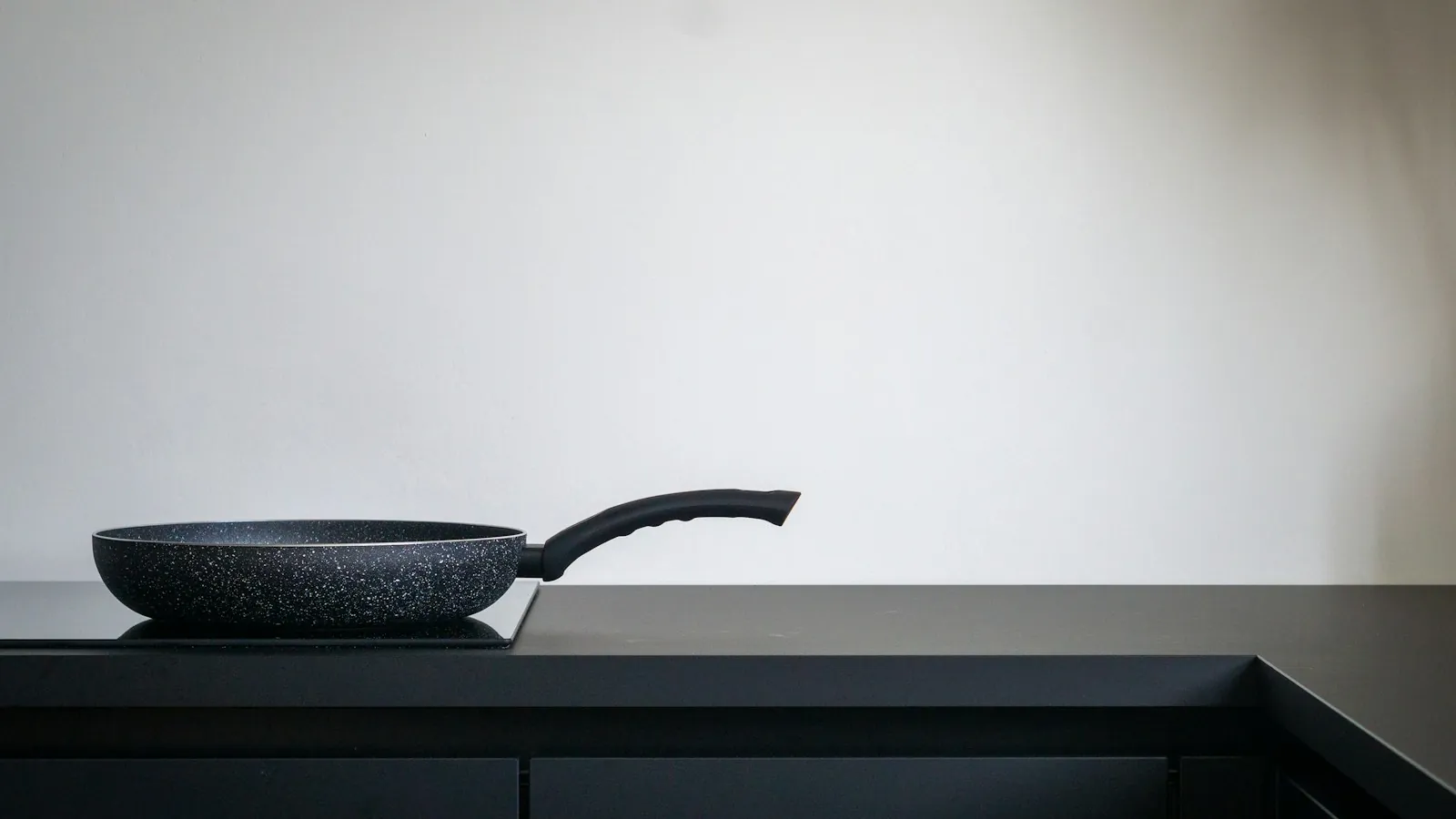
The standard advice for cooking Chinese food at home is to buy a wok. For most people on most Western stoves that is the wrong first purchase, and understanding why explains a good deal about what actually makes restaurant stir-frying work.
A wok only outperforms a skillet if you can get it genuinely hot, which most domestic stoves cannot do. On a typical home range, a large flat-bottomed carbon steel skillet beats a wok. The two purchases actually worth making are a cleaver and a steamer.
Why the wok is the wrong first purchase
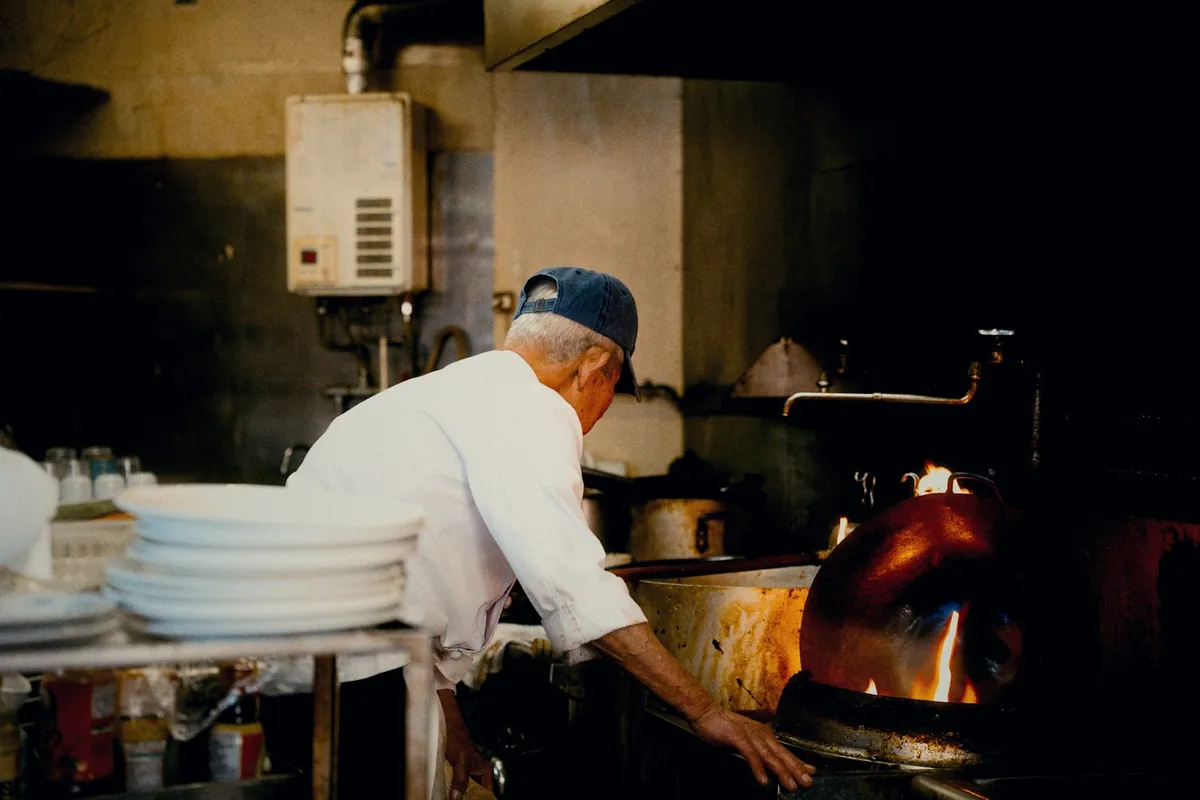
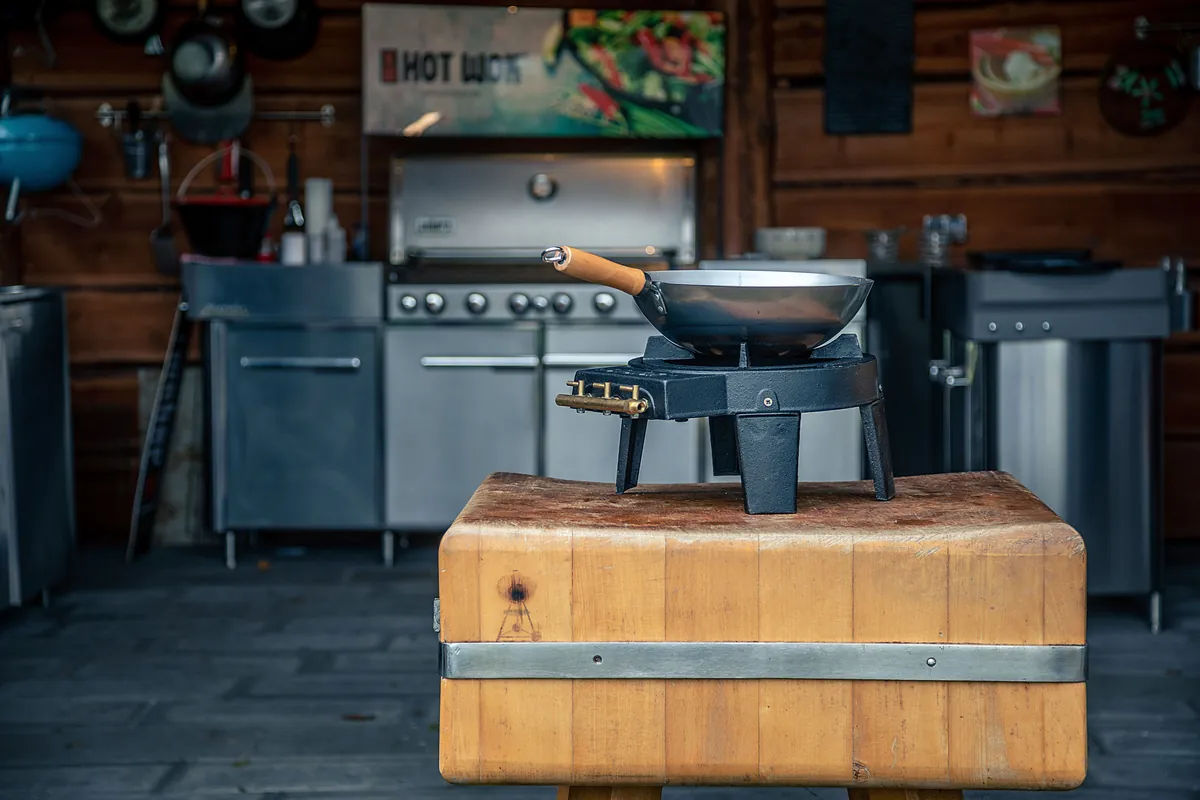
A wok is a heat-concentration device. Its shape is designed around a jet burner that wraps flame up the sides, so the whole curved surface becomes cooking area and the food can be tossed through zones of different temperature.
Take that away and the geometry works against you. On a flat domestic burner, only the small area actually touching the element gets hot. The sloping sides stay comparatively cool, so food pushed up them stops cooking and starts steaming — which is the exact failure a stir-fry is trying to avoid.
Domestic burners also deliver a fraction of the power of a restaurant wok range. Our guide to how takeout kitchens work covers that gap, and it is the single biggest reason home stir-fries taste different.
What to use instead
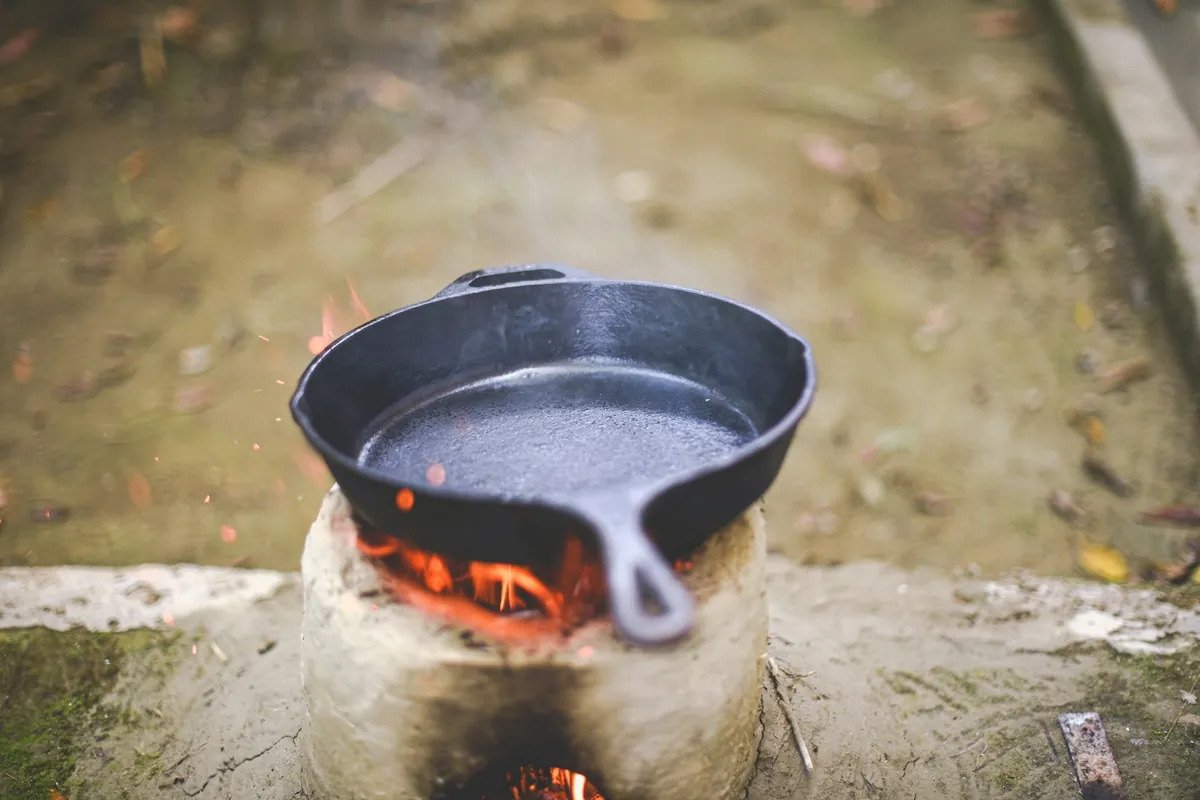
A large, heavy, flat-bottomed pan — carbon steel or cast iron — used in smaller batches.
The reasoning is simple: on a weak heat source, surface contact and thermal mass matter more than shape. A heavy flat pan holds its heat when cold food hits it, and a flat base means all of it is in contact with the burner.
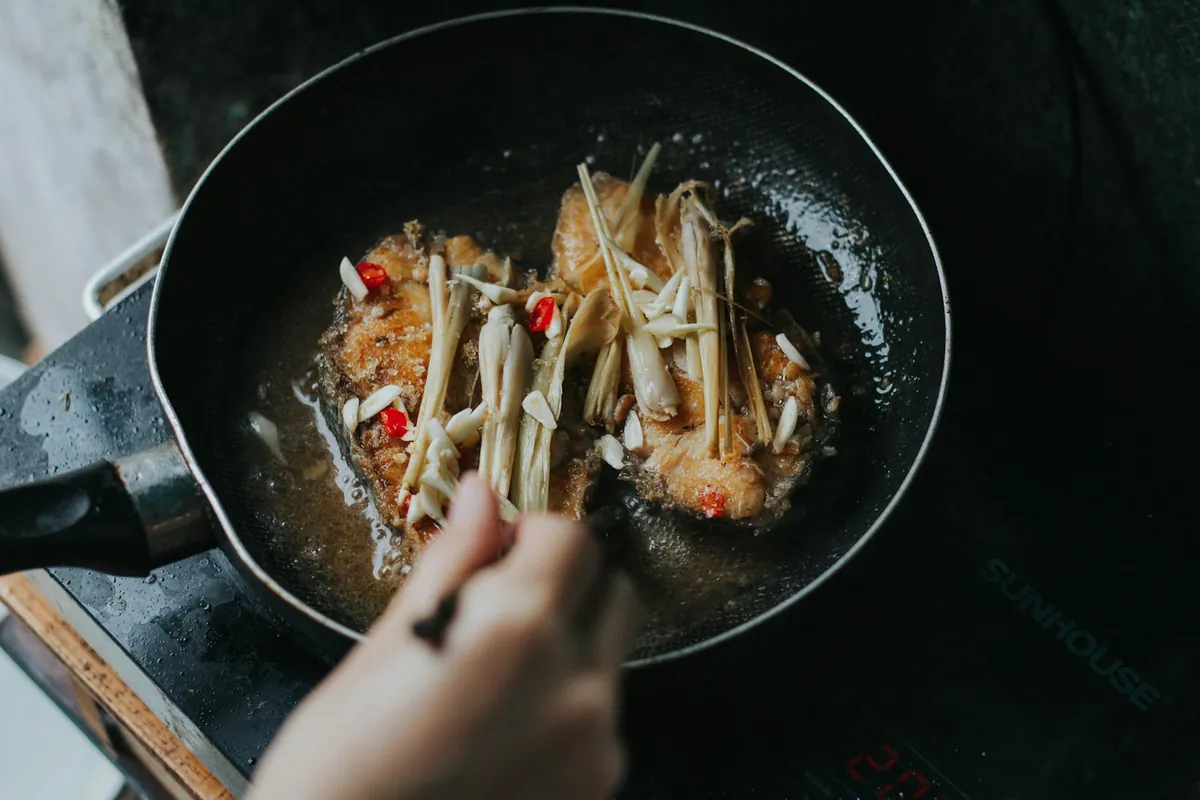
The other half is batch size. Most home stir-fries fail because too much food goes in at once, the pan temperature collapses, and everything steams in its own liquid. Cooking in two batches and combining at the end fixes more problems than any equipment purchase.
| Item | Worth it? | Why |
|---|---|---|
| Chinese cleaver | Yes — first purchase | Does most prep tasks better than a chef’s knife |
| Steamer (bamboo or metal) | Yes | Enables a whole cooking method; cheap |
| Heavy flat-bottomed pan | Yes, if you lack one | Outperforms a wok on domestic heat |
| Wok | Only with a powerful burner | Shape needs flame up the sides to work |
| Wok ring | Rarely | Usually lifts the pan away from the heat |
| Cleaver-shaped gadgets | No | The cleaver already does it |
The cleaver is the real answer
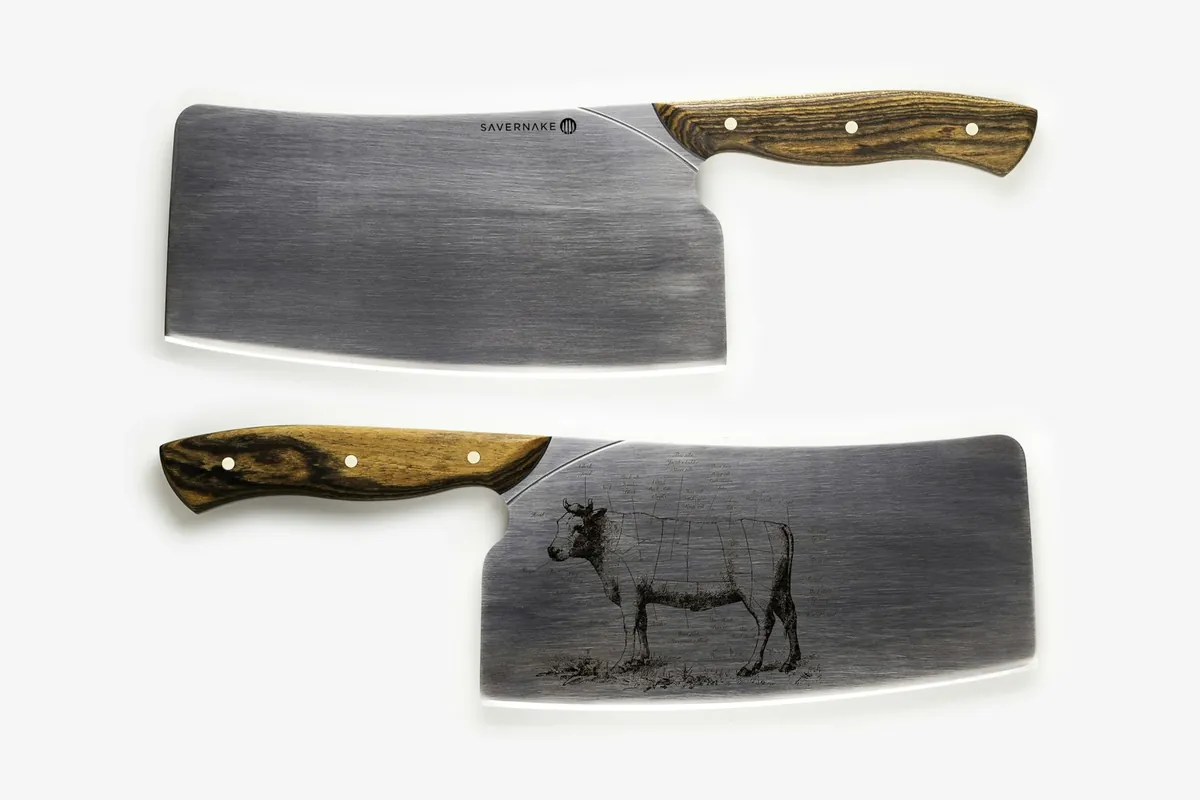
If you buy one thing, buy this. A Chinese vegetable cleaver — the thin, light, rectangular kind, not a heavy bone cleaver — is the most useful tool in this cuisine and the least understood outside it.
It is not for chopping bone. The thin-bladed version is a slicing knife with an unusually tall blade, and the height is the point: a flat surface to scoop chopped ingredients with, a broad side to crush garlic under, and enough knuckle clearance to cut quickly without watching your hand.
Chinese cooking involves an enormous amount of uniform cutting — everything must cook in the same ninety seconds, so everything must be the same size. A cleaver does that faster than a chef’s knife, and the flat blade moves the results to the pan without a separate scraper.
They are also usually cheap, because the design is simple and the market is not aimed at Western home cooks.
The steamer
The second purchase, and the one that unlocks a cooking method rather than improving an existing one.
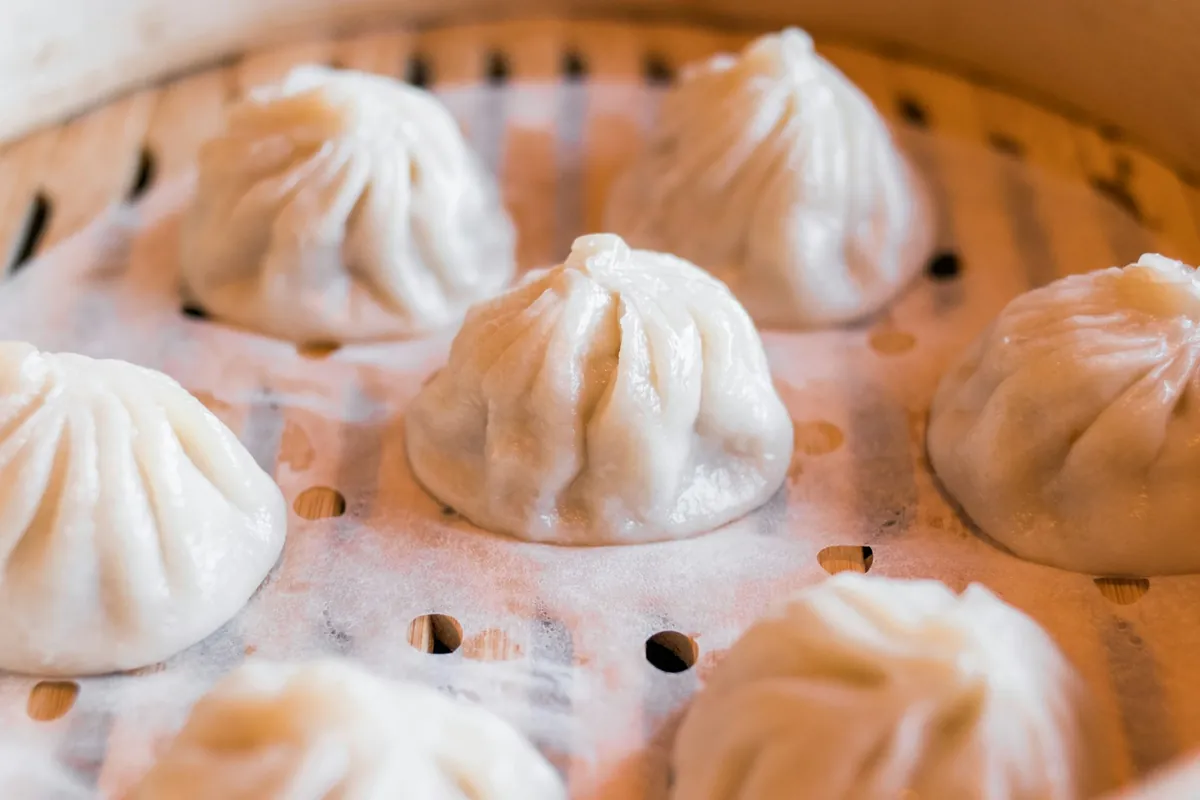
Steaming is a major branch of Chinese cooking that gets almost no attention in Western kitchens, and it needs no technique to speak of — put food in, cover, wait. It is how the dishes in our steamed section guide are made, and it is the one method that is genuinely easier at home than stir-frying, because it does not depend on heat you do not have.
Bamboo steamers are cheap, stack, and let a little moisture escape so condensation does not drip back onto the food. Metal ones last longer and clean more easily. A folding metal insert in a pot works perfectly well for one dish.
Bamboo needs a little care: soak before first use, keep it out of the dishwasher, and dry it fully before storing or it will grow mold.
What you do not need
Skip these
- A wok ring, on most domestic stoves
- Electric woks, which are underpowered
- Specialist wok utensils, at first
- Anything sold as a “Chinese cooking set”
Buy instead
- A thin Chinese vegetable cleaver
- A steamer of any kind
- Light and dark soy sauce
- A neutral high-heat oil, in quantity
The pantry items on the right are, honestly, a better investment than the equipment. Our guides to soy sauce and cooking oils cover both, and between them they change more about how home Chinese food tastes than any pan will.

If you do want a wok
Reasonable, and worth doing properly rather than half way.
Buy carbon steel, not non-stick and not stainless. Carbon steel is what restaurants use: it is light, it takes and holds seasoning, and it tolerates the heat that would destroy a non-stick coating. It is also the cheapest option, which is unusual.
Buy flat-bottomed unless you have a gas burner powerful enough to justify a round one. And season it before use — heat it, wipe a very thin film of oil over the whole surface, and repeat until it darkens. That layer is what makes it release food, and it builds with use.
Then accept the constraint: cook in small batches, get the pan hotter than feels sensible, and have everything cut before you start. Our guide to the aromatics covers why there is no time to prepare anything once cooking begins.
Frequently asked questions
Do I need a wok to cook Chinese food?
No, and on most domestic stoves a wok is the wrong choice. Its shape depends on flame wrapping up the sides, which a flat home burner cannot do. A large heavy flat-bottomed skillet performs better on a typical home range.
What is a Chinese cleaver used for?
Slicing, not chopping bone. The thin vegetable cleaver is a slicing knife with a tall blade, which gives knuckle clearance, a broad side for crushing garlic and a flat surface for moving chopped ingredients to the pan.
Why does my home stir-fry steam instead of frying?
Usually too much food at once. The pan temperature collapses and the food cooks in its own liquid. Cook in two batches and combine at the end — that fixes more than any equipment purchase.
What kind of wok should I buy if I want one?
Carbon steel, flat-bottomed unless you have a powerful gas burner. Carbon steel is what restaurants use: light, seasonable and heat-tolerant, and usually the cheapest option. Avoid non-stick, which cannot take the temperature.
Is a bamboo steamer better than a metal one?
Bamboo lets a little moisture escape so condensation does not drip onto the food, and it stacks cheaply. Metal lasts longer and cleans more easily. Either works, and a folding insert in a pot is fine for one dish.
The short version
A wok needs heat most home stoves cannot supply, so a heavy flat pan and smaller batches beat it. Buy a thin cleaver first and a steamer second.
And two bottles of soy sauce will do more for your cooking than any pan you can buy.
Or let us do it
The stir-fried dishes are the hardest to reproduce at home — that is what the heat is for.
Sources
- Wok — on the shape, materials and the heat it is designed around.
- Chinese cleaver — on the thin vegetable cleaver and how it differs from a bone cleaver.