A Chinese takeout menu is written in a mixture of English, romanized Cantonese and a handful of words that belong to neither. Most people order around the parts they cannot read. You do not have to — almost all of it decodes with about a dozen terms.
Most untranslated words on a Chinese menu describe either the cut (ding means diced, pan means sliced), the cooking method (chow means fried, lo means tossed), or what is in it (subgum means assorted, moo goo means mushrooms, gai is chicken).
Words about the cut
These tell you the shape of what arrives, which affects texture more than people expect.
Ding means diced — cubes rather than slices. Roast pork with almond ding is diced pork and vegetables with almonds. A diced dish eats chunkier and holds sauce differently from a sliced one.
Pan means sliced. It appears in moo goo gai pan, where it tells you the chicken is in thin slices rather than cubes or shreds — our guide to moo goo gai pan covers that dish.
Kew, where you see it, means chunks — larger pieces than diced, usually of a premium protein.
Words about the cooking
Two of these are the most useful words on the entire menu, because they distinguish the two biggest noodle sections from each other.
Chow means fried or stir-fried. Lo means tossed or mixed. So chow mein is fried noodles and lo mein is tossed noodles — the same noodle, treated two completely different ways, which is why they arrive looking nothing alike. Our guide to lo mein versus chow mein versus mei fun covers the difference in detail.
Mein means wheat noodle. Fun means rice noodle. That single distinction tells you what chow mei fun is before you read another word: fried rice noodles.
| Word | Means | Tells you about | Seen in |
|---|---|---|---|
| Chow | Fried, stir-fried | Method | Chow mein, chow mei fun |
| Lo | Tossed, mixed | Method | Lo mein |
| Mein | Wheat noodle | Ingredient | Lo mein, chow mein |
| Fun | Rice noodle | Ingredient | Chow mei fun |
| Ding | Diced | Cut | Almond ding |
| Pan | Sliced | Cut | Moo goo gai pan |
| Gai | Chicken | Protein | Moo goo gai pan |
| Moo goo | Button mushrooms | Ingredient | Moo goo gai pan |
| Subgum | Assorted, mixed | Contents | Subgum wonton, subgum chow mein |
| Moo shu | A dish served with pancakes | Format | Moo shu pork |
Subgum, the most useful word nobody knows
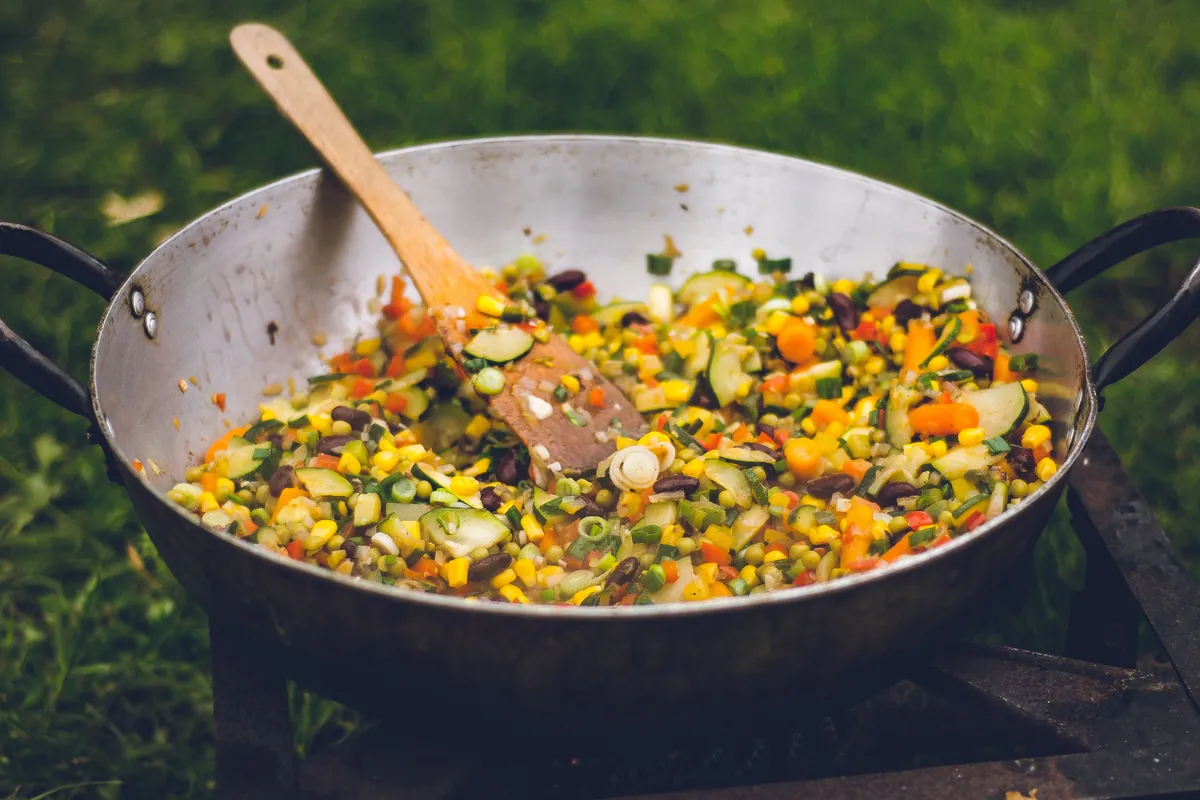
Subgum means assorted or mixed. When it appears in a dish name, it is telling you the dish contains a variety of vegetables and often more than one protein, rather than the single-vegetable version.
That makes it genuinely practical information. Subgum chow mein is a more varied dish than plain chicken chow mein, with more going on in it. If a menu offers both, the subgum version is the one to order when you want the dish to be interesting rather than simple.
It is also worth knowing because it signals the same thing the flowery specials names do — multiple proteins — but in the ordinary sections at ordinary prices. Our guide to the mixed platters covers the expensive version of the same idea.
Words that are not translations at all
A separate category, and the one that trips people up most, because these look like they should decode and do not.
House special means whatever the kitchen decides. Usually a larger portion, often with mixed proteins, sometimes a different sauce. It is not a defined term and it varies between restaurants.
Delight, as in Triple Delight or Seafood Delight, is pure menu English — it means “several nice things together” and has no culinary meaning.
Regional names like Szechuan, Hunan and Mongolian describe a flavor style on an American menu rather than a strict regional recipe. Our guides to Szechuan, Hunan and Kung Pao and Mongolian beef cover what those actually deliver.
Putting it together
Once the vocabulary is in place, most dish names read straight through.
Worked examples
- Chow mei fun — fried rice noodles
- Moo goo gai pan — sliced chicken with mushrooms
- Subgum chow mein — assorted fried wheat noodles
- Almond ding — diced, with almonds
Still worth asking about
- Anything called house special
- Any name with no decodable words in it
- Regional names, for heat level
- Any dish, if you have an allergy
The general rule: words from Cantonese are usually descriptive and reliable, and words in English on the same menu are usually promotional and are not. Our guide to ordering covers how to use that when you are actually choosing.
A note on spelling
You will see the same word spelled several ways across different menus — moo shu, moo shi, mu shu; mei fun, mai fun, me fun; subgum, sub gum, sup gum. None of these is a mistake in any useful sense.
These are romanizations: attempts to write Cantonese or Mandarin sounds using the Latin alphabet, made by different people at different times with no standard to follow. A restaurant spelling a dish differently from the one down the road is not evidence of anything except that the two menus were written separately.
Practically, this means searching for a dish by exact spelling often fails. If you cannot find something, try the variant spellings or describe the dish instead.
Frequently asked questions
What does subgum mean on a Chinese menu?
Assorted or mixed. A subgum dish contains a variety of vegetables and often more than one protein, rather than the single-ingredient version. If a menu lists both, the subgum one is the more varied dish.
What does ding mean in Chinese food?
Diced — cut into cubes rather than slices. Roast pork with almond ding is diced pork and vegetables with almonds added. It describes the cut, which affects the texture of the dish and how it holds sauce.
What is the difference between lo and chow?
Lo means tossed or mixed and chow means fried or stir-fried. That is why lo mein and chow mein are the same noodle prepared two entirely different ways — one tossed with sauce, the other fried.
Why is the same dish spelled differently on different menus?
Because these are romanizations — attempts to write Cantonese or Mandarin sounds in the Latin alphabet, done independently with no single standard. Moo shu, mu shu and moo shi are the same dish, and none of the spellings is wrong.
Does house special mean anything specific?
No. It is not a defined culinary term. It usually means a larger portion or a version with mixed proteins, but it varies entirely between restaurants, so it is one of the names always worth asking about.
The short version
Chow is fried, lo is tossed. Mein is wheat, fun is rice. Ding is diced, pan is sliced. Gai is chicken, moo goo is mushrooms, subgum is assorted.
The Cantonese words describe the food accurately. The English words on the same menu — special, delight, deluxe — describe nothing at all.
Read our menu in Fayetteville
China King’s full menu is online, with 22 sections and every dish code listed.
Sources
- American Chinese cuisine — on how these menus and their terminology developed.
- Britannica: Cantonese — background on the language most of these terms come from.