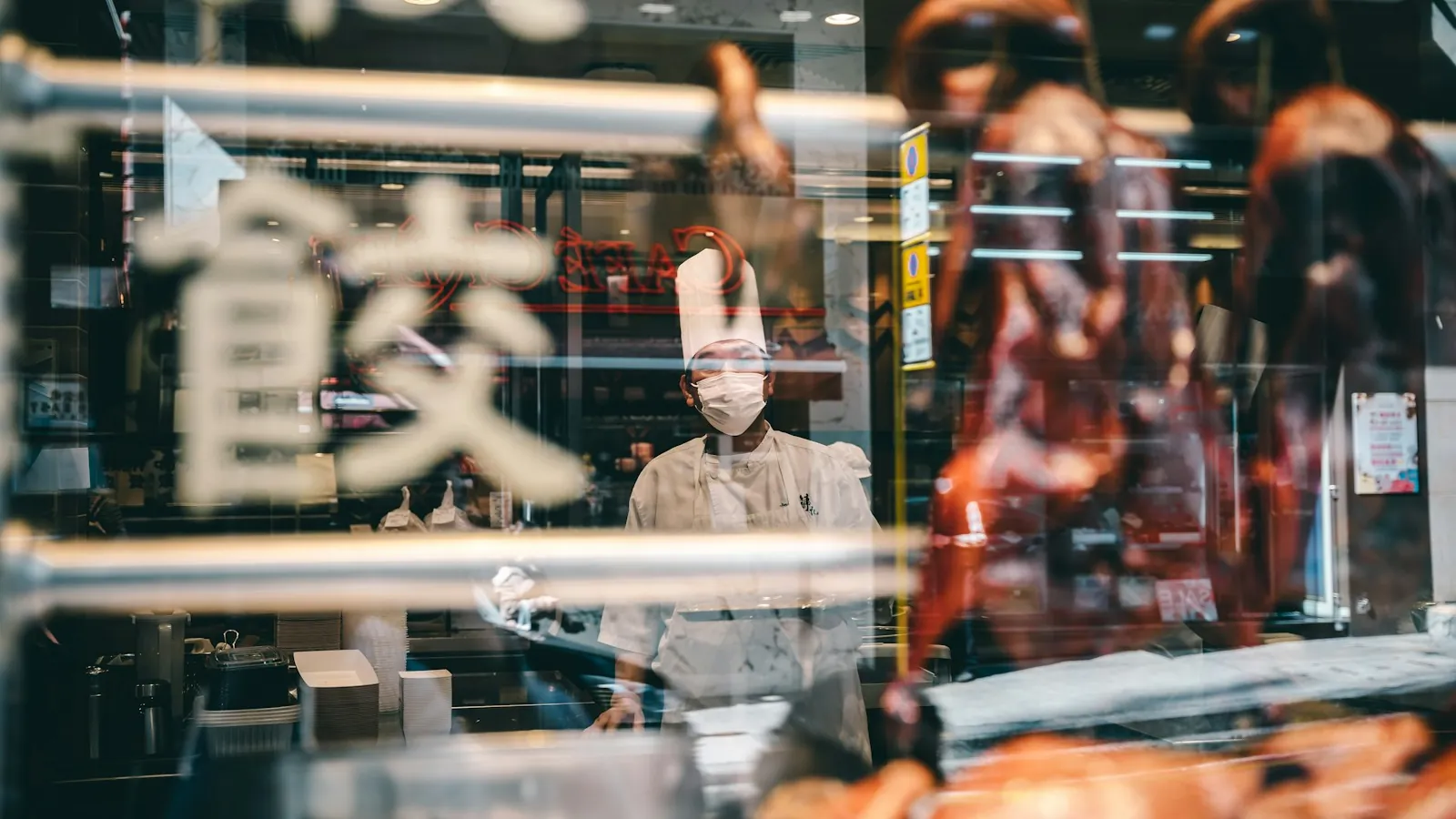
Peking duck is the most famous Chinese dish that almost nobody orders, because almost nowhere sells it. It requires days of preparation, a specific oven and a person to carve it at your table, which puts it outside the reach of every takeout kitchen in the country.
Peking duck is a whole duck, air-dried for a day or more and roasted until the skin is glassy and crisp, then carved and served with thin pancakes, scallion, cucumber and sweet bean sauce. The skin is the dish. It needs days of notice and is usually ordered in advance.
What makes it different from any other roast duck
The preparation, which takes days and is aimed entirely at one outcome: separating the skin from the fat beneath it so the skin can crisp.
Air is introduced between the skin and the flesh, which lifts the skin away from the body. The duck is then scalded, coated with a syrup solution, and hung to air-dry in a cool draught for a day or longer. That drying is the step that matters — a wet skin steams in the oven, a thoroughly dried one turns to glass.
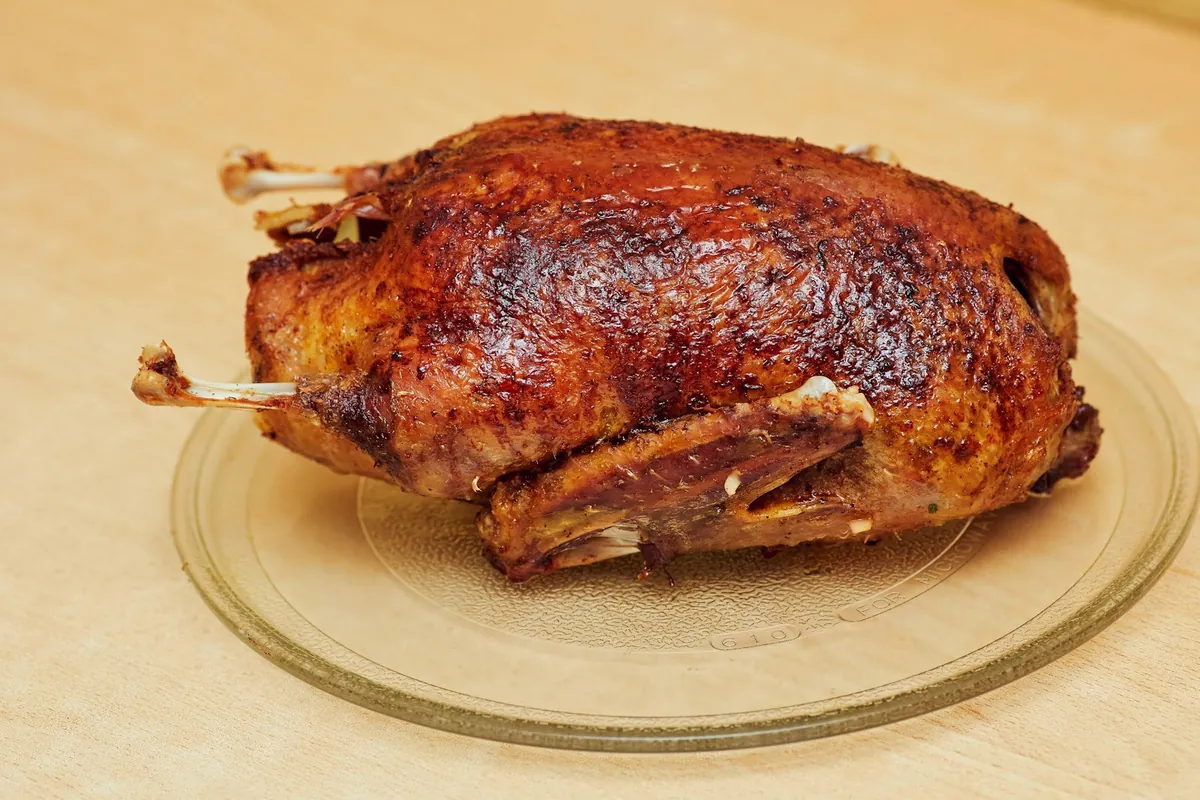
It is then roasted, traditionally hung vertically in a tall oven so the fat renders downward and away from the skin. The result is a skin that shatters rather than chews, over meat that has cooked in its own rendering fat.
Nothing about that process can be shortened. There is no fast version, which is the whole reason for everything else in this article.

How it is served
As an assembly kit, and in courses.
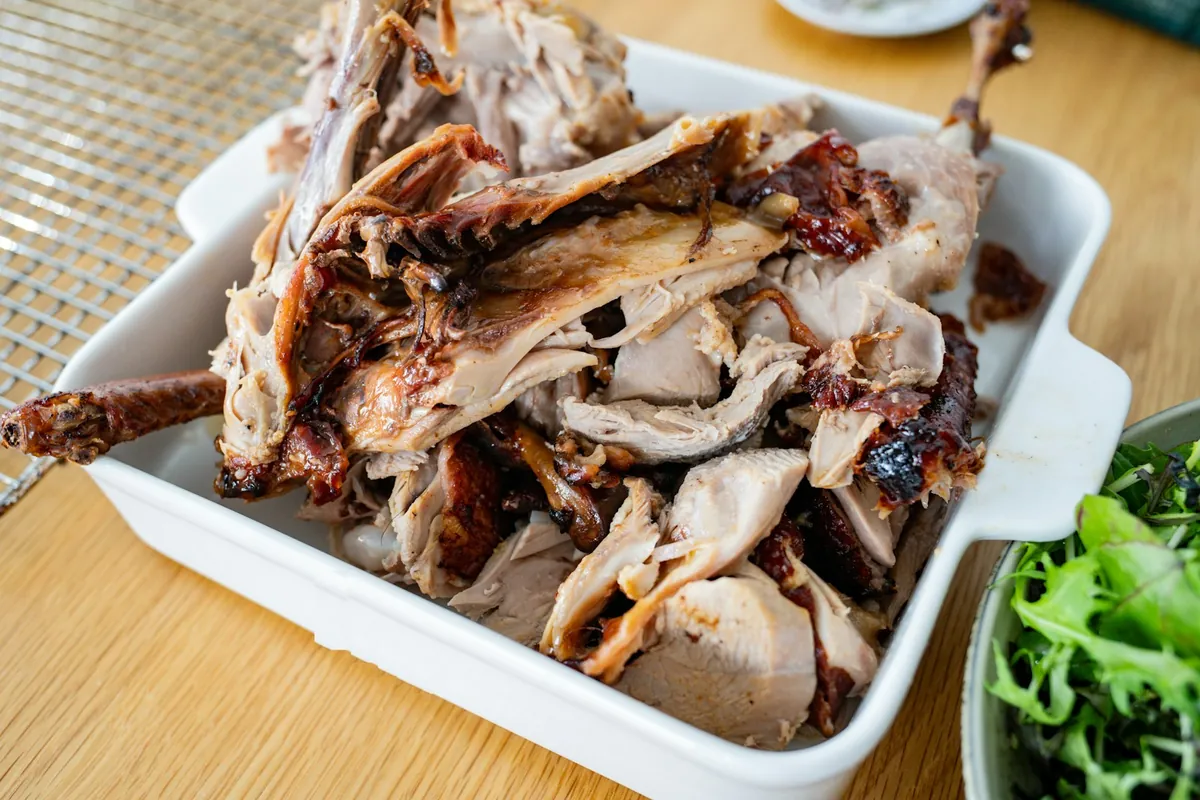
The duck is carved — often at the table — and the skin is presented separately from or arranged over the meat. Alongside come thin wheat pancakes, batons of cucumber, lengths of scallion, and a sweet fermented bean sauce.
You build each one yourself: a pancake, a smear of sauce, a piece of skin and meat, cucumber and scallion, rolled. The vegetables are not garnish — the cucumber’s water and the scallion’s sharpness are structurally necessary against that much rendered fat.
If the pancake-and-sauce assembly sounds familiar, it should. Our guide to moo shu covers the one dish on an American takeout menu built the same way, and it is the closest available relative.
In a full traditional service the rest of the bird follows: a stir-fry from the remaining meat, and a soup made from the carcass. One duck, three courses.
Why it is expensive and needs notice
| Requirement | Detail | Why takeout cannot |
|---|---|---|
| Time | A day or more of air-drying | Nothing else on the menu needs days |
| Equipment | A tall oven for vertical hanging | A wok station and a fryer, not an oven room |
| Skill | Separating skin, drying, carving | A specialist trade |
| Whole birds | Sold whole, not by portion | Waste risk if unsold |
| Service | Carved and assembled at the table | There is no table |
| Transport | Crisp skin lasts minutes | The dish would not survive the bag |
That bottom row is the one that ends the discussion. Even if a takeout kitchen could produce it, glassy skin in a closed container is soft skin by the time you park — the same physics our guide to pickup or delivery covers for every fried dish, but with more at stake.
Restaurants that do serve it usually ask for a day’s notice, and the price reflects a whole bird plus days of labor.
What “Peking” means here
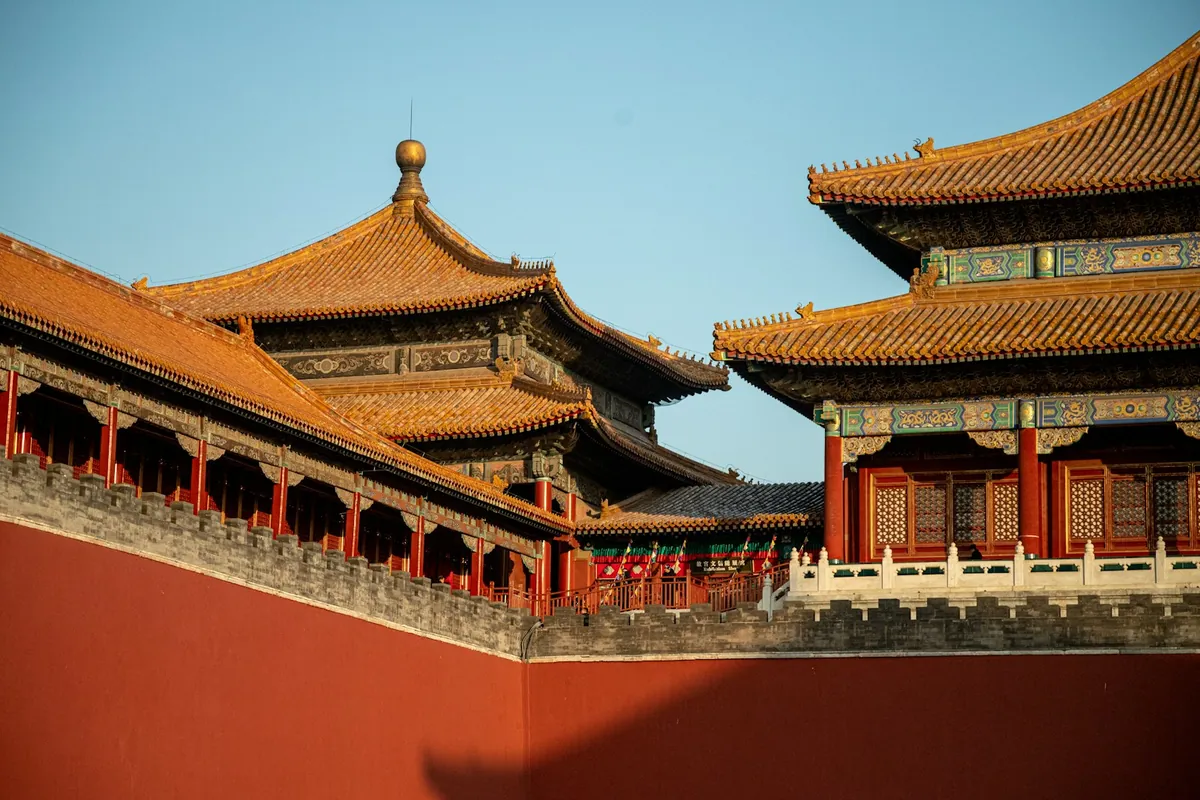
It is an older romanization of Beijing, and the dish is genuinely from there — it is a northern Chinese imperial dish with several centuries of documented history, associated with specific Beijing restaurants that have been making it for generations.
That makes it unusual on a list of famous Chinese dishes in America. Our guides to chop suey, crab rangoon and fortune cookies all cover dishes invented outside China. Peking duck is the opposite case: entirely Chinese, largely unavailable in American takeout, and famous anyway.
The name also survives commercially where the city name has changed, which is why menus say Peking rather than Beijing duck.
If you want to try it
How to go about it
- Look for a dine-in Chinese restaurant, not takeout
- Call ahead — a day’s notice is common
- Go with three or four people; it is a whole bird
- Ask whether the second and third courses are included
What to expect
- Skin served as the highlight, not an afterthought
- Assembly work at your end of the table
- A price well above any takeout dish
- A long meal rather than a quick one
What is worth avoiding is a version sold without notice at a low price from a kitchen with no oven room. That is usually roast duck — which can be very good — rather than Peking duck, and the difference is precisely the days of drying.
What the takeout menu offers instead
No duck, in most cases. Duck is uncommon on American Chinese takeout menus generally, for the same economics: whole birds, portioning problems, and a flavor most customers do not order often enough to justify the stock.
What is genuinely comparable is the pancake format. Moo shu dishes come with thin pancakes and a sauce and are assembled by the diner exactly as Peking duck is, and roast pork carries some of the same sweet-savory character — our guide to roast pork covers that.
That is not a substitute and this article is not going to pretend otherwise. It is the nearest thing on the menu, which is a different claim.
Frequently asked questions
What is Peking duck?
A whole duck, air-dried for a day or more and roasted until the skin is glassy and crisp, then carved and served with thin pancakes, cucumber, scallion and a sweet bean sauce. The crisp skin is the point of the dish rather than the meat.
Why is Peking duck not on takeout menus?
It needs days of preparation, a tall oven for hanging the bird, a specialist to prepare and carve it, and table service to assemble. It also has to be eaten within minutes — crisp skin in a closed container becomes soft skin.
How do you eat Peking duck?
You assemble it yourself: a thin pancake, a smear of sweet bean sauce, a piece of skin and meat, then cucumber and scallion, rolled up. The vegetables are structural rather than decorative — they cut through the rendered fat.
Why is Peking duck expensive?
A whole bird, a day or more of labor before it reaches the oven, specialist skill, and table service. Restaurants also carry the risk of an unsold duck, which is why most ask for a day’s notice.
Is Peking duck actually Chinese?
Entirely. It is a northern Chinese imperial dish from Beijing with several centuries of documented history, which makes it unusual among famous Chinese dishes in America — chop suey, crab rangoon and fortune cookies were all invented outside China.
The short version
A whole duck, days of drying, a hanging oven, and skin that shatters. Served as an assembly kit with pancakes, and often as three courses from one bird.
Genuinely Chinese, genuinely famous, and genuinely impossible from a takeout counter. Order it in a dining room, with a day’s notice.
Order from China King
No Peking duck — but moo shu uses the same pancake assembly at the table.
Sources
- Peking duck — on the preparation, the history and how it is served.
- Britannica: Beijing — on the city the dish and its older romanization come from.