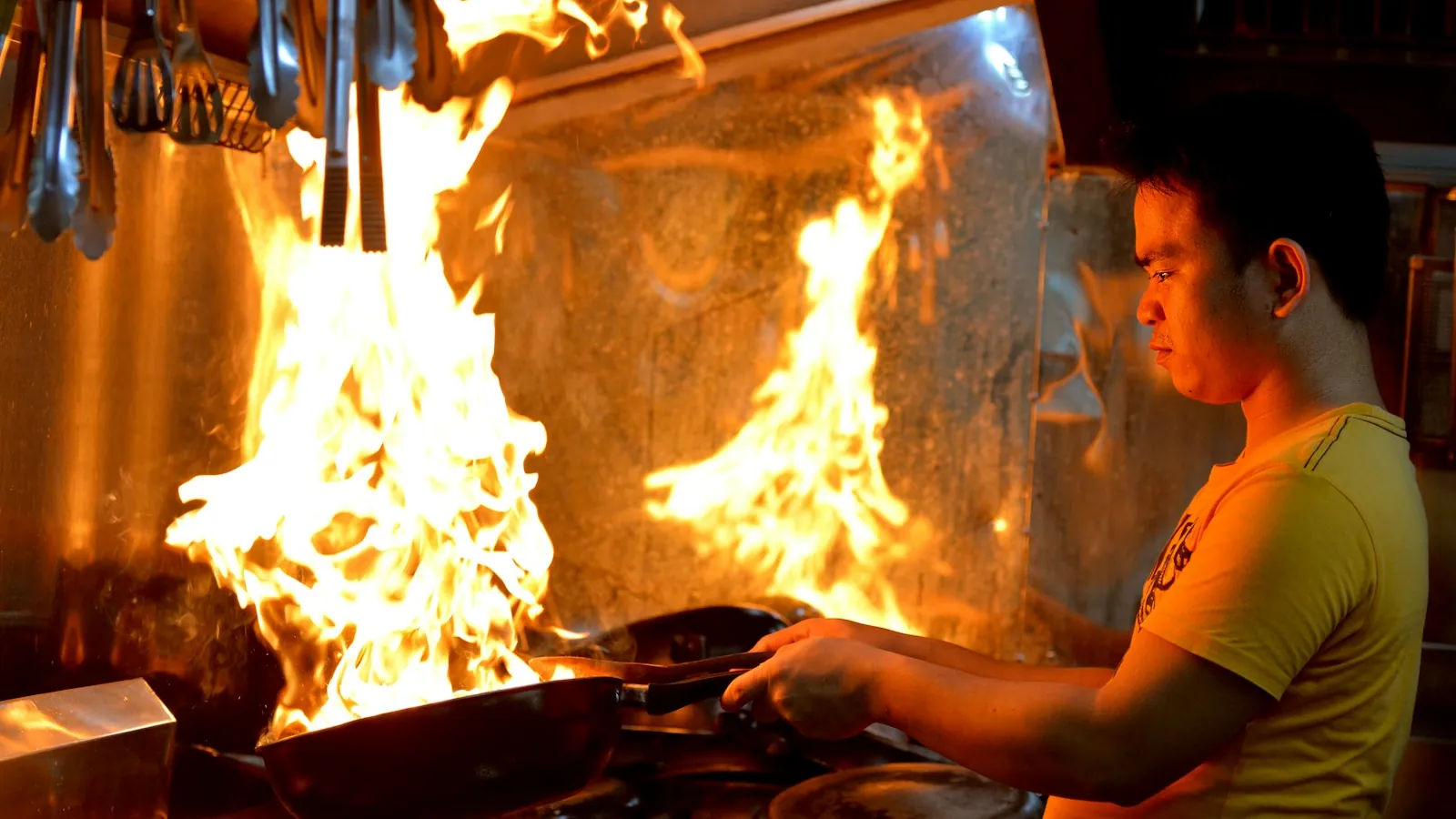
There is a specific flavor in good stir-fried food that has no English name and that most home cooks never produce. Chinese cooking has a name for it — wok hei — and understanding what it is explains why your version of a dish tastes flatter than the restaurant’s even when you follow the recipe exactly.
Wok hei translates roughly as “breath of the wok”. It is the faintly smoky, seared aroma produced when food and oil hit metal hot enough to char and vaporize at the surface. It requires more heat than a domestic stove produces, and it fades within minutes of the dish leaving the pan.
What it actually is
A combination of things happening at once, at temperatures a home kitchen rarely reaches.
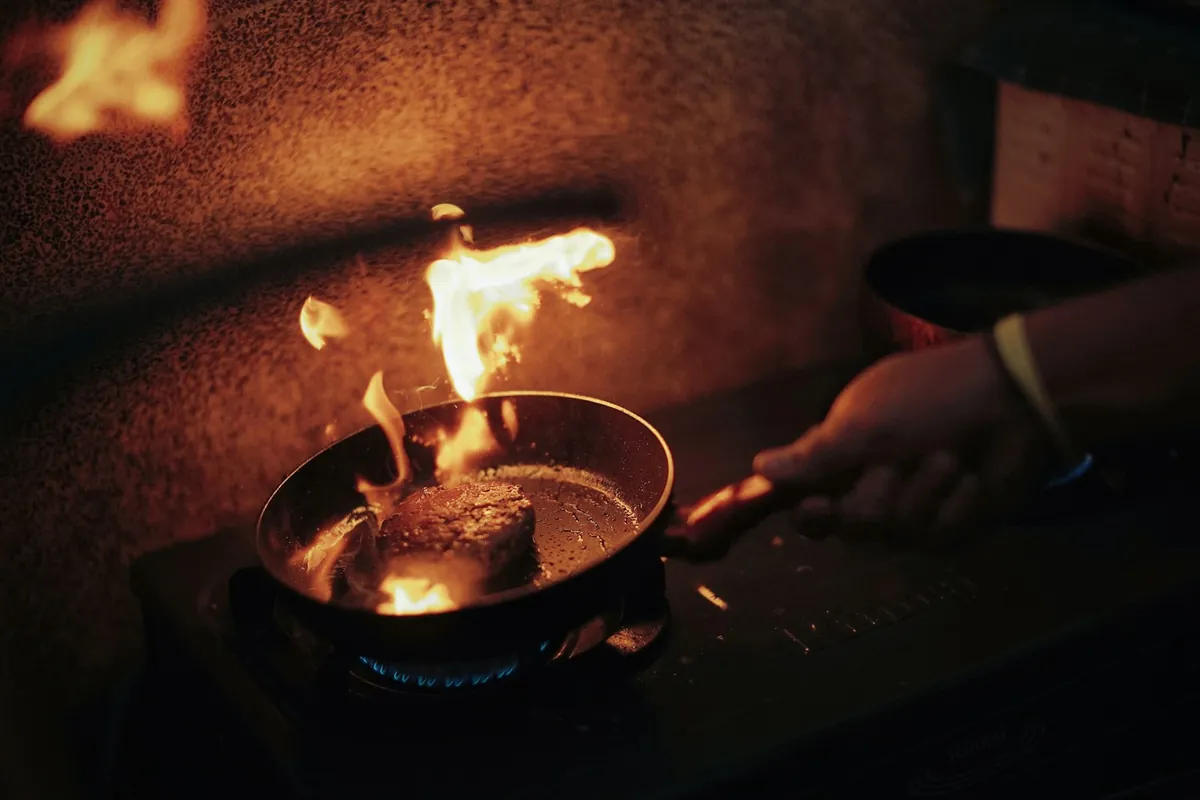
At high heat, sugars and amino acids on the surface of food brown rapidly — the same browning reaction that makes seared meat and toasted bread taste the way they do. At the same time, droplets of oil and moisture vaporize on contact with the metal, and some of that vapor ignites briefly above the pan.
The result is a trace of char and smoke that settles onto the food. It is not the taste of burning — burnt food is bitter and unpleasant — but a much lighter aromatic layer that reads as depth rather than as smoke.
Cantonese cooking treats it as a quality marker in its own right. A dish with it is considered properly made; one without is considered flat, whatever else is right about it.
What produces it
| Condition | Why it matters | At home? |
|---|---|---|
| Very high heat | Drives surface browning and vaporization | Rarely |
| A seasoned metal surface | Carries and holds the heat | Yes, with carbon steel |
| Small batches | Stops the pan temperature collapsing | Yes |
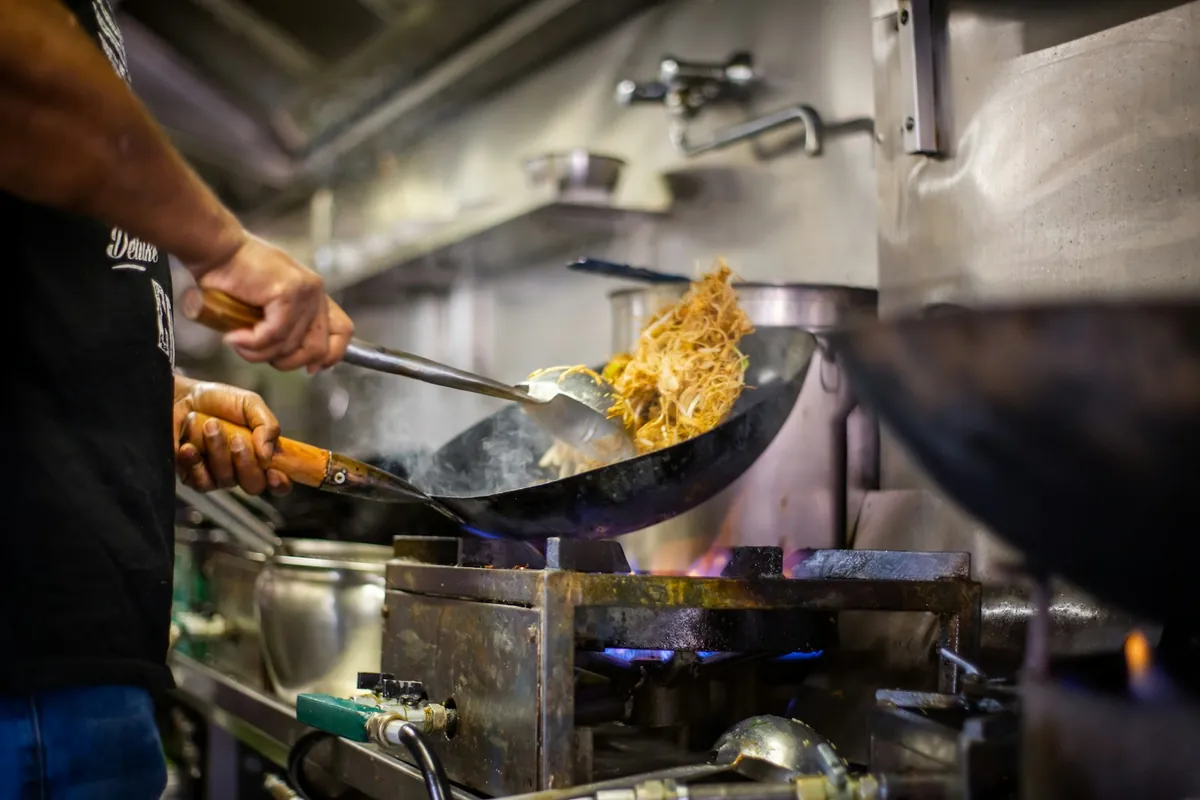
| Constant movement | Sears without burning any one piece | Yes |
| Dry ingredients | Water steams instead of searing | Yes |
| Speed | Seconds, not minutes | Yes, with prep done first |
Read the right-hand column and the picture is encouraging: five of the six conditions are within reach of any home cook. The one that is not is the first, and unfortunately it is the one that matters most.
A restaurant wok burner produces heat on a scale a domestic hob simply does not — our guide to how takeout kitchens work covers that gap. It is why the flame wraps up the sides of the wok and why food can be tossed through the fire above it.
Getting closer to it at home
You will not fully reproduce it, and you can get considerably nearer than most people do.
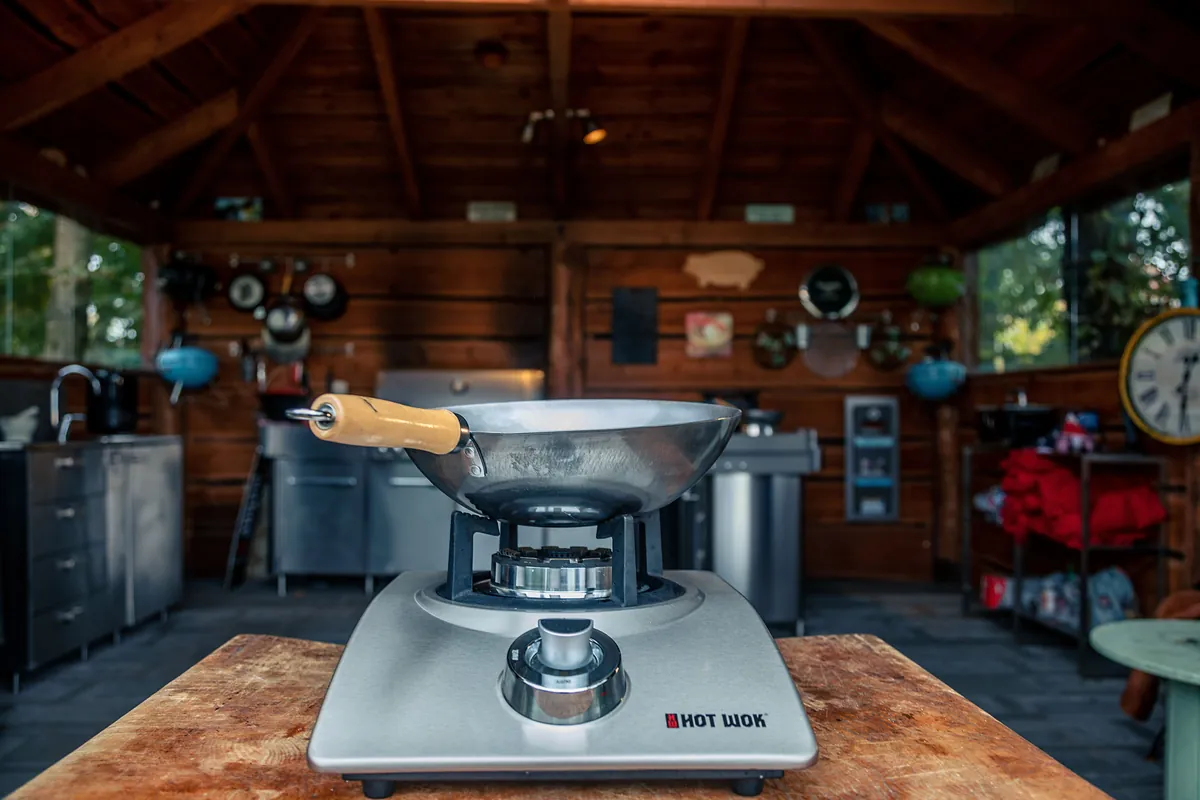
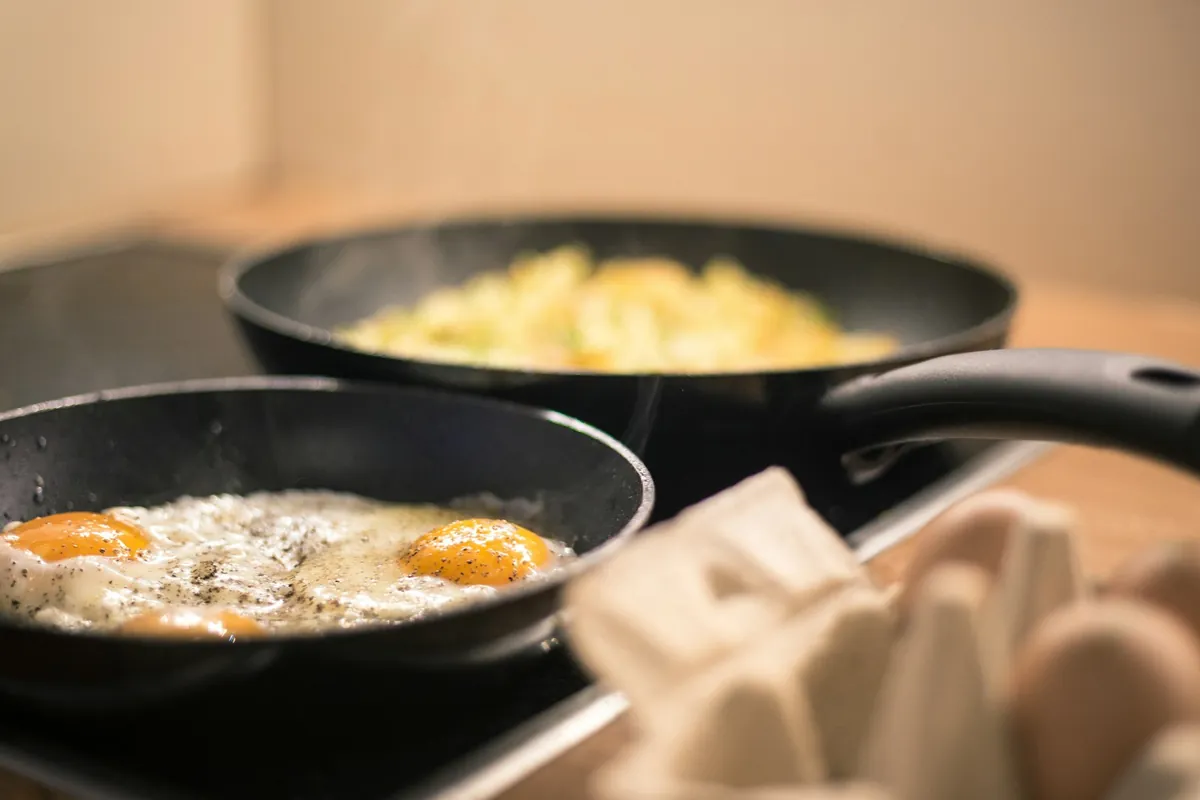
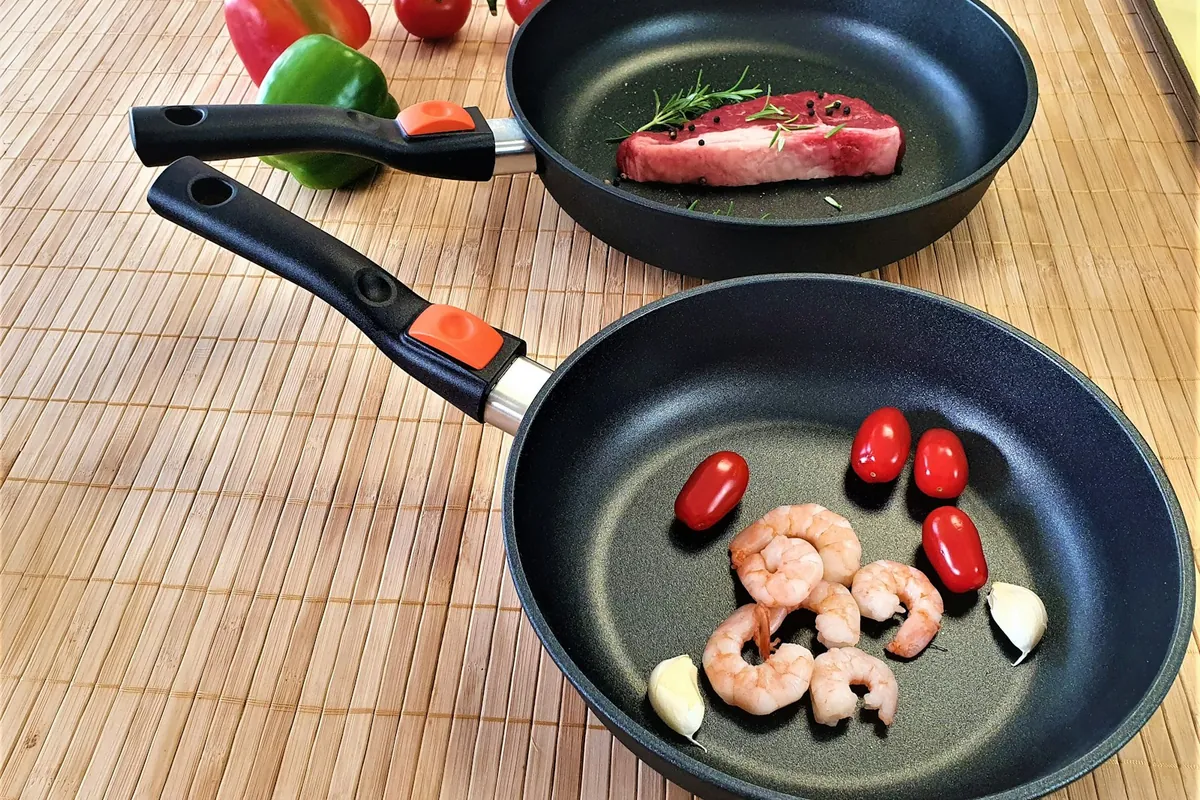
Use a heavy pan and preheat it far longer than feels sensible. Thermal mass substitutes partly for burner power: a heavy carbon steel or cast iron pan, empty, over high heat for several minutes, stores enough energy to sear the first batch properly. Our guide to Chinese cooking equipment explains why a flat heavy pan beats a wok on a domestic stove.
Cook in small batches. This is the single highest-value change. Too much food at once drops the pan temperature and everything steams in its own liquid, which is the exact opposite of what you want.
Dry your ingredients. Surface water must boil off before searing can start, and it takes heat with it. Patting meat and vegetables dry is a two-minute step that changes the result.
Prep everything first. There is no time to chop once cooking starts — our guide to the aromatics covers why the first seconds are decisive.
Genuinely helps
- A long preheat on a heavy pan
- Cooking in two or three batches
- Drying ingredients before they go in
- Everything cut and within reach
Does not help
- Adding liquid smoke or similar
- A round wok on a flat burner
- More oil
- Cooking for longer
Why it disappears from takeout
This is the part with a practical consequence, and it is worth being straightforward about.
Wok hei is volatile. The aromatic compounds that carry it dissipate within minutes, and a closed container full of steam accelerates the process. A dish that had it at the counter has substantially less by the time you get home.
That is not a fault in the kitchen or the packaging. It is a property of the thing itself, and it is one of the strongest arguments for eating stir-fried food in, or collecting it and eating it quickly, rather than having it delivered across town — our guide to pickup or delivery covers the wider picture.
It also means reheated stir-fry will never have it. Reheating can restore heat and texture reasonably well, as our guide to storing and reheating describes, but the aroma is gone and does not come back.

Which dishes show it most
Not all of them, which is useful to know when deciding what to order for eating in.
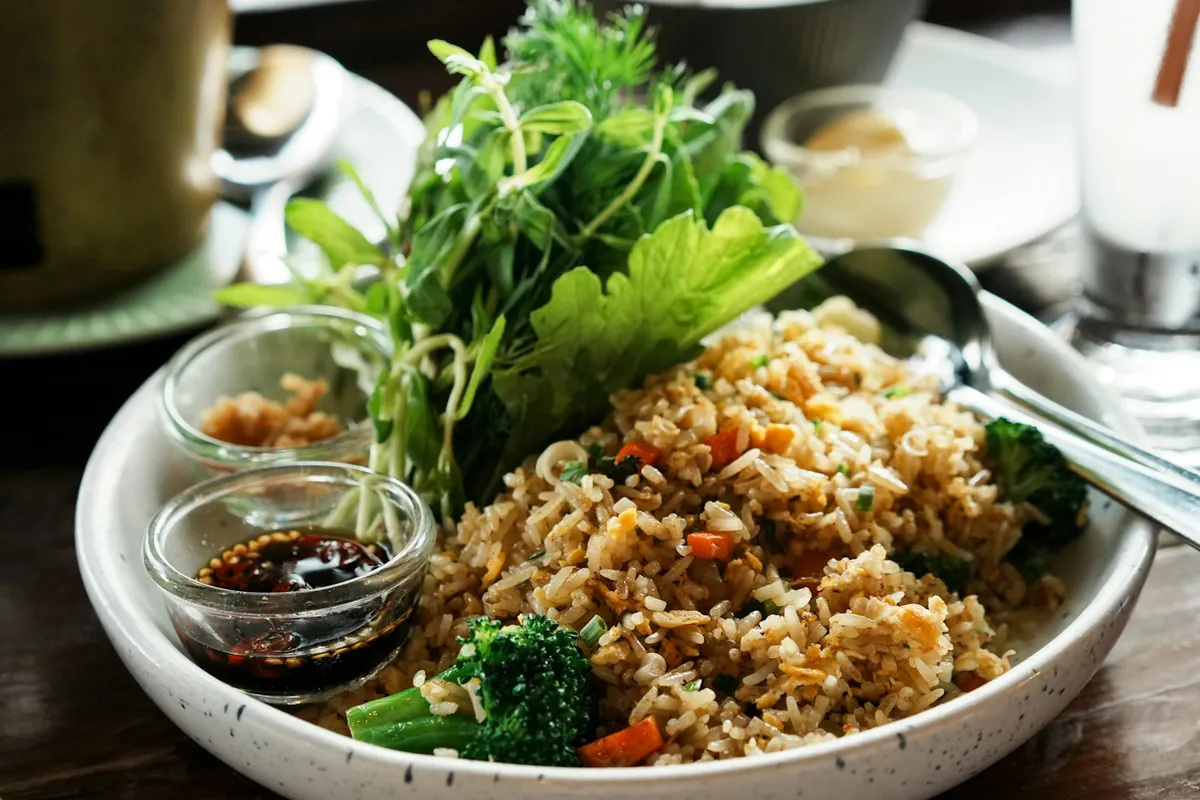
It shows most clearly in dishes with little sauce and a lot of surface area: plain fried rice, dry-fried noodles, simply stir-fried vegetables. Our guide to fried rice covers the dish where it is most obvious — good fried rice tastes of the wok as much as of its ingredients.
It shows least in heavily sauced dishes, where a thick glaze coats everything and dominates the aroma. That is not a criticism of those dishes; it just means the sauce is doing the work instead.
So if you want to taste it, order something simple and eat it immediately. A plain fried rice eaten at a table is a better demonstration than any elaborate dish delivered to a house.
Frequently asked questions
What is wok hei?
A faintly smoky, seared aroma produced when food and oil meet metal hot enough to char and vaporize at the surface. The term translates roughly as “breath of the wok”, and Cantonese cooking treats it as a marker of a properly made dish.
Can you get wok hei at home?
Not fully, because domestic burners do not produce enough heat. You can get much closer by preheating a heavy pan for several minutes, cooking in small batches, drying ingredients first and having everything prepped before you start.
Is wok hei the same as burnt food?
No. Burnt food is bitter and unpleasant. Wok hei is a much lighter aromatic layer of char and smoke that reads as depth rather than as smoke, produced by brief searing rather than by overcooking.
Why does takeout stir-fry taste different from eating in?
Because wok hei is volatile and dissipates within minutes, and a closed container full of steam speeds that up. The dish is otherwise the same — it is the aroma that has gone, and reheating does not bring it back.
Which dishes show wok hei best?
Ones with little sauce and lots of surface area: plain fried rice, dry-fried noodles and simply stir-fried vegetables. Heavily sauced dishes mask it, because the glaze dominates the aroma.
The short version
The seared, faintly smoky aroma that comes from food meeting metal hotter than a home stove can manage. Cantonese cooking calls it the breath of the wok and treats it as the mark of a dish done properly.
Five of the six things that produce it are available at home. The sixth is heat, and that is the one that decides it.
Order from China King
The low-sauce dishes show it best — and they are the ones worth collecting.
Sources
- Wok hei — on the term, the conditions that produce it and its place in Cantonese cooking.
- Maillard reaction — on the browning chemistry behind seared flavor.