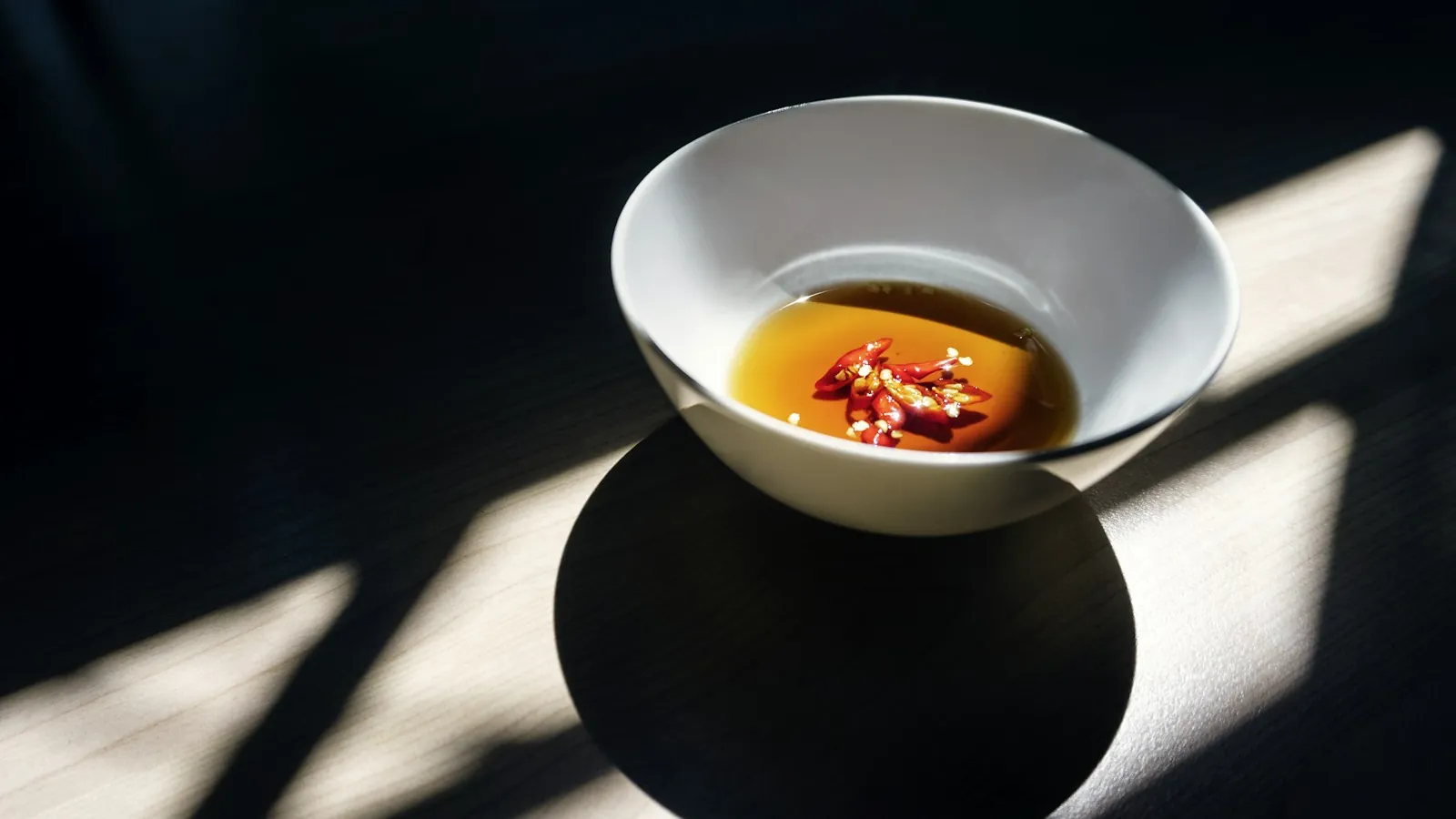
Hoisin is the sauce most people have eaten without ever ordering. It arrives in a small dish with moo shu, gets spread on a pancake, and is rarely explained — which is a shame, because it is one of the more distinctive things on a Chinese menu and the name is doing it no favors.
Hoisin is a thick, dark, sweet-savory sauce made from fermented soybean paste with sugar, vinegar, garlic and spices. It is not a seafood sauce despite the name meaning “seafood” in Chinese, and it contains none. Think of it as closer to a savory jam than to soy sauce.
The name problem
Hoisin translates roughly as “seafood” in Cantonese, and the sauce contains no seafood at all.
Explanations differ. One is that it was originally served with seafood rather than made from it. Another is that the name signalled richness — seafood being a premium category — rather than describing ingredients. Neither is firmly established, and both are more plausible than the sauce ever having contained fish.
If that pattern sounds familiar, it should. Our guide to Chinese sauces covers lobster sauce, which contains no lobster, and our guide to crab rangoon covers a dish whose crab is usually not crab. Menu names in this cuisine describe associations at least as often as contents.
What is actually in it
The base is fermented soybean paste. Sugar, vinegar, garlic, chili and a five-spice-style seasoning are added, and the result is cooked down into something thick and glossy.
That soybean base is what gives hoisin its depth, and the fermentation is what separates it from a simple sweet sauce. Our guide to soy sauce covers the same fermentation working in a thinner, saltier direction.
Two practical notes on ingredients. Most commercial hoisin contains wheat, usually through the soybean paste or as an added thickener. Many versions also contain sesame. Neither is universal, and both matter to some people — if you avoid either, that is a question for the restaurant about the specific dish rather than an assumption from the name.
Sugar content is high relative to other Chinese sauces, which is why it reads as sweet before it reads as savory.
How it compares to the others
| Sauce | Base | Character | Used |
|---|---|---|---|
| Hoisin | Fermented soybean paste | Sweet, dark, thick, faintly spiced | As a condiment; in glazes |
| Oyster sauce | Oyster extract | Savory, rich, less sweet | Cooked into dishes |
| Soy sauce | Fermented soybeans and wheat | Salty, thin, savory | Seasoning throughout |
| Black bean sauce | Fermented black soybeans | Salty, pungent, funky | Cooked into dishes |
| Duck sauce | Fruit | Sweet, tangy, thin | Dipping fried food |
The one most often confused with hoisin is oyster sauce, and the difference is straightforward: oyster sauce is savory and goes into the pan; hoisin is sweet and usually goes onto the plate. Oyster sauce also genuinely contains what its name says, which is the reverse of the hoisin situation.
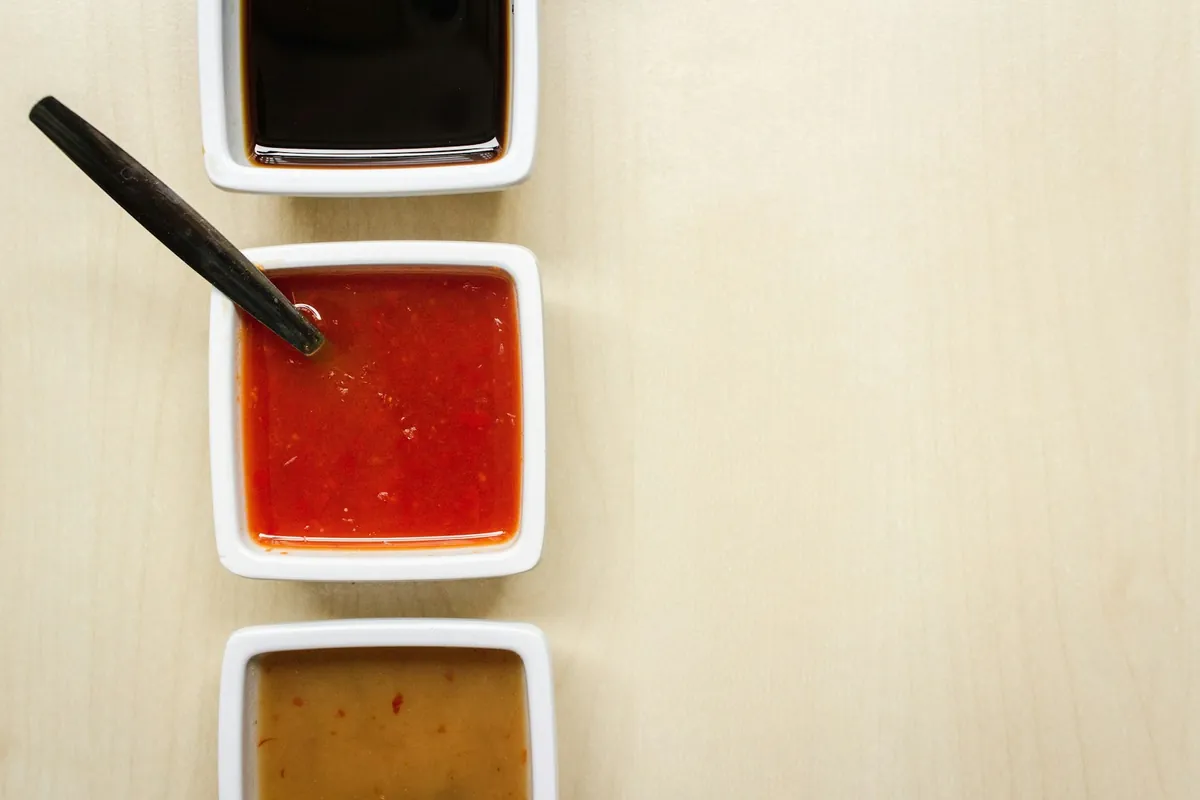
Duck sauce is the other comparison worth drawing, since both arrive in small dishes. Duck sauce is fruit-based, thin and tangy; hoisin is soybean-based, thick and deep. Our guide to duck sauce and hot mustard covers that one.
Where you meet it on a menu
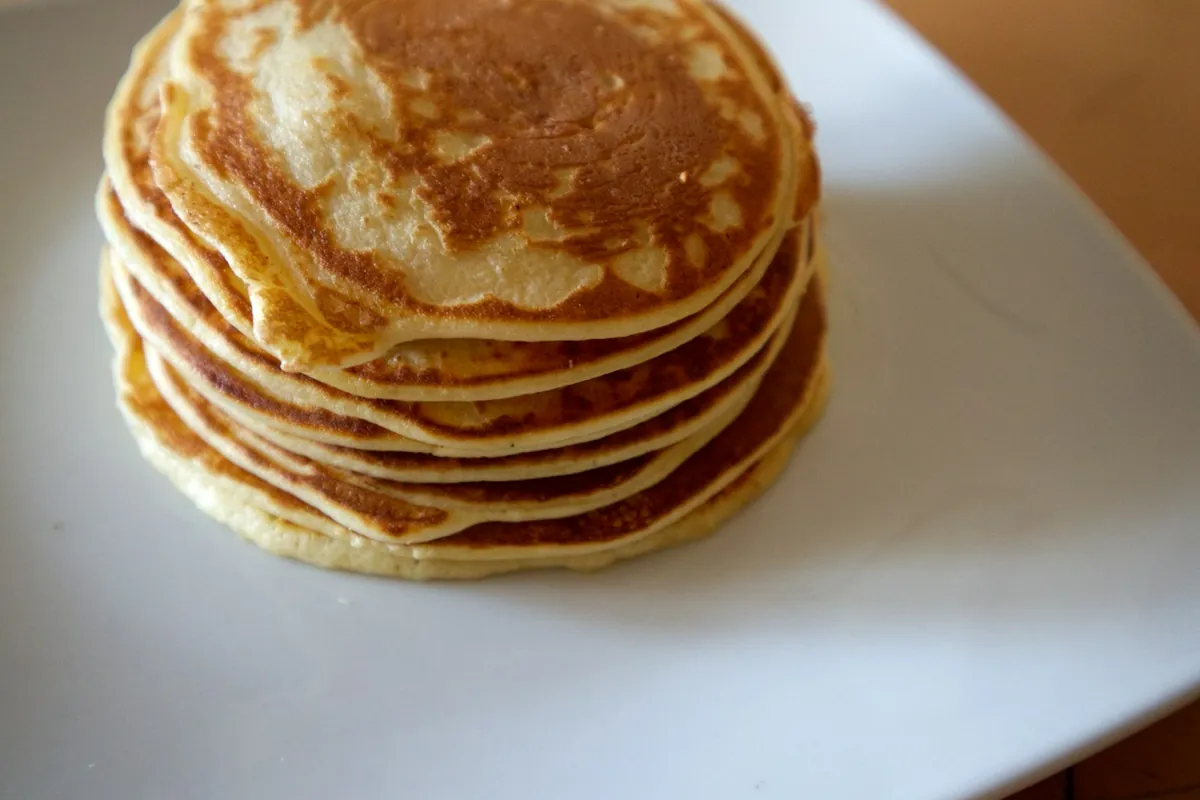
Most reliably with moo shu, where a small dish of hoisin comes alongside the pancakes and you spread it on yourself before rolling. That is its classic role in an American Chinese restaurant — our guide to moo shu covers the dish and the assembly.
It also appears in Peking duck service in exactly the same way, which is not a coincidence: the two dishes share a format. Our guide to Peking duck covers that.
Beyond the pancake dishes, hoisin turns up cooked into glazes for roasted meats and in some barbecue-style marinades, where its sugar helps produce a lacquered surface. It is generally not in the standard brown-sauce stir-fries, which are built on soy and stock instead.
Using it well
Works well
- Spread thinly on a pancake, under the filling
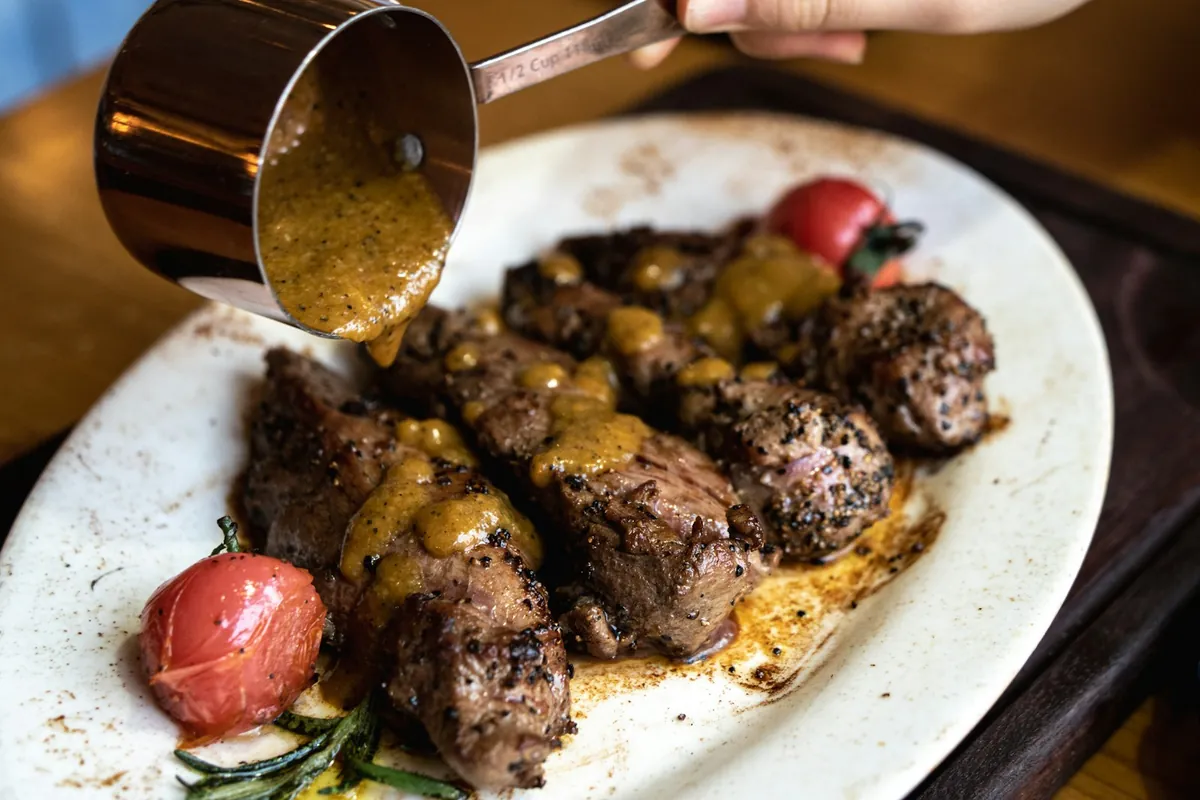
- Brushed onto meat near the end of roasting
- Thinned with water or vinegar as a dip
- A small amount in a marinade
Works badly
- Used generously — it dominates fast
- As a general stir-fry sauce
- Brushed on early, where the sugar burns
- Alongside another sweet dish
The consistent mistake is quantity. Hoisin is intense and sweet, and a thin smear does what a spoonful will overwhelm. In a moo shu pancake it should be a background note, not the main flavor.
The other is timing when cooking with it. Its sugar content means it burns readily, so it belongs at the end of a roast or the last moments of a pan rather than at the start — the same principle our guide to five spice describes in reverse, where the spice needs time and hoisin needs the opposite.
Buying and keeping it
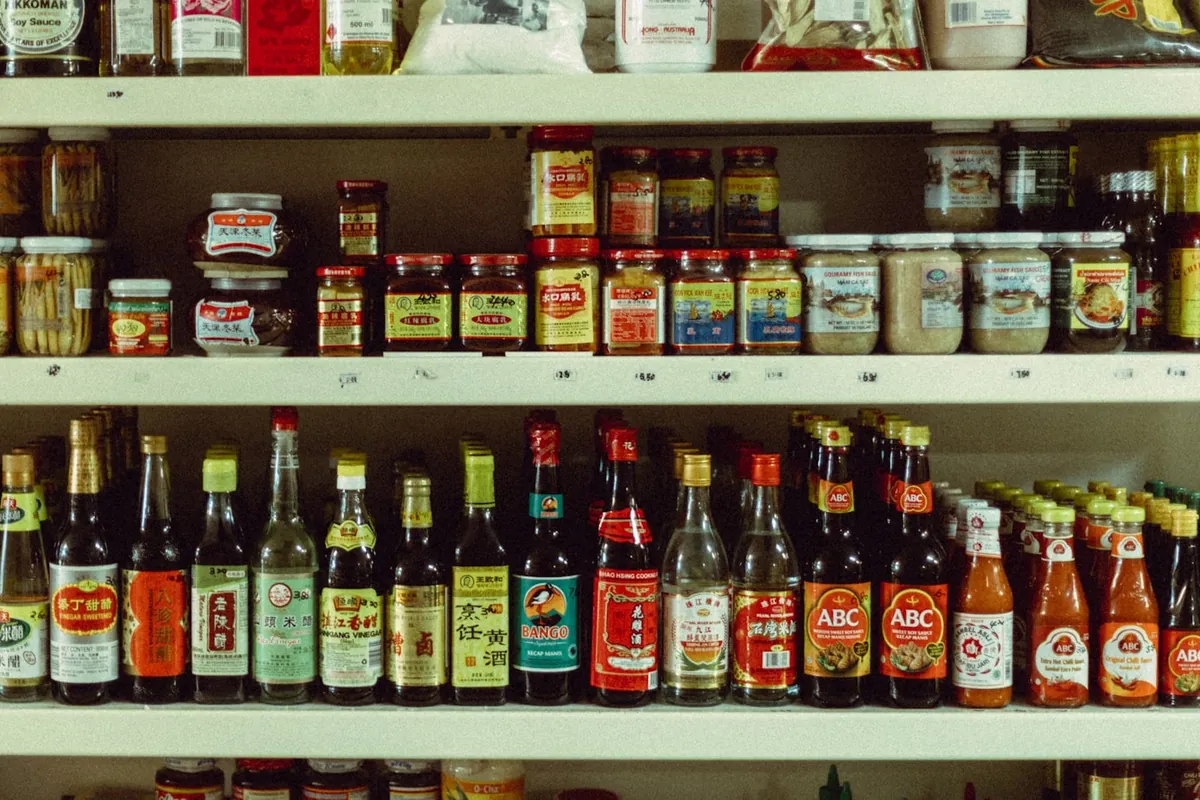
Sold in jars and squeeze bottles in most supermarkets, and there is real variation between brands — some are noticeably sweeter, some saltier and more fermented-tasting. It is worth trying more than one if the first disappoints.
Once opened it keeps for months refrigerated, because the sugar and salt do the preserving. It thickens as it ages, which is easily fixed with a little water.
Check the label if wheat or sesame matter to you. Both are common in commercial hoisin and neither is guaranteed present or absent, which is exactly why reading the jar beats assuming.

Frequently asked questions
What is hoisin sauce made of?
Fermented soybean paste as the base, with sugar, vinegar, garlic, chili and warm spices, cooked down until thick and glossy. The fermentation gives it depth, and the sugar is what makes it read as sweet before savory.
Does hoisin sauce contain seafood?
No. The name translates roughly as “seafood” in Cantonese, but the sauce contains none. It was probably named for what it was served with, or as a signal of richness, rather than for its ingredients.
What is the difference between hoisin and oyster sauce?
Hoisin is soybean-based, sweet, and usually goes onto the plate as a condiment. Oyster sauce is made from oyster extract, is savory rather than sweet, and is cooked into dishes. Oyster sauce also genuinely contains what its name says.
Does hoisin contain wheat?
Most commercial hoisin does, through the soybean paste or as a thickener, and many versions also contain sesame. Neither is universal. If you avoid either, read the label at home and ask the restaurant about the specific dish when eating out.
How much hoisin should I use on a moo shu pancake?
A thin smear. It is intense and sweet enough that a spoonful overwhelms the filling, and it is meant to be a background note rather than the main flavor of the roll.
The short version
Fermented soybean paste with sugar, vinegar, garlic and spice. Thick, dark and sweet-savory, with no seafood in it despite the name.
A thin smear on a pancake, or a late brush on a roast. Used generously it takes over everything.
Order from China King
Hoisin comes with the moo shu dishes, to spread on the pancakes yourself.
Sources
- Hoisin sauce — on its composition, the meaning of the name and its uses.
- FDA: Food allergies — on wheat and sesame as major allergens.